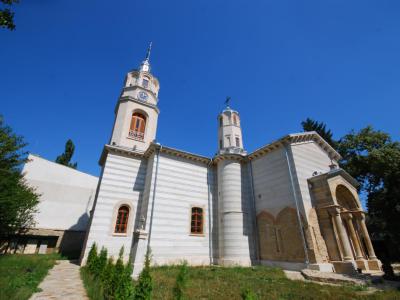


Biserica Armeneasca (Armenian Church), Iasi
Biserica Armenească is one of the oldest religious sites linked to the Armenian community in Moldavia. Tradition places its foundation in 1395, though historians still debate this date. If correct, it would make the church older than the first written mention of Iași in 1408. Armenians were important merchants and craftsmen, and several Moldavian rulers granted tax privileges to the church’s priests.
The church is dedicated to the Virgin Mary and was rebuilt from its foundations after the powerful 1802 earthquake, with major work completed in 1803. It later survived World War II bombing and required structural repairs in 1946. Visitors can notice Armenian inscriptions, old stonework, and three historic bells, including one with a Latin inscription from 1607 and another with Old Church Slavonic writing from 1881.
The courtyard adds another layer of interest. Along the back walls are old Armenian tombstones carved with Armenian script and symbols linked to the trades of those buried there. Local tradition also remembers a second Armenian church dedicated to Saint Gregory the Illuminator, lost in a major fire in 1827. Today, this church remains the main surviving monument of a community that helped shape the area’s religious, commercial, and cultural life.
The church is dedicated to the Virgin Mary and was rebuilt from its foundations after the powerful 1802 earthquake, with major work completed in 1803. It later survived World War II bombing and required structural repairs in 1946. Visitors can notice Armenian inscriptions, old stonework, and three historic bells, including one with a Latin inscription from 1607 and another with Old Church Slavonic writing from 1881.
The courtyard adds another layer of interest. Along the back walls are old Armenian tombstones carved with Armenian script and symbols linked to the trades of those buried there. Local tradition also remembers a second Armenian church dedicated to Saint Gregory the Illuminator, lost in a major fire in 1827. Today, this church remains the main surviving monument of a community that helped shape the area’s religious, commercial, and cultural life.
Want to visit this sight? Check out these Self-Guided Walking Tours in Iasi. Alternatively, you can download the mobile app "GPSmyCity: Walks in 1K+ Cities" from Apple App Store or Google Play Store. The app turns your mobile device to a personal tour guide and it works offline, so no data plan is needed when traveling abroad.
Download The GPSmyCity App



Biserica Armeneasca (Armenian Church) on Map
Sight Name: Biserica Armeneasca (Armenian Church)
Sight Location: Iasi, Romania (See walking tours in Iasi)
Sight Type: Religious
Sight Location: Iasi, Romania (See walking tours in Iasi)
Sight Type: Religious
Nearby Sights

Walking Tours in Iasi, Romania

Create Your Own Walk in Iasi
Creating your own self-guided walk in Iasi is easy and fun. Choose the city attractions that you want to see and a walk route map will be created just for you. You can even set your hotel as the start point of the walk.
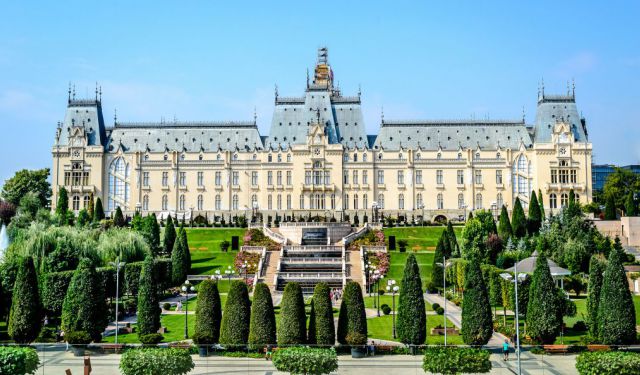
Iasi Introduction Walking Tour
The city of Iasi – second largest in Romania after the national capital Bucharest – is quite often, and deservedly so, referred to as the "cultural capital" of the country. Located in the vast eastern region of Moldova, around which Romania, as a unified kingdom, was formed in the mid 19th century, it was indeed once the capital of it. Renowned for its cultural heritage, Iasi is also... view more
Tour Duration: 2 Hour(s)
Travel Distance: 2.4 Km or 1.5 Miles
Tour Duration: 2 Hour(s)
Travel Distance: 2.4 Km or 1.5 Miles
Useful Travel Guides for Planning Your Trip
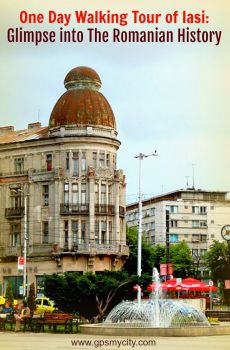
One Day Walking Tour of Iasi: Glimpse into The Romanian History
The university city of Iași is quite often, and deservedly so, referred to as the "cultulral capital" of Romania. Located in the eastern part of the country, it was indeed once capital of the vast Moldavia region around which the unified kingdom of Romania was eventually formed in the mid...