

Botanischer Garten Potsdam (Botanical Garden), Potsdam
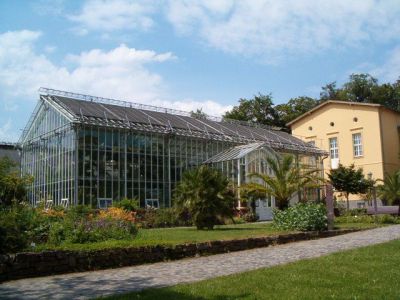
The Botanical Garden in Potsdam, maintained by the University of Potsdam, is a significant botanical garden and arboretum situated in Potsdam. Spanning a total area of 8.5 hectares, with 5 hectares open to the public, the garden offers a diverse collection of plant species and is accessible daily, with an admission fee applicable only for the glasshouses.
Established in 1950 on land previously part of Sanssouci Park and the Paradise Garden, the Botanical Garden has a rich history. Post-World War II, Sanssouci Park was under the control of the Red Army and temporarily served as a branch of the Moscow Botanical Garden. The current garden, divided by Mulberry Avenue (Maulbeerallee), features the Paradise Garden in the north, used as a teaching and display area, and the institute building, greenhouses, and additional outdoor spaces to the south.
The Botanical Garden cultivates around 9,000 plant taxa, including notable collections of succulents, Begoniaceae, Araceae, Aizoaceae, Haworthia, ferns, Australian Proteaceae, orchids, chimaeras, invasive species, and Chinese medicinal herbs. Key outdoor areas feature ecological and geographical collections like an arboretum, East Asian and Eurasian steppe plants, Central European forests, North American prairies, an alpine garden, rhododendrons, wildflowers, a rose garden, and marsh and aquatic plants. There are also gardens dedicated to plant morphology, useful plants (dyes, fibers, food, medicinal, and aromatic), and endangered species from Germany.
The Botanical Garden in Potsdam features ten greenhouses spanning 3,000 square meters, housing around 4,600 tropical and subtropical species. These include specialized houses for palms, epiphytes, orchids, ferns, cacti, aquatics, and Victoria plants. The collection also includes economically and ecologically significant plants like coffee, cocoa, sugarcane, cotton, cassava, guava, begonias, and carnivorous plants, showcasing a rich diversity of global plant life.
Established in 1950 on land previously part of Sanssouci Park and the Paradise Garden, the Botanical Garden has a rich history. Post-World War II, Sanssouci Park was under the control of the Red Army and temporarily served as a branch of the Moscow Botanical Garden. The current garden, divided by Mulberry Avenue (Maulbeerallee), features the Paradise Garden in the north, used as a teaching and display area, and the institute building, greenhouses, and additional outdoor spaces to the south.
The Botanical Garden cultivates around 9,000 plant taxa, including notable collections of succulents, Begoniaceae, Araceae, Aizoaceae, Haworthia, ferns, Australian Proteaceae, orchids, chimaeras, invasive species, and Chinese medicinal herbs. Key outdoor areas feature ecological and geographical collections like an arboretum, East Asian and Eurasian steppe plants, Central European forests, North American prairies, an alpine garden, rhododendrons, wildflowers, a rose garden, and marsh and aquatic plants. There are also gardens dedicated to plant morphology, useful plants (dyes, fibers, food, medicinal, and aromatic), and endangered species from Germany.
The Botanical Garden in Potsdam features ten greenhouses spanning 3,000 square meters, housing around 4,600 tropical and subtropical species. These include specialized houses for palms, epiphytes, orchids, ferns, cacti, aquatics, and Victoria plants. The collection also includes economically and ecologically significant plants like coffee, cocoa, sugarcane, cotton, cassava, guava, begonias, and carnivorous plants, showcasing a rich diversity of global plant life.
Want to visit this sight? Check out these Self-Guided Walking Tours in Potsdam. Alternatively, you can download the mobile app "GPSmyCity: Walks in 1K+ Cities" from Apple App Store or Google Play Store. The app turns your mobile device to a personal tour guide and it works offline, so no data plan is needed when traveling abroad.
Download The GPSmyCity App



Botanischer Garten Potsdam (Botanical Garden) on Map
Sight Name: Botanischer Garten Potsdam (Botanical Garden)
Sight Location: Potsdam, Germany (See walking tours in Potsdam)
Sight Type: Attraction/Landmark
Sight Location: Potsdam, Germany (See walking tours in Potsdam)
Sight Type: Attraction/Landmark
Nearby Sights

Walking Tours in Potsdam, Germany

Create Your Own Walk in Potsdam
Creating your own self-guided walk in Potsdam is easy and fun. Choose the city attractions that you want to see and a walk route map will be created just for you. You can even set your hotel as the start point of the walk.
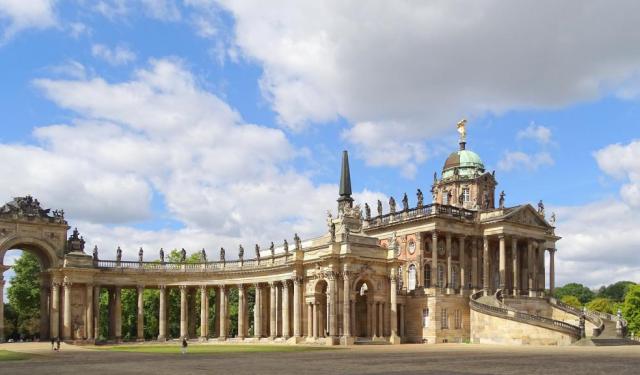
Potsdam City Center and Sanssouci Palace Walking Tour
Potsdam was likely founded during the seventh century by the Hevelli tribe. The town was mentioned by the name of Poztupimi in a document from Emperor Otto III. The name likely came from an old Western Slavonic term roughly meaning "beneath the oaks."
By the early 1300s, a small town had formed with a town charter. By 1573 the town had around 2,000 people living there. Potsdam rose to... view more
Tour Duration: 2 Hour(s)
Travel Distance: 3.8 Km or 2.4 Miles
By the early 1300s, a small town had formed with a town charter. By 1573 the town had around 2,000 people living there. Potsdam rose to... view more
Tour Duration: 2 Hour(s)
Travel Distance: 3.8 Km or 2.4 Miles
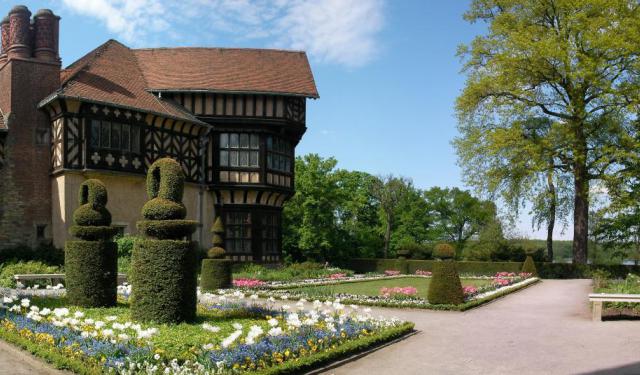
Neuer Garten Walking Tour
Laid out at the behest of Friedrich William II in 1787, Potsdam's Neuer Garten (New Garden) was indeed "new" compared to the already in place Sanssouci Park.
Between 1816 and 1828, the area was modified further as an English-style, open landscape garden, with an aim to reproduce nature – trees and plants were left to grow naturally, unshaped and untrimmed. Rural life was also... view more
Tour Duration: 2 Hour(s)
Travel Distance: 2.8 Km or 1.7 Miles
Between 1816 and 1828, the area was modified further as an English-style, open landscape garden, with an aim to reproduce nature – trees and plants were left to grow naturally, unshaped and untrimmed. Rural life was also... view more
Tour Duration: 2 Hour(s)
Travel Distance: 2.8 Km or 1.7 Miles
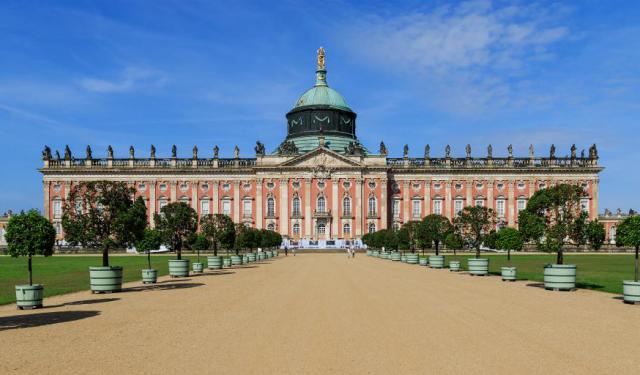
Sanssouci Park Walking Tour
Sanssouci Park is a unique Potsdam landmark that occupies 290 hectares in the heart of the city. The Park is named after the Sanssouci Palace that it surrounds, which in turn takes its name from the French phrase "sans souci", which means carefree, and implies that the palace was designated as a place of fun, rather than a seat of power.
Indeed, the Sanssouci Palace was built in 1747... view more
Tour Duration: 2 Hour(s)
Travel Distance: 3.9 Km or 2.4 Miles
Indeed, the Sanssouci Palace was built in 1747... view more
Tour Duration: 2 Hour(s)
Travel Distance: 3.9 Km or 2.4 Miles