

Camposanto Monumentale (Monumental Cemetery), Pisa (must see)
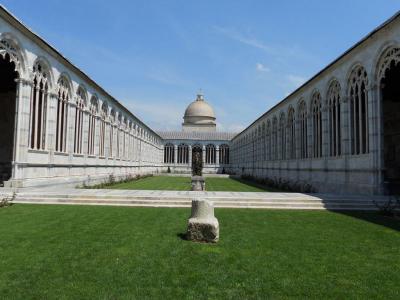
The Monumental Cemetery stands along the northern side of the Miracles Square and immediately feels more enclosed than the surrounding monuments. As you face the long façade, notice the continuous sequence of typical Gothic elements - pointed arches, stretching across the exterior, creating a steady rhythm that defines the building. This elongated structure surrounds a central lawn, forming a cloistered rectangle designed for reflection.
Its Italian name Campo Santo, meaning “holy field,” comes from the tradition that the cemetery was built using sacred soil brought from Golgotha - the site in Jerusalem associated with Christ’s crucifixion - by Archbishop Ubaldo de’ Lanfranchi, giving the ground its special religious significance. A local legend even claims that bodies buried here would decompose within just 24 hours.
If you enter through the right-hand doorway, you can see a sculpted tabernacle showing the Virgin and Child with four saints. It dates to the second half of the 14th century and is attributed to a follower of Giovanni Pisano, an Italian sculptor, painter, and architect. Its placement above the entrance signals the sacred character of the space beyond.
Step inside and walk beneath the covered corridors that frame the open courtyard. Along the walls stand Roman sarcophagi, reminders that this site also became a place for preserving classical antiquities. Among the notable memorials, the western gallery of the cemetery features a 19th-century commemorative statue dedicated to Italian mathematician Leonardo Fibonacci, inaugurated in 1863 and created by Italian sculptor Giovanni Paganucci. The monument reflects Pisa’s pride in the mathematician whose work had a lasting influence on European mathematics.
The frescoed walls are one of the greatest highlights of the cemetery. Between 1336 and 1341, Italian painter Buonamico Buffalmacco decorated them with powerful scenes such as The Triumph of Death, The Last Judgment, and the Stories of the Hermits, created to remind visitors of the fragility of life. About a century later, painter Benozzo Gozzoli added the colorful Stories of the Old Testament along the north wall, preserving biblical history through vivid and detailed imagery.
Although many of these works were damaged during World War II bombing and fire, restoration efforts have preserved significant sections.
Within the Chapel Aulla, you can find the original lamp associated with Galileo Galilei, the renowned Italian astronomer and physicist. Historical accounts link Galileo’s observations of a similar swinging lamp inside Pisa Cathedral to the early development of his studies on pendulum motion.
Its Italian name Campo Santo, meaning “holy field,” comes from the tradition that the cemetery was built using sacred soil brought from Golgotha - the site in Jerusalem associated with Christ’s crucifixion - by Archbishop Ubaldo de’ Lanfranchi, giving the ground its special religious significance. A local legend even claims that bodies buried here would decompose within just 24 hours.
If you enter through the right-hand doorway, you can see a sculpted tabernacle showing the Virgin and Child with four saints. It dates to the second half of the 14th century and is attributed to a follower of Giovanni Pisano, an Italian sculptor, painter, and architect. Its placement above the entrance signals the sacred character of the space beyond.
Step inside and walk beneath the covered corridors that frame the open courtyard. Along the walls stand Roman sarcophagi, reminders that this site also became a place for preserving classical antiquities. Among the notable memorials, the western gallery of the cemetery features a 19th-century commemorative statue dedicated to Italian mathematician Leonardo Fibonacci, inaugurated in 1863 and created by Italian sculptor Giovanni Paganucci. The monument reflects Pisa’s pride in the mathematician whose work had a lasting influence on European mathematics.
The frescoed walls are one of the greatest highlights of the cemetery. Between 1336 and 1341, Italian painter Buonamico Buffalmacco decorated them with powerful scenes such as The Triumph of Death, The Last Judgment, and the Stories of the Hermits, created to remind visitors of the fragility of life. About a century later, painter Benozzo Gozzoli added the colorful Stories of the Old Testament along the north wall, preserving biblical history through vivid and detailed imagery.
Although many of these works were damaged during World War II bombing and fire, restoration efforts have preserved significant sections.
Within the Chapel Aulla, you can find the original lamp associated with Galileo Galilei, the renowned Italian astronomer and physicist. Historical accounts link Galileo’s observations of a similar swinging lamp inside Pisa Cathedral to the early development of his studies on pendulum motion.
Want to visit this sight? Check out these Self-Guided Walking Tours in Pisa. Alternatively, you can download the mobile app "GPSmyCity: Walks in 1K+ Cities" from Apple App Store or Google Play Store. The app turns your mobile device to a personal tour guide and it works offline, so no data plan is needed when traveling abroad.
Download The GPSmyCity App



Camposanto Monumentale (Monumental Cemetery) on Map
Sight Name: Camposanto Monumentale (Monumental Cemetery)
Sight Location: Pisa, Italy (See walking tours in Pisa)
Sight Type: Attraction/Landmark
Guide(s) Containing This Sight:
Sight Location: Pisa, Italy (See walking tours in Pisa)
Sight Type: Attraction/Landmark
Guide(s) Containing This Sight:
Nearby Sights
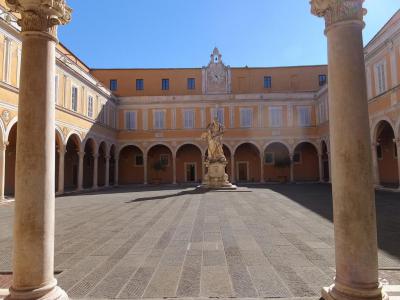
Walking Tours in Pisa, Italy

Create Your Own Walk in Pisa
Creating your own self-guided walk in Pisa is easy and fun. Choose the city attractions that you want to see and a walk route map will be created just for you. You can even set your hotel as the start point of the walk.
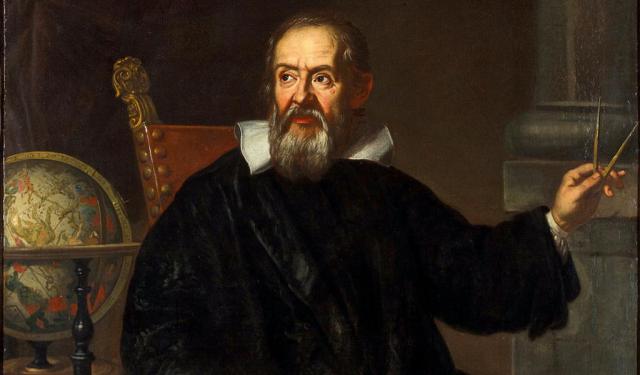
Galileo's Pisa Walking Tour
Among the names most closely connected with Pisa, few are as widely recognized as Galileo Galilei. He became one of the most influential thinkers in history-an astronomer, mathematician, and physicist whose work reshaped how people understood motion, gravity, and the structure of the universe. It's not just the place where his life began; it is also where many of the observations and... view more
Tour Duration: 1 Hour(s)
Travel Distance: 1.8 Km or 1.1 Miles
Tour Duration: 1 Hour(s)
Travel Distance: 1.8 Km or 1.1 Miles
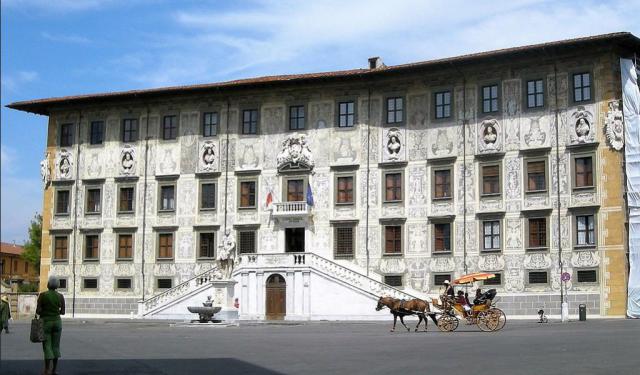
Pisa Palaces Walking Tour
As you continue your acquaintance with Pisa, you will notice that there is a lot more to see here than just a "leaning" landmark. Indeed, just like Italy in general, this particular Tuscan city boasts a glorious heritage of wonderful palaces, fit to transport you back in time.
The most beautiful palaces in Pisa are found on both sides of the Arno River, forming a multi-colored ribbon... view more
Tour Duration: 1 Hour(s)
Travel Distance: 2.1 Km or 1.3 Miles
The most beautiful palaces in Pisa are found on both sides of the Arno River, forming a multi-colored ribbon... view more
Tour Duration: 1 Hour(s)
Travel Distance: 2.1 Km or 1.3 Miles
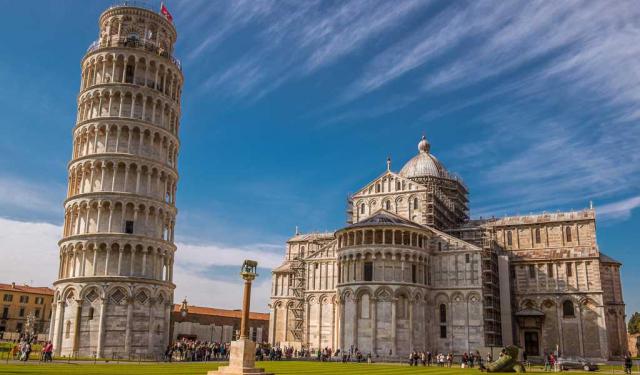
Pisa Old Town Walking Tour
Pisa is known around the world for its Leaning Tower and as the birthplace of Galileo Galilei, often called the father of modern science. Those two associations alone would be enough to secure its place on the map. Yet the city's story stretches far beyond a tilted bell tower and one brilliant mind. It is a city shaped by the sea, by trade, and by centuries of quiet reinvention.
The origin... view more
Tour Duration: 2 Hour(s)
Travel Distance: 3.0 Km or 1.9 Miles
The origin... view more
Tour Duration: 2 Hour(s)
Travel Distance: 3.0 Km or 1.9 Miles