

Carcer Tullianum (Mamertine Prison), Rome
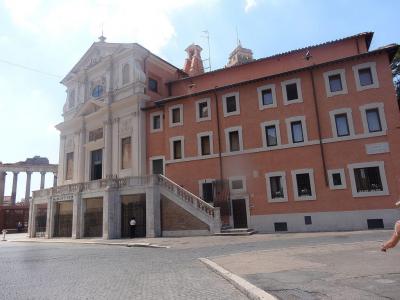
The Mamertine Prison, originally called the Tullianum, was an ancient prison in Rome, located on the northeastern slope of the Capitoline Hill. Built in the 7th century BC, it is traditionally attributed to Ancus Marcius, Rome’s fourth king.
The origins of the name Tullianum are uncertain. Some believe it was named after the Roman kings Tullus Hostilius or Servius Tullius, while others suggest it refers to an ancient Latin word meaning water jet, as the site originally served as a cistern. The name Mamertine emerged in the medieval period, possibly referencing a nearby Temple of Mars.
As Roman law did not use imprisonment as punishment, the prison was not intended for long-term detention. Instead, it functioned primarily as a temporary holding of inmates awaiting trials or executions. As such, the site had a lower dungeon, wherein prisoners were dropped through an opening and often left in grim conditions.
The Mamertine Prison played a role in several significant historical events. In 63 BC, members of the Catiline conspiracy were executed there. Sejanus, the disgraced Praetorian Prefect, was also detained and executed at the site. Additionally, many foreign rulers captured in battle met their fate there following triumphal parades. Among them were Jugurtha, king of Numidia, and Vercingetorix, the Gaulish chieftain, both of whom died in captivity.
Rome’s policy was generally to pardon high-ranking enemies after war, using diplomacy to secure capitulation. However, figures considered especially dangerous or hated were sometimes subjected to harsh treatment, and the Mamertine Prison served as an ideal location for public humiliation before execution. The Palatine Hill, a short walk away, provided a stage for displaying conquered leaders as part of Roman propaganda.
The most prominent prisoner at the Mamertine was Saint Peter. According to Christian tradition, he was imprisoned here before his upside-down crucifixion, allegedly performing baptisms in a pre-existing spring within the jail. However, historical evidence confirming his imprisonment is limited. As for Saint Paul, whose name is also sometimes associated with this site, he was actually held elsewhere before his execution.
By late antiquity, the prison ceased operations and transitioned into a Christian Church of San Giuseppe. Today, it remains a historical and religious landmark, with an upside-down cross on its altar commemorating Saint Peter’s crucifixion.
The origins of the name Tullianum are uncertain. Some believe it was named after the Roman kings Tullus Hostilius or Servius Tullius, while others suggest it refers to an ancient Latin word meaning water jet, as the site originally served as a cistern. The name Mamertine emerged in the medieval period, possibly referencing a nearby Temple of Mars.
As Roman law did not use imprisonment as punishment, the prison was not intended for long-term detention. Instead, it functioned primarily as a temporary holding of inmates awaiting trials or executions. As such, the site had a lower dungeon, wherein prisoners were dropped through an opening and often left in grim conditions.
The Mamertine Prison played a role in several significant historical events. In 63 BC, members of the Catiline conspiracy were executed there. Sejanus, the disgraced Praetorian Prefect, was also detained and executed at the site. Additionally, many foreign rulers captured in battle met their fate there following triumphal parades. Among them were Jugurtha, king of Numidia, and Vercingetorix, the Gaulish chieftain, both of whom died in captivity.
Rome’s policy was generally to pardon high-ranking enemies after war, using diplomacy to secure capitulation. However, figures considered especially dangerous or hated were sometimes subjected to harsh treatment, and the Mamertine Prison served as an ideal location for public humiliation before execution. The Palatine Hill, a short walk away, provided a stage for displaying conquered leaders as part of Roman propaganda.
The most prominent prisoner at the Mamertine was Saint Peter. According to Christian tradition, he was imprisoned here before his upside-down crucifixion, allegedly performing baptisms in a pre-existing spring within the jail. However, historical evidence confirming his imprisonment is limited. As for Saint Paul, whose name is also sometimes associated with this site, he was actually held elsewhere before his execution.
By late antiquity, the prison ceased operations and transitioned into a Christian Church of San Giuseppe. Today, it remains a historical and religious landmark, with an upside-down cross on its altar commemorating Saint Peter’s crucifixion.
Want to visit this sight? Check out these Self-Guided Walking Tours in Rome. Alternatively, you can download the mobile app "GPSmyCity: Walks in 1K+ Cities" from Apple App Store or Google Play Store. The app turns your mobile device to a personal tour guide and it works offline, so no data plan is needed when traveling abroad.
Download The GPSmyCity App



Carcer Tullianum (Mamertine Prison) on Map
Sight Name: Carcer Tullianum (Mamertine Prison)
Sight Location: Rome, Italy (See walking tours in Rome)
Sight Type: Attraction/Landmark
Sight Location: Rome, Italy (See walking tours in Rome)
Sight Type: Attraction/Landmark
Nearby Sights
Walking Tours in Rome, Italy

Create Your Own Walk in Rome
Creating your own self-guided walk in Rome is easy and fun. Choose the city attractions that you want to see and a walk route map will be created just for you. You can even set your hotel as the start point of the walk.

"Roman Holiday" Movie Walking Tour
Filmed entirely in the heart of Rome, Roman Holiday is one of those timeless films that beckons you to hop on a Vespa and lose yourself in the intoxicating beauty of the Italian capital. Released in 1953, this beloved classic has captured hearts across generations, thanks to its irresistible blend of romance, adventure, and charm-anchored by two of Hollywood’s brightest stars, Audrey Hepburn and... view more
Tour Duration: 4 Hours
Travel Distance: 8.5 Km or 5.3 Miles
Tour Duration: 4 Hours
Travel Distance: 8.5 Km or 5.3 Miles
Hidden Art Treasures in Rome
Rome is one of the world's top living museums, replete with some of the most iconic pieces of art on the face of the planet. Famous artists, such as Michelangelo, Caravaggio, Raphael, Bernini, to mention but a few, had lived and worked here and left indelible marks in the city.
Needless to say that the abundance of masterpieces makes Rome crowded with tourists anxious to see them, causing... view more
Tour Duration: 1 Hour
Travel Distance: 2.6 Km or 1.6 Miles
Needless to say that the abundance of masterpieces makes Rome crowded with tourists anxious to see them, causing... view more
Tour Duration: 1 Hour
Travel Distance: 2.6 Km or 1.6 Miles
Holy Sites Walking Tour
As the cradle of the Catholic Church, one of the world's largest organizations, Rome has a large number of valuable, sacred places of worship. Crowded with architectural splendors from different periods of time, each of its churches and basilicas represent a significant part of culture and history.
Take this self-guided walking tour to discover Rome's magnificent religious heritage,... view more
Tour Duration: 3 Hours
Travel Distance: 6.9 Km or 4.3 Miles
Take this self-guided walking tour to discover Rome's magnificent religious heritage,... view more
Tour Duration: 3 Hours
Travel Distance: 6.9 Km or 4.3 Miles
Food Tasting Walking Tour
Whether it’s a long lunch or a stop-off for an ice cream on an evening stroll, eating in Rome is a very social activity. Culinary traditions run deep here, and it may well be one of Italy’s most pleasurable cities in which to eat. Deli shops, prosciutterias, pizzerias, fornos (bakeries) and caffès are also very popular and offer a great alternative to a restaurant meal.
On this... view more
Tour Duration: 2 Hours
Travel Distance: 2.5 Km or 1.6 Miles
On this... view more
Tour Duration: 2 Hours
Travel Distance: 2.5 Km or 1.6 Miles
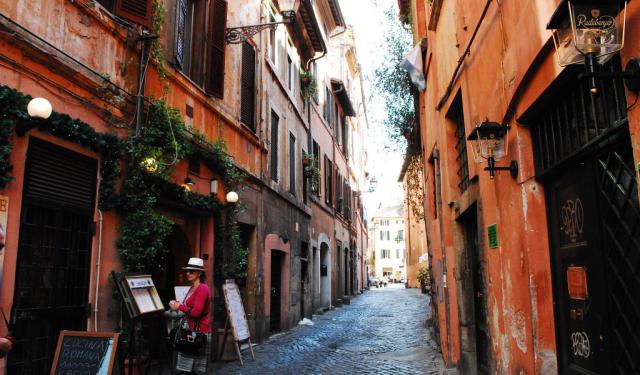
Trastevere Walking Tour
Heading down from the Vatican along the River Tiber, one is bound to find yet another city hidden within the city - Trastevere. This name translates literally to "across the Tiber". Indeed, crossing the picturesque Ponte Sisto (Sisto Bridge) to the west bank, you will find yourself in a charming neighborhood with a distinct character that sets it apart from any other part of Rome.
The... view more
Tour Duration: 2 Hours
Travel Distance: 3 Km or 1.9 Miles
The... view more
Tour Duration: 2 Hours
Travel Distance: 3 Km or 1.9 Miles
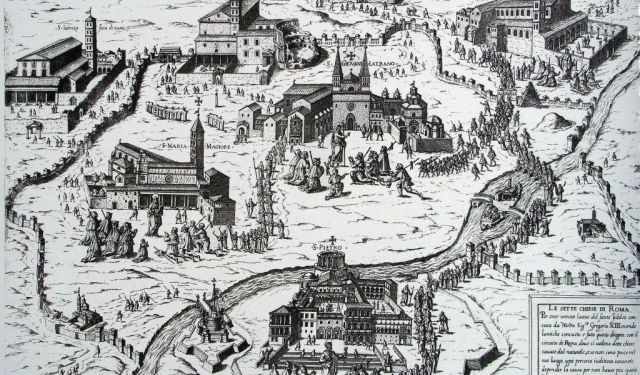
Seven Pilgrim Churches of Rome Walking Tour
Rome has long played host to pilgrims-after all, it's home to the Pope, the Catholic Curia, and a treasure trove of relics linked to apostles, saints, and martyrs. Back in the day, the Via Francigena provided a straight shot for the faithful traveling from England to Rome. Upon arrival, it was tradition to visit the tombs of Saints Peter and Paul. When a Jubilee rolled around, the spiritual... view more
Tour Duration: 6 Hours
Travel Distance: 17.4 Km or 10.8 Miles
Tour Duration: 6 Hours
Travel Distance: 17.4 Km or 10.8 Miles
Useful Travel Guides for Planning Your Trip
Souvenirs Shopping: 15 Authentic Italian Things To Buy in Rome
Rome is the Eternal City and, as such, the list of gift options available here is countless. Whether it's something edible, drinkable, wearable or pleasing to the eye that you want - you will find it all here in abundance. However, if time or budget is the factor, perhaps you might want to...
17 Best Gelaterias in Rome Italy
For ice cream lovers and dabblers this guide is a treasure chest of Rome’s best gelato shops. There are gelaterias everywhere. Many visitors to Rome only have a few days to explore the city. You owe it to yourself to make the most of your time and find the gelato locals eat. Often the authentic...
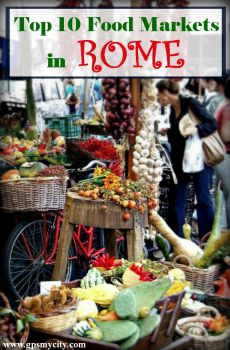
10 Best Food Markets in Rome Italy
Of all the things Italy is most famous for (cars, music, fashion, movies, etc.), food is, undoubtedly, top of the list. Rome may well not be the whole Italy, but no Italy is whole without Rome... And the Romans, much as all their fellow-Italians, like it "fresco", hence the abundance of...
City Walks Overview
