

Casa de Pilatos (Pilate's House), Seville (must see)
Pilate’s House is one of Seville’s most distinctive historic residences. Construction began in the late 15th century under the nobleman Pedro Enríquez de Quiñones and his wife, Catalina de Ribera, and was later expanded by their son, Don Fadrique Enríquez de Ribera. In October 1520, Fadrique returned from a journey to the Holy Land deeply influenced by Jerusalem. Soon after, he inaugurated in Seville the Holy Way of the Cross, tracing the path of Christ from Pontius Pilate’s praetorium to Calvary—symbolically marked here by a pillar in a field outside the city walls.
At the time, Fadrique’s residence was still under construction, and it came to be associated with Pilate’s house itself. Over time, the palace adopted the name Pilate’s House, as many believed it echoed the layout or spirit of the Roman governor’s residence in Jerusalem.
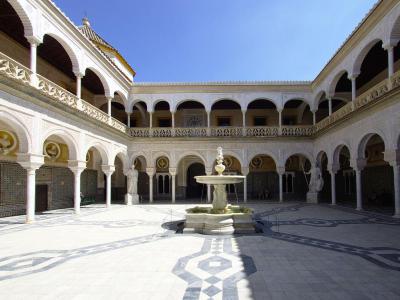
Architecturally, Pilate’s House is celebrated for its refined fusion of Italian Renaissance and Mudéjar styles. The marble Renaissance entrance gate opens onto a simple courtyard. As soon as you enter, look to your right at the slender white columns with red arches. Among the columns, there is a black door that leads to the heart of the palace – the Main Courtyard. Once you step into th e courtyard look into the corners of the gallery for four larger-than-life statues. The most impressive of them all is specifically the Athena, an original Greek sculpture from the 5th century BC, placed in the northeast corner of the gallery. Moreover, the courtyard's walls are covered in over 150 different patterns of Azulejo vibrant ceramic tiles from the 16th century. Last but not least, the arches are lined with 24 marble busts of Roman emperors.
Apart from the Main Courtyard, the Large Garden features manicured hedges and orange trees. The garden's focal point is the Loggia, an open-air gallery at the far end decorated with classical niches and frescoes, creating a peaceful space that feels more like a Renaissance Italy than southern Spain. To reach the garden, head toward the southwestern arched gallery of the Main Courtyard. Look for a large, ornate wooden door in the middle of this right-hand gallery. This leads to The Praetor’s Room. Just past the entrance to that room, you will see a large open gateway. Walk through this gate, and you will step directly into the sunlight of the Large Garden.
One of the artistic highlights is found in a room in the left wing of the tower, where a ceiling fresco by the Spanish painter Francisco Pacheco depicts the apotheosis of Hercules, celebrated in legend as the founder of Seville and Cádiz.
At the time, Fadrique’s residence was still under construction, and it came to be associated with Pilate’s house itself. Over time, the palace adopted the name Pilate’s House, as many believed it echoed the layout or spirit of the Roman governor’s residence in Jerusalem.
Architecturally, Pilate’s House is celebrated for its refined fusion of Italian Renaissance and Mudéjar styles. The marble Renaissance entrance gate opens onto a simple courtyard. As soon as you enter, look to your right at the slender white columns with red arches. Among the columns, there is a black door that leads to the heart of the palace – the Main Courtyard. Once you step into th e courtyard look into the corners of the gallery for four larger-than-life statues. The most impressive of them all is specifically the Athena, an original Greek sculpture from the 5th century BC, placed in the northeast corner of the gallery. Moreover, the courtyard's walls are covered in over 150 different patterns of Azulejo vibrant ceramic tiles from the 16th century. Last but not least, the arches are lined with 24 marble busts of Roman emperors.
Apart from the Main Courtyard, the Large Garden features manicured hedges and orange trees. The garden's focal point is the Loggia, an open-air gallery at the far end decorated with classical niches and frescoes, creating a peaceful space that feels more like a Renaissance Italy than southern Spain. To reach the garden, head toward the southwestern arched gallery of the Main Courtyard. Look for a large, ornate wooden door in the middle of this right-hand gallery. This leads to The Praetor’s Room. Just past the entrance to that room, you will see a large open gateway. Walk through this gate, and you will step directly into the sunlight of the Large Garden.
One of the artistic highlights is found in a room in the left wing of the tower, where a ceiling fresco by the Spanish painter Francisco Pacheco depicts the apotheosis of Hercules, celebrated in legend as the founder of Seville and Cádiz.
Want to visit this sight? Check out these Self-Guided Walking Tours in Seville. Alternatively, you can download the mobile app "GPSmyCity: Walks in 1K+ Cities" from Apple App Store or Google Play Store. The app turns your mobile device to a personal tour guide and it works offline, so no data plan is needed when traveling abroad.
Download The GPSmyCity App



Casa de Pilatos (Pilate's House) on Map
Sight Name: Casa de Pilatos (Pilate's House)
Sight Location: Seville, Spain (See walking tours in Seville)
Sight Type: Attraction/Landmark
Guide(s) Containing This Sight:
Sight Location: Seville, Spain (See walking tours in Seville)
Sight Type: Attraction/Landmark
Guide(s) Containing This Sight:
Nearby Sights



Walking Tours in Seville, Spain

Create Your Own Walk in Seville
Creating your own self-guided walk in Seville is easy and fun. Choose the city attractions that you want to see and a walk route map will be created just for you. You can even set your hotel as the start point of the walk.
Old Seville Walking Tour
In his famous book Don Quixote, Spanish writer Miguel de Cervantes referred to Seville as a city where the bustle of life never seemed to stop.
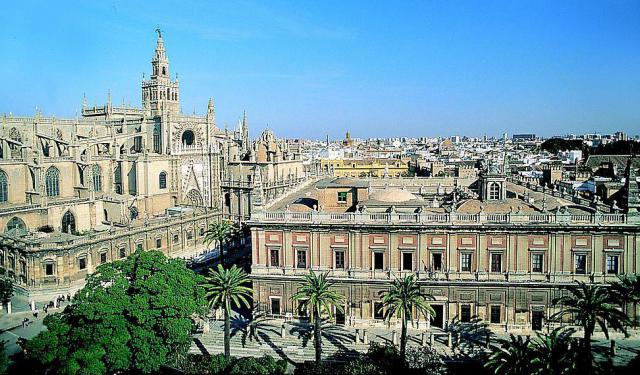
Old Seville, the historic heart of the Andalusian capital, reflects more than two thousand years of cultural layers. The area developed along the banks of the Guadalquivir River, which for centuries connected the city to the wider Mediterranean world.... view more
Tour Duration: 1 Hour(s)
Travel Distance: 2.4 Km or 1.5 Miles
Old Seville, the historic heart of the Andalusian capital, reflects more than two thousand years of cultural layers. The area developed along the banks of the Guadalquivir River, which for centuries connected the city to the wider Mediterranean world.... view more
Tour Duration: 1 Hour(s)
Travel Distance: 2.4 Km or 1.5 Miles

Flamenco Walking Tour
They say if it's Flamenco – it's Andalusia, and if it's Andalusia – it's all about Seville. Indeed, with its roots deeply embedded in the Andalusian culture, Seville is a prime destination for experiencing the essence of Flamenco and is largely considered to be the home of this fiery dance.
Flamenco sites are found all over the city – in bars, theaters, or specialized... view more
Tour Duration: 1 Hour(s)
Travel Distance: 2.7 Km or 1.7 Miles
Flamenco sites are found all over the city – in bars, theaters, or specialized... view more
Tour Duration: 1 Hour(s)
Travel Distance: 2.7 Km or 1.7 Miles
Seville Introduction Walking Tour
19th-century American writer Washington Irving noted that in Seville “the past lingers like perfume.”
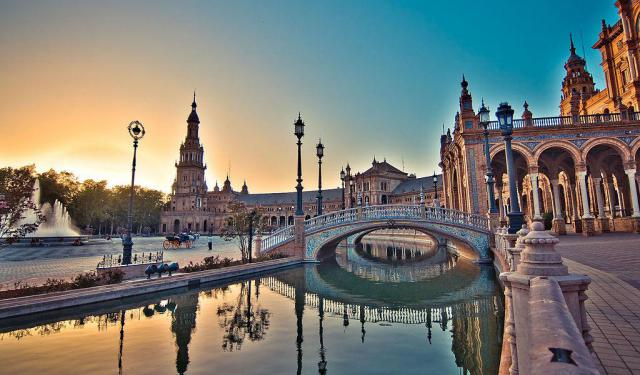
Seville is the largest city and provincial capital of Andalusia, located on the banks of the Guadalquivir River. Ancient tradition credits the city’s foundation to Hercules. Historically, early Phoenician settlers called the site Hisbaal, invoking the god Baal, a name later Latinised by... view more
Tour Duration: 2 Hour(s)
Travel Distance: 4.9 Km or 3 Miles
Seville is the largest city and provincial capital of Andalusia, located on the banks of the Guadalquivir River. Ancient tradition credits the city’s foundation to Hercules. Historically, early Phoenician settlers called the site Hisbaal, invoking the god Baal, a name later Latinised by... view more
Tour Duration: 2 Hour(s)
Travel Distance: 4.9 Km or 3 Miles
Useful Travel Guides for Planning Your Trip

16 Uniquely Spanish Things to Buy in Seville
Immortalized by Gioachino Rossini in his famous The Barber of Seville opera, the city of Seville is a major historic and cultural sight adorning the face of modern Spain. Much of the city's character is reflected in the locally-made products that can make for a great gift or trip memento...