

Audio Guide: Seville's Top Attractions Walking Tour (Self Guided), Seville
19th-century American writer Washington Irving noted that in Seville “the past lingers like perfume.”
Seville is the largest city and provincial capital of Andalusia, located on the banks of the Guadalquivir River. Ancient tradition credits the city’s foundation to Hercules. Historically, early Phoenician settlers called the site Hisbaal, invoking the god Baal, a name later Latinised by the Romans as Hispalis. From this evolved the modern names Sevilla in Spanish and Seville in English.
Under Roman rule, Seville prospered as a river port exporting olive oil and agricultural goods across the empire. After Rome’s decline, the Visigoths made Seville an important religious and intellectual centre, closely associated with Isidore of Seville, whose writings helped transmit classical knowledge to medieval Europe.
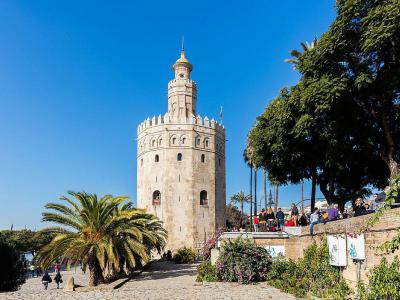
A major turning point came in 711 AD, when Seville fell under Muslim rule and became known as Ishbiliyah. As part of Al-Andalus, the city expanded significantly, particularly during the Almohad period in the 12th century. Defensive walls, gates, and monumental buildings reshaped the urban fabric. The Gold Tower, a riverside watchtower, was expanded to three levels to control river traffic and defend the port.
In 1248, Seville was captured by Ferdinand III of Castile and incorporated into the Christian kingdom. The city’s development accelerated under Castilian rule. Mosques were converted into churches, and new public buildings rose in Gothic and Mudéjar styles, blending Christian and Islamic artistic traditions.
Seville’s greatest period of prosperity followed the voyages of Christopher Columbus in 1492. Granted monopoly control over trade with the Americas, the city entered its Golden Age, becoming one of Europe’s richest and most influential ports. Wealth from across the Atlantic transformed Seville’s architecture, art, and social life. This dominance faded in the 17th century, when plague, flooding, and shifting colonial realities brought economic decline.
Recovery came slowly, but by the late 20th century Seville experienced a construction boom greater than any before, reshaping the modern city. Today, Seville is defined by the accumulation of its layers—Phoenician, Roman, Islamic, Christian, and imperial.
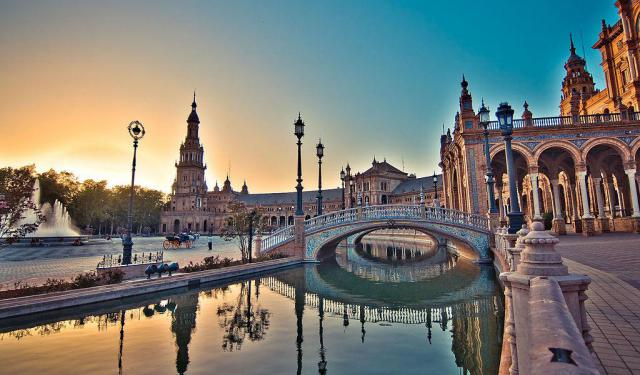
Walking through Seville’s historic centre means moving between narrow Moorish streets, sunlit plazas, and monumental landmarks. You pass Seville Cathedral and the Giralda Tower, step into the intricate courtyards of the Royal Palace, and catch glimpses of the Gold Tower along the river. Orange trees line small squares, tile-covered façades catch the light, and church bells mingle with flamenco rhythms, as Roman, Islamic, Gothic, and Baroque layers unfold within a few steps.
And as Irving observed, that past never quite disappears—it lingers in the air, carried from one street to the next, waiting to be followed on foot.
Seville is the largest city and provincial capital of Andalusia, located on the banks of the Guadalquivir River. Ancient tradition credits the city’s foundation to Hercules. Historically, early Phoenician settlers called the site Hisbaal, invoking the god Baal, a name later Latinised by the Romans as Hispalis. From this evolved the modern names Sevilla in Spanish and Seville in English.
Under Roman rule, Seville prospered as a river port exporting olive oil and agricultural goods across the empire. After Rome’s decline, the Visigoths made Seville an important religious and intellectual centre, closely associated with Isidore of Seville, whose writings helped transmit classical knowledge to medieval Europe.
A major turning point came in 711 AD, when Seville fell under Muslim rule and became known as Ishbiliyah. As part of Al-Andalus, the city expanded significantly, particularly during the Almohad period in the 12th century. Defensive walls, gates, and monumental buildings reshaped the urban fabric. The Gold Tower, a riverside watchtower, was expanded to three levels to control river traffic and defend the port.
In 1248, Seville was captured by Ferdinand III of Castile and incorporated into the Christian kingdom. The city’s development accelerated under Castilian rule. Mosques were converted into churches, and new public buildings rose in Gothic and Mudéjar styles, blending Christian and Islamic artistic traditions.
Seville’s greatest period of prosperity followed the voyages of Christopher Columbus in 1492. Granted monopoly control over trade with the Americas, the city entered its Golden Age, becoming one of Europe’s richest and most influential ports. Wealth from across the Atlantic transformed Seville’s architecture, art, and social life. This dominance faded in the 17th century, when plague, flooding, and shifting colonial realities brought economic decline.
Recovery came slowly, but by the late 20th century Seville experienced a construction boom greater than any before, reshaping the modern city. Today, Seville is defined by the accumulation of its layers—Phoenician, Roman, Islamic, Christian, and imperial.
Walking through Seville’s historic centre means moving between narrow Moorish streets, sunlit plazas, and monumental landmarks. You pass Seville Cathedral and the Giralda Tower, step into the intricate courtyards of the Royal Palace, and catch glimpses of the Gold Tower along the river. Orange trees line small squares, tile-covered façades catch the light, and church bells mingle with flamenco rhythms, as Roman, Islamic, Gothic, and Baroque layers unfold within a few steps.
And as Irving observed, that past never quite disappears—it lingers in the air, carried from one street to the next, waiting to be followed on foot.
How it works: Download the app "GPSmyCity: Walks in 1K+ Cities" from Apple App Store or Google Play Store to your mobile phone or tablet. The app turns your mobile device into a personal tour guide and its built-in GPS navigation functions guide you from one tour stop to next. The app works offline, so no data plan is needed when traveling abroad.
Download The GPSmyCity App



Seville's Top Attractions Walking Tour Map
Guide Name: Seville's Top Attractions Walking Tour
Guide Location: Spain » Seville (See other walking tours in Seville)
Guide Type: Self-guided Walking Tour (Sightseeing)
Tour Duration: 2 Hour(s)
Travel Distance: 4.9 Km or 3 Miles
Guide Location: Spain » Seville (See other walking tours in Seville)
Guide Type: Self-guided Walking Tour (Sightseeing)
Tour Duration: 2 Hour(s)
Travel Distance: 4.9 Km or 3 Miles
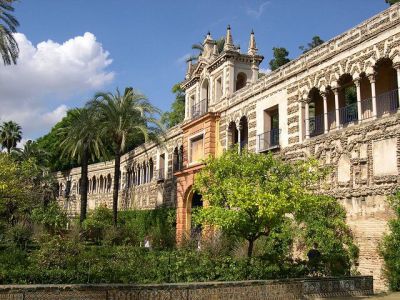
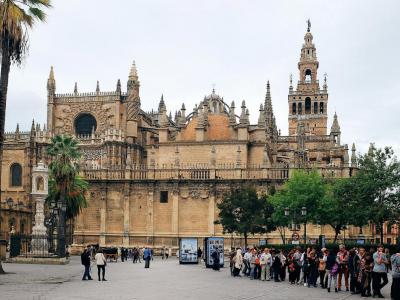
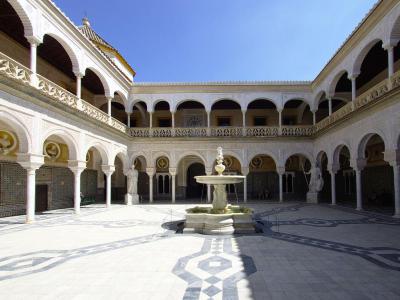
Sights Featured in This Walk
Walking Tours in Seville, Spain

Create Your Own Walk in Seville
Creating your own self-guided walk in Seville is easy and fun. Choose the city attractions that you want to see and a walk route map will be created just for you. You can even set your hotel as the start point of the walk.
Flamenco Walking Tour
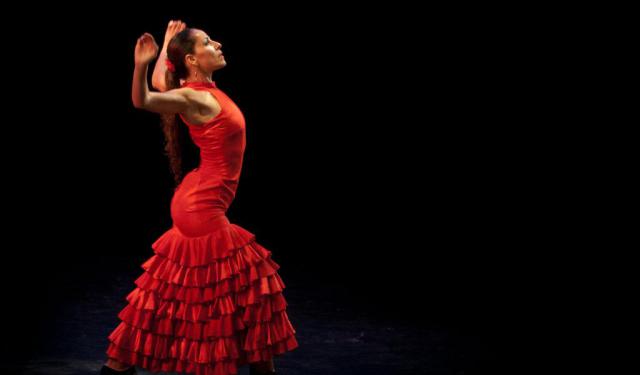
They say if it's Flamenco – it's Andalusia, and if it's Andalusia – it's all about Seville. Indeed, with its roots deeply embedded in the Andalusian culture, Seville is a prime destination for experiencing the essence of Flamenco and is largely considered to be the home of this fiery dance.
Flamenco sites are found all over the city – in bars, theaters, or specialized... view more
Tour Duration: 1 Hour(s)
Travel Distance: 2.7 Km or 1.7 Miles
Flamenco sites are found all over the city – in bars, theaters, or specialized... view more
Tour Duration: 1 Hour(s)
Travel Distance: 2.7 Km or 1.7 Miles
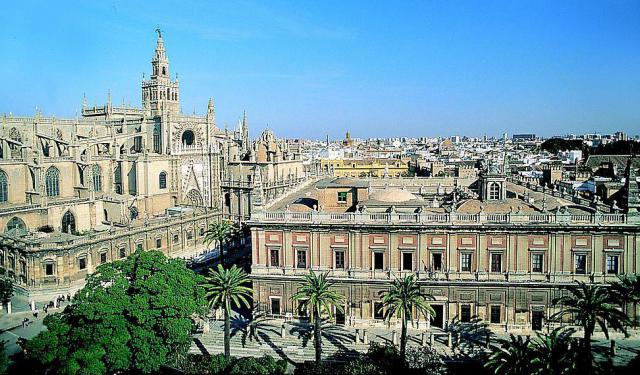
Seville's Old Town Walking Tour
In his famous book Don Quixote, Spanish writer Miguel de Cervantes referred to Seville as a city where the bustle of life never seemed to stop.
Old Seville, the historic heart of the Andalusian capital, reflects more than two thousand years of cultural layers. The area developed along the banks of the Guadalquivir River, which for centuries connected the city to the wider Mediterranean world.... view more
Tour Duration: 1 Hour(s)
Travel Distance: 2.4 Km or 1.5 Miles
Old Seville, the historic heart of the Andalusian capital, reflects more than two thousand years of cultural layers. The area developed along the banks of the Guadalquivir River, which for centuries connected the city to the wider Mediterranean world.... view more
Tour Duration: 1 Hour(s)
Travel Distance: 2.4 Km or 1.5 Miles
Useful Travel Guides for Planning Your Trip

16 Uniquely Spanish Things to Buy in Seville
Immortalized by Gioachino Rossini in his famous The Barber of Seville opera, the city of Seville is a major historic and cultural sight adorning the face of modern Spain. Much of the city's character is reflected in the locally-made products that can make for a great gift or trip memento...
The Most Popular Cities
/ view all