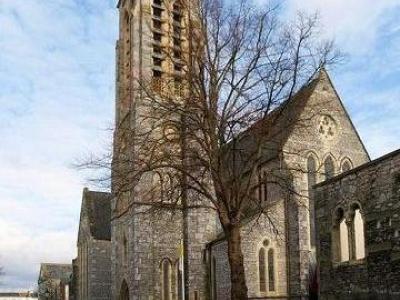


Cathedral Church of St. Mary and St. Boniface, Plymouth
The Cathedral Church of Saint Mary and Saint Boniface in Plymouth, England, serves as the seat of the Bishop of Plymouth and is the mother church of the Roman Catholic Diocese of Plymouth. The cathedral, dedicated to the Virgin Mary and Saint Boniface, the latter believed to have been born in Crediton within the diocese, was officially opened in 1858.
Before the construction of the current cathedral, the small church of Saint Mary, built in 1807 on Saint Mary Street, functioned as the Pro-cathedral. With Catholic emancipation in 1850, Plymouth became the center of the diocese, and George Errington, a Yorkshire native known for his pastoral visits to Dartmoor Prison, was consecrated as the first Bishop of Plymouth on 25 July 1851.
Bishop Vaughan initiated the construction of a proper cathedral to replace the Pro-cathedral. He acquired land on the outskirts of Plymouth on 20 February 1856, and construction commenced on 22 June. The architects Joseph Hansom and Charles Hansom designed the cathedral, which was built by local workers from Stonehouse. A noteworthy event during the early phase of construction was the firing of new Turkish Man-of-war guns in Plymouth Sound by a Royal Navy officer, which caused subsidence. The cathedral was completed and opened for Mass on 25 March 1858, the Feast of the Annunciation, and was consecrated by Bishop Vaughan on 22 September 1880.
The cathedral holds special significance for Royal Navy personnel stationed at HMNB Devonport, who attend an annual naval mass each July. Historically, before the Reformation, Exeter Cathedral was the seat for bishops overseeing all of Devon and Cornwall. The establishment of the Diocese of Plymouth marked a new chapter for the Catholic Church in the region.
The Cathedral Church of Saint Mary and Saint Boniface stands as a symbol of resilience, devotion, and the rich history of Catholicism in southwest England.
Before the construction of the current cathedral, the small church of Saint Mary, built in 1807 on Saint Mary Street, functioned as the Pro-cathedral. With Catholic emancipation in 1850, Plymouth became the center of the diocese, and George Errington, a Yorkshire native known for his pastoral visits to Dartmoor Prison, was consecrated as the first Bishop of Plymouth on 25 July 1851.
Bishop Vaughan initiated the construction of a proper cathedral to replace the Pro-cathedral. He acquired land on the outskirts of Plymouth on 20 February 1856, and construction commenced on 22 June. The architects Joseph Hansom and Charles Hansom designed the cathedral, which was built by local workers from Stonehouse. A noteworthy event during the early phase of construction was the firing of new Turkish Man-of-war guns in Plymouth Sound by a Royal Navy officer, which caused subsidence. The cathedral was completed and opened for Mass on 25 March 1858, the Feast of the Annunciation, and was consecrated by Bishop Vaughan on 22 September 1880.
The cathedral holds special significance for Royal Navy personnel stationed at HMNB Devonport, who attend an annual naval mass each July. Historically, before the Reformation, Exeter Cathedral was the seat for bishops overseeing all of Devon and Cornwall. The establishment of the Diocese of Plymouth marked a new chapter for the Catholic Church in the region.
The Cathedral Church of Saint Mary and Saint Boniface stands as a symbol of resilience, devotion, and the rich history of Catholicism in southwest England.
Want to visit this sight? Check out these Self-Guided Walking Tours in Plymouth. Alternatively, you can download the mobile app "GPSmyCity: Walks in 1K+ Cities" from Apple App Store or Google Play Store. The app turns your mobile device to a personal tour guide and it works offline, so no data plan is needed when traveling abroad.
Download The GPSmyCity App



Cathedral Church of St. Mary and St. Boniface on Map
Sight Name: Cathedral Church of St. Mary and St. Boniface
Sight Location: Plymouth, England (See walking tours in Plymouth)
Sight Type: Religious
Sight Location: Plymouth, England (See walking tours in Plymouth)
Sight Type: Religious
Nearby Sights




Walking Tours in Plymouth, England

Create Your Own Walk in Plymouth
Creating your own self-guided walk in Plymouth is easy and fun. Choose the city attractions that you want to see and a walk route map will be created just for you. You can even set your hotel as the start point of the walk.

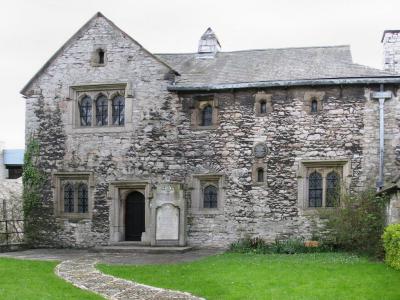
Walking Along Plymouth's Pilgrim Fathers Trail
Back in the early 17th century, a group of English Puritans - nowadays reverently referred to as the Pilgrim Fathers - fled religious persecution in their homeland and established a colony in North America that later became known as Plymouth, Massachusetts. The Pilgrims embarked on their perilous journey across the Atlantic from Plymouth, England in 1620 aboard a ship called the Mayflower, which... view more
Tour Duration: 1 Hour
Travel Distance: 0.6 Km or 0.4 Miles
Tour Duration: 1 Hour
Travel Distance: 0.6 Km or 0.4 Miles
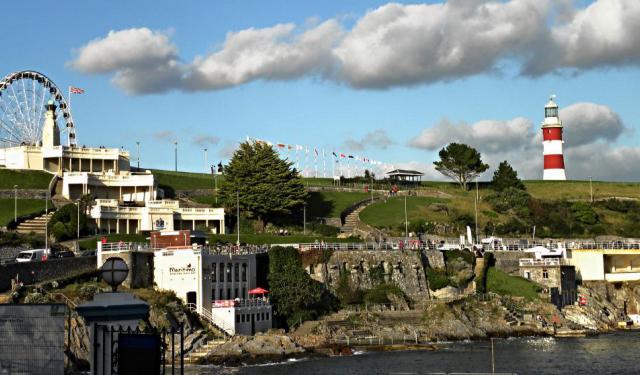
Plymouth Hoe Walking Tour
Plymouth Hoe, referred to locally as the Hoe, is a large south-facing open public space in Plymouth with commanding views of Plymouth Sound, Drake's Island, and further afield into Cornwall. The name derives from the Anglo-Saxon word hoh, which means a sloping ridge shaped like an inverted foot and heel.
This part of town has always been a meeting place, where people would come regularly... view more
Tour Duration: 1 Hour
Travel Distance: 0.7 Km or 0.4 Miles
This part of town has always been a meeting place, where people would come regularly... view more
Tour Duration: 1 Hour
Travel Distance: 0.7 Km or 0.4 Miles
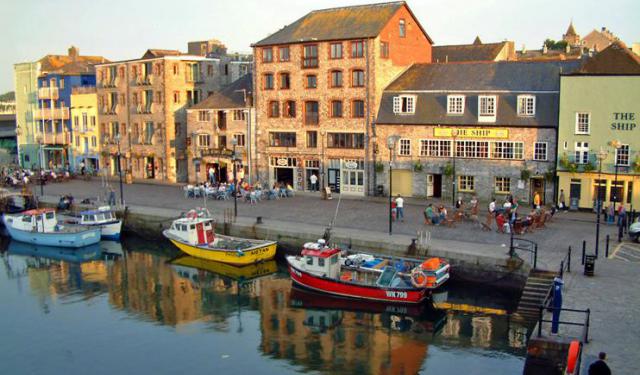
Plymouth Old Town Walking Tour
Plymouth's early history began in the Bronze Age when the first settlement emerged at Mount Batten. It is mentioned in Ptolemy's Geographia as a maritime outpost exporting bronze mirrors.
The settlement was a major port in the southwest of England in Roman times. It was surpassed as a port in the ninth century by the nearby wealthier village of Sutton, later called Plymouth.... view more
Tour Duration: 1 Hour
Travel Distance: 1.8 Km or 1.1 Miles
The settlement was a major port in the southwest of England in Roman times. It was surpassed as a port in the ninth century by the nearby wealthier village of Sutton, later called Plymouth.... view more
Tour Duration: 1 Hour
Travel Distance: 1.8 Km or 1.1 Miles
City Walks Overview
