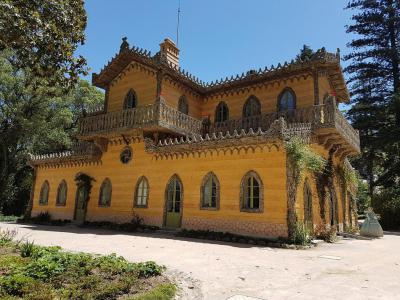


Chalet and Garden of the Countess of Edla, Sintra
The Chalet and Garden of the Countess of Edla, also known as the Casa do Regalo, is a charming architectural and botanical gem nestled within the Sintra Cultural Landscape in Portugal. Situated on the western side of the park surrounding the iconic Pena Palace, this site forms part of the UNESCO World Heritage-listed Sintra Cultural Landscape and the Sintra-Cascais Natural Park.
Constructed between 1864 and 1869, the Chalet was a personal retreat built for King Fernando II and his second wife, Elise Hensler, the Countess of Edla. Their love story, marked by artistic collaboration and controversy, adds a romantic aura to the site. Elise, a Swiss-born opera singer who became an American citizen, caught the king’s eye during a performance at Lisbon’s São Carlos National Theatre. Despite societal opposition, they married in 1869 after Fernando secured a noble title for Elise from his cousin, Duke Ernest II of Saxe-Coburg and Gotha.
Designed in the style of a Swiss chalet, a popular architectural trend of the era, the building was planned by Elise herself and constructed without formal blueprints, which later posed challenges for restorers. Its unique facade and interiors reflect the couple's artistic sensibilities. The surrounding garden features a stunning variety of flora, including rhododendrons, camellias, azaleas, and ferns sourced from Australia and New Zealand.
After King Fernando died in 1885, the Chalet became embroiled in legal and political disputes. While Elise inherited the king’s possessions, including the Pena Palace and Moorish Castle, the Portuguese state acquired these properties, allowing Elise to retain the use of the Chalet and its garden until 1904. Known for her cultural patronage, Elise supported local charities and artists until she died in 1929.
The Chalet was tragically destroyed by fire in 1999 but underwent meticulous restoration led by Parques de Sintra. Reopened in 2011, the project earned the prestigious Europa Nostra Award for Conservation in 2013, reaffirming its status as a site of significant cultural, historical, and artistic importance. Today, the Chalet and Garden of the Countess of Edla stand as a testament to romanticism, art, and love in the heart of Sintra’s magical landscape.
Constructed between 1864 and 1869, the Chalet was a personal retreat built for King Fernando II and his second wife, Elise Hensler, the Countess of Edla. Their love story, marked by artistic collaboration and controversy, adds a romantic aura to the site. Elise, a Swiss-born opera singer who became an American citizen, caught the king’s eye during a performance at Lisbon’s São Carlos National Theatre. Despite societal opposition, they married in 1869 after Fernando secured a noble title for Elise from his cousin, Duke Ernest II of Saxe-Coburg and Gotha.
Designed in the style of a Swiss chalet, a popular architectural trend of the era, the building was planned by Elise herself and constructed without formal blueprints, which later posed challenges for restorers. Its unique facade and interiors reflect the couple's artistic sensibilities. The surrounding garden features a stunning variety of flora, including rhododendrons, camellias, azaleas, and ferns sourced from Australia and New Zealand.
After King Fernando died in 1885, the Chalet became embroiled in legal and political disputes. While Elise inherited the king’s possessions, including the Pena Palace and Moorish Castle, the Portuguese state acquired these properties, allowing Elise to retain the use of the Chalet and its garden until 1904. Known for her cultural patronage, Elise supported local charities and artists until she died in 1929.
The Chalet was tragically destroyed by fire in 1999 but underwent meticulous restoration led by Parques de Sintra. Reopened in 2011, the project earned the prestigious Europa Nostra Award for Conservation in 2013, reaffirming its status as a site of significant cultural, historical, and artistic importance. Today, the Chalet and Garden of the Countess of Edla stand as a testament to romanticism, art, and love in the heart of Sintra’s magical landscape.
Want to visit this sight? Check out these Self-Guided Walking Tours in Sintra. Alternatively, you can download the mobile app "GPSmyCity: Walks in 1K+ Cities" from Apple App Store or Google Play Store. The app turns your mobile device to a personal tour guide and it works offline, so no data plan is needed when traveling abroad.
Download The GPSmyCity App



Chalet and Garden of the Countess of Edla on Map
Sight Name: Chalet and Garden of the Countess of Edla
Sight Location: Sintra, Portugal (See walking tours in Sintra)
Sight Type: Attraction/Landmark
Sight Location: Sintra, Portugal (See walking tours in Sintra)
Sight Type: Attraction/Landmark
Nearby Sights

Walking Tours in Sintra, Portugal

Create Your Own Walk in Sintra
Creating your own self-guided walk in Sintra is easy and fun. Choose the city attractions that you want to see and a walk route map will be created just for you. You can even set your hotel as the start point of the walk.
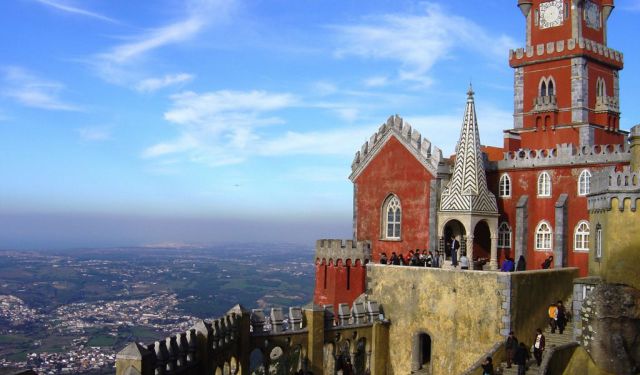
Pena Palace and Moorish Castle Tour
A charming little township on the outskirts of Lisbon, Sintra is a place where there's something for everyone. As if straight out of a fairy tale, this area is a home to several magnificent castles, palaces and gardens, the grandiosity of which fits for a king; and it has been a firm favorite of Portuguese royals since the late 15th century.
The diversity of styles found here is rich -... view more
Tour Duration: 2 Hours
Travel Distance: 3.5 Km or 2.2 Miles
The diversity of styles found here is rich -... view more
Tour Duration: 2 Hours
Travel Distance: 3.5 Km or 2.2 Miles
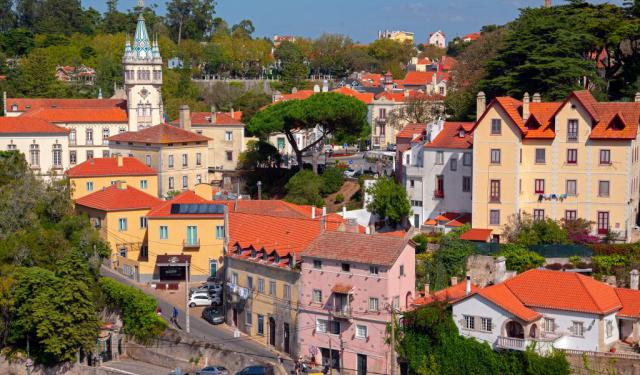
Sintra Introduction Walking Tour
Traces of humanity in Sintra date back to Paleolithic times. At an open air site near the church of Sao Pedro de Canaferrim and the Moorish Castle there were found ceramics from 5,000 BC. The name Sintra is indo-European. It means "bright star" or "sun." Romans called the place "sacred mountain." Ptolemy called it "mountains of the moon."
In 1147 the... view more
Tour Duration: 1 Hour
Travel Distance: 2 Km or 1.2 Miles
In 1147 the... view more
Tour Duration: 1 Hour
Travel Distance: 2 Km or 1.2 Miles
City Walks Overview
