

Cheong Fatt Tze - The Blue Mansion, George Town (must see)
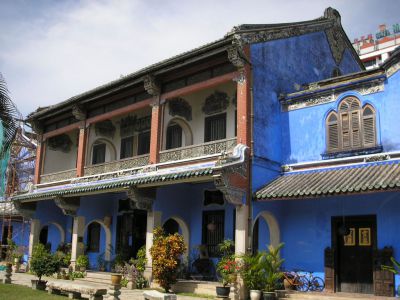
Cheong Fatt Tze’s residence is better known as the Blue Mansion, a name inspired by its indigo-blue limewashed walls. Cheong rose from poverty after leaving Guangdong during the upheaval of the Second Opium War and built a commercial empire across Southeast Asia, earning the nickname “Rockefeller of the East.” An industrialist, politician and philanthropist, he commissioned the mansion at 43 Leith Street as a family residence, business headquarters and administrative office.
Construction began in 1897 and was completed in 1904. The two-storey mansion contains 38 rooms, five granite-paved courtyards, seven staircases and 220 timber-louvred windows. Its design combines the bilateral symmetry of a traditional Chinese courtyard house with European materials and decorative styles. Gothic details appear alongside Chinese motifs, creating one of George Town’s most elaborate examples of eclectic architecture.
Start exploring the mansion by stepping through the main wooden entrance gates into the reception hall, where mother-of-pearl inlaid chairs and gilded timber screens line the traditional Chinese reception area.
The mansion's layout was also carefully planned according to feng shui principles. Open courtyards admit daylight, encourage ventilation and collect rainwater, while the arrangement of rooms was intended to promote harmony and prosperity.
For the next highlight, go past the entrance hall's timber partitions into the central open-air courtyard, surrounded by Scottish cast-iron columns and granite paving designed to collect rainwater.
To reach the next level, step out of the courtyard into the covered side wings, where you can take either of the two ornamental wooden staircases up to the second floor. There, the space opens onto an upper balcony gallery, featuring geometric Stoke-on-Trent floor tiles and Scottish Art Nouveau stained-glass windows.
After Cheong’s death in 1916, the property declined and was divided among numerous tenants. It was purchased from his descendants in 1989 and restored during the 1990s. The conservation project later received a UNESCO Asia-Pacific Heritage Conservation Award.
Today, the Blue Mansion operates as a boutique hotel and museum, with selected rooms and courtyards accessible on tours. Its Indigo restaurant occupies part of the property. The mansion has appeared in numerous films and television programmes, including Indochine and Crazy Rich Asians, although its indigo façade, courtyards and richly furnished interiors remain its main attractions.
Construction began in 1897 and was completed in 1904. The two-storey mansion contains 38 rooms, five granite-paved courtyards, seven staircases and 220 timber-louvred windows. Its design combines the bilateral symmetry of a traditional Chinese courtyard house with European materials and decorative styles. Gothic details appear alongside Chinese motifs, creating one of George Town’s most elaborate examples of eclectic architecture.
Start exploring the mansion by stepping through the main wooden entrance gates into the reception hall, where mother-of-pearl inlaid chairs and gilded timber screens line the traditional Chinese reception area.
The mansion's layout was also carefully planned according to feng shui principles. Open courtyards admit daylight, encourage ventilation and collect rainwater, while the arrangement of rooms was intended to promote harmony and prosperity.
For the next highlight, go past the entrance hall's timber partitions into the central open-air courtyard, surrounded by Scottish cast-iron columns and granite paving designed to collect rainwater.
To reach the next level, step out of the courtyard into the covered side wings, where you can take either of the two ornamental wooden staircases up to the second floor. There, the space opens onto an upper balcony gallery, featuring geometric Stoke-on-Trent floor tiles and Scottish Art Nouveau stained-glass windows.
After Cheong’s death in 1916, the property declined and was divided among numerous tenants. It was purchased from his descendants in 1989 and restored during the 1990s. The conservation project later received a UNESCO Asia-Pacific Heritage Conservation Award.
Today, the Blue Mansion operates as a boutique hotel and museum, with selected rooms and courtyards accessible on tours. Its Indigo restaurant occupies part of the property. The mansion has appeared in numerous films and television programmes, including Indochine and Crazy Rich Asians, although its indigo façade, courtyards and richly furnished interiors remain its main attractions.
Want to visit this sight? Check out these Self-Guided Walking Tours in George Town. Alternatively, you can download the mobile app "GPSmyCity: Walks in 1K+ Cities" from Apple App Store or Google Play Store. The app turns your mobile device to a personal tour guide and it works offline, so no data plan is needed when traveling abroad.
Download The GPSmyCity App



Cheong Fatt Tze - The Blue Mansion on Map
Sight Name: Cheong Fatt Tze - The Blue Mansion
Sight Location: George Town, Malaysia (See walking tours in George Town)
Sight Type: Attraction/Landmark
Guide(s) Containing This Sight:
Sight Location: George Town, Malaysia (See walking tours in George Town)
Sight Type: Attraction/Landmark
Guide(s) Containing This Sight:
Nearby Sights

Walking Tours in George Town, Malaysia

Create Your Own Walk in George Town
Creating your own self-guided walk in George Town is easy and fun. Choose the city attractions that you want to see and a walk route map will be created just for you. You can even set your hotel as the start point of the walk.
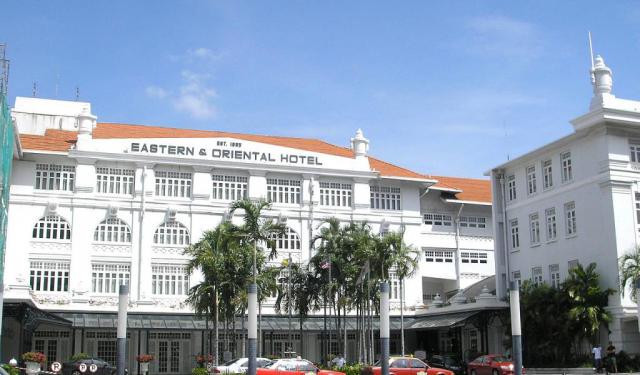
Farquhar Street Walking Tour
A street can carry the same name for more than two centuries and still be associated with the wrong person. Farquhar Street is often linked to William Farquhar, the first Resident of Singapore, but it was actually named during or shortly after the 1804-1805 administration of Robert Townsend Farquhar.
One of the oldest roads in George Town’s colonial quarter, Farquhar Street was laid out... view more
Tour Duration: 2 Hours
Travel Distance: 2.4 Km or 1.5 Miles
One of the oldest roads in George Town’s colonial quarter, Farquhar Street was laid out... view more
Tour Duration: 2 Hours
Travel Distance: 2.4 Km or 1.5 Miles
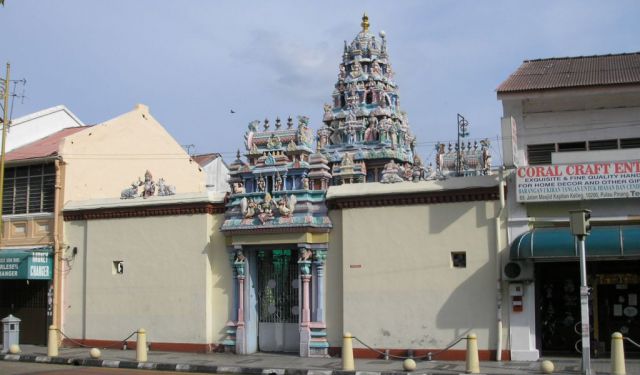
George Town's Historical Religious Buildings
George Town, Malaysia, has much to be proud of when it comes to religious heritage. The city boasts a plethora of wonderful churches, temples, mosques, and other religious sites - each beautifully decorated and with its own unique story. Follow us on this self-guided walk and see some of them up close.
We start at the Acheen Street Mosque. Dating back to the early 19th century, this is one of... view more
Tour Duration: 1 Hour
Travel Distance: 1.8 Km or 1.1 Miles
We start at the Acheen Street Mosque. Dating back to the early 19th century, this is one of... view more
Tour Duration: 1 Hour
Travel Distance: 1.8 Km or 1.1 Miles
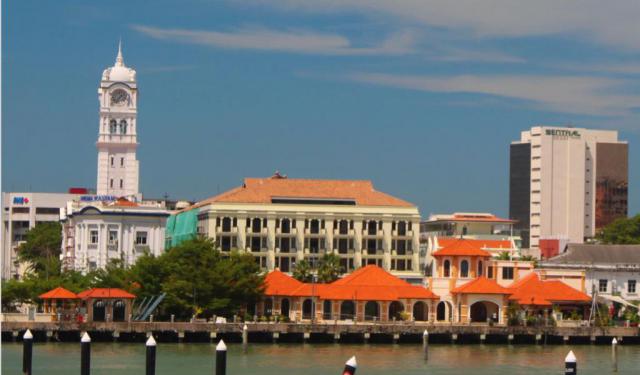
George Town Historic City Center Walking Tour
British traveller Isabella Bird was struck by George Town’s “blaze of color” even before she reached the shore. She was among the fortunate visitors who witnessed the city’s multicultural character first-hand.
George Town occupies the northeastern cape of Penang Island, an area that historically belonged to the Sultanate of Kedah. Before British rule, the locality was known as Tanjung... view more
Tour Duration: 2 Hours
Travel Distance: 3.5 Km or 2.2 Miles
George Town occupies the northeastern cape of Penang Island, an area that historically belonged to the Sultanate of Kedah. Before British rule, the locality was known as Tanjung... view more
Tour Duration: 2 Hours
Travel Distance: 3.5 Km or 2.2 Miles