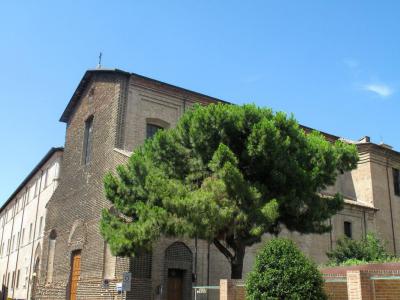


Chiesa del Suffragio (Suffragio Church), Rimini
The Suffragio Church, officially named the Church of San Francesco Saverio, is a Catholic church located in the historic center of Rimini. Established in the early 18th century by the Jesuits, it stands as a testament to the Baroque architectural influence and the Jesuits' significant presence in the city.
The Jesuits arrived in Rimini in 1627 and initially founded a modest church in 1631, repurposing a former granary generously donated by a local benefactor. By 1655, with the financial support of Cesare Galli, an apostolic prothonotary, the order envisioned a new church inspired by the grandeur of Rome’s Church of the Gesù. Construction began in 1719, and the main structure was completed by 1721, though the stone façade remained unfinished due to the Jesuit suppression.
The design of the church has been attributed to several architects, including Giovan Francesco Buonamici, Count Francesco Garampi, and Alfonso Torreggiani. Torreggiani is also credited with designing the adjacent Jesuit college between 1746 and 1755. The church features a Latin cross floor plan with a single nave and side chapels, embodying the Baroque aesthetic. Its interior houses a Zanin organ, which underwent restoration in 2007.
Tragically, the Suffragio Church suffered extensive damage during World War II due to Allied bombing but was carefully reconstructed in the post-war period.
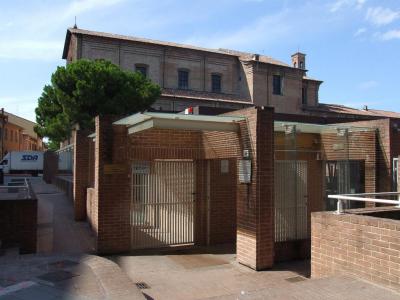
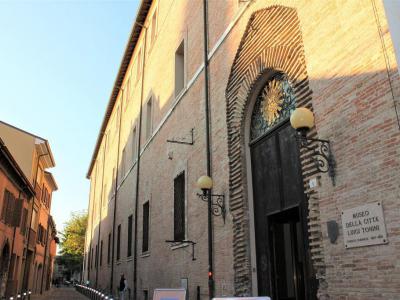
The adjoining college, which served as a hospital for over a century, has housed the Museum of the City of Rimini since 1981, further enriching the cultural legacy of the site. Today, the Suffragio Church remains an enduring symbol of Rimini’s historical and architectural heritage.
The Jesuits arrived in Rimini in 1627 and initially founded a modest church in 1631, repurposing a former granary generously donated by a local benefactor. By 1655, with the financial support of Cesare Galli, an apostolic prothonotary, the order envisioned a new church inspired by the grandeur of Rome’s Church of the Gesù. Construction began in 1719, and the main structure was completed by 1721, though the stone façade remained unfinished due to the Jesuit suppression.
The design of the church has been attributed to several architects, including Giovan Francesco Buonamici, Count Francesco Garampi, and Alfonso Torreggiani. Torreggiani is also credited with designing the adjacent Jesuit college between 1746 and 1755. The church features a Latin cross floor plan with a single nave and side chapels, embodying the Baroque aesthetic. Its interior houses a Zanin organ, which underwent restoration in 2007.
Tragically, the Suffragio Church suffered extensive damage during World War II due to Allied bombing but was carefully reconstructed in the post-war period.
The adjoining college, which served as a hospital for over a century, has housed the Museum of the City of Rimini since 1981, further enriching the cultural legacy of the site. Today, the Suffragio Church remains an enduring symbol of Rimini’s historical and architectural heritage.
Want to visit this sight? Check out these Self-Guided Walking Tours in Rimini. Alternatively, you can download the mobile app "GPSmyCity: Walks in 1K+ Cities" from Apple App Store or Google Play Store. The app turns your mobile device to a personal tour guide and it works offline, so no data plan is needed when traveling abroad.
Download The GPSmyCity App



Chiesa del Suffragio (Suffragio Church) on Map
Sight Name: Chiesa del Suffragio (Suffragio Church)
Sight Location: Rimini, Italy (See walking tours in Rimini)
Sight Type: Religious
Sight Location: Rimini, Italy (See walking tours in Rimini)
Sight Type: Religious
Nearby Sights


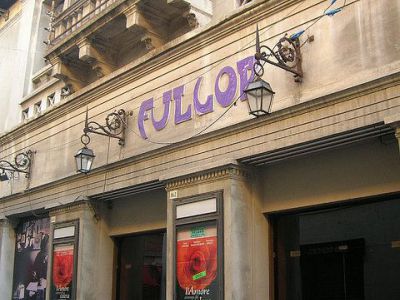

Walking Tours in Rimini, Italy

Create Your Own Walk in Rimini
Creating your own self-guided walk in Rimini is easy and fun. Choose the city attractions that you want to see and a walk route map will be created just for you. You can even set your hotel as the start point of the walk.
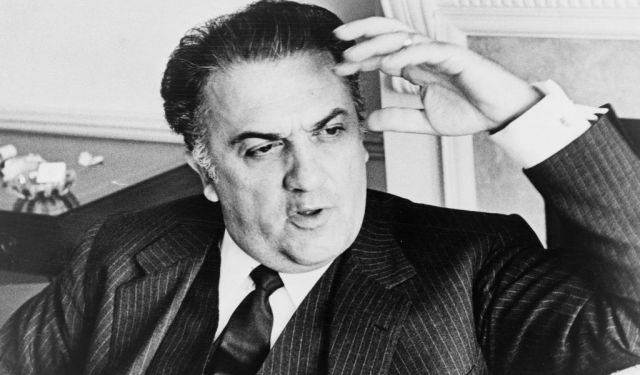
Discover Rimini's Federico Fellini Sites on Foot
Even those vaguely familiar with cinema perhaps have heard of Federico Fellini. In recent history, the picturesque resort town of Rimini, on the Adriatic coast of Italy, "marked" itself primarily as the birthplace and the final resting place of this great film director.
Fellini lived in Rimini from January 1920, when he was born, until January 1939, when he moved out to Rome. While... view more
Tour Duration: 2 Hours
Travel Distance: 3.4 Km or 2.1 Miles
Fellini lived in Rimini from January 1920, when he was born, until January 1939, when he moved out to Rome. While... view more
Tour Duration: 2 Hours
Travel Distance: 3.4 Km or 2.1 Miles
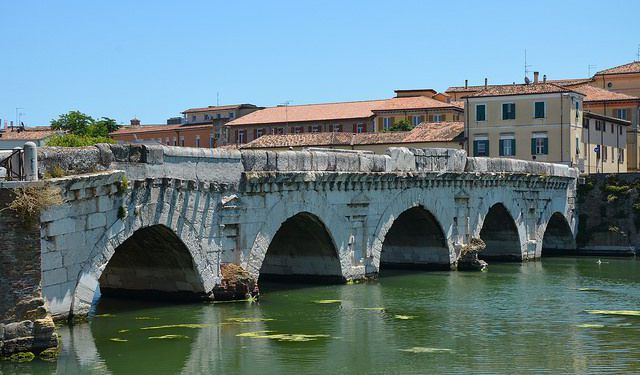
Rimini's Historic Old Town Walking Tour
The Roman Republic founded an outpost called Ariminus at the mouth of the river Marecchia in 268 BC. Rimini was a center of civil wars and invasions. Julius Caesar made his famous "Rubicon" speech to his troops in the city forum.
The city was an all-important junction. The ancient Roman road, via Flaminia, ended in Rimini at the Arch of Augustus, erected in 27 BC. Another old Roman... view more
Tour Duration: 2 Hours
Travel Distance: 2.4 Km or 1.5 Miles
The city was an all-important junction. The ancient Roman road, via Flaminia, ended in Rimini at the Arch of Augustus, erected in 27 BC. Another old Roman... view more
Tour Duration: 2 Hours
Travel Distance: 2.4 Km or 1.5 Miles
City Walks Overview
