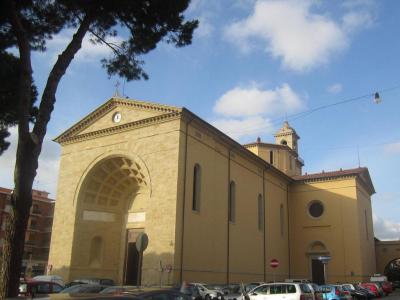


Chiesa di San Giuseppe (Church of San Giuseppe), Livorno
The Church of San Giuseppe, located in Piazza II Giugno in Livorno, marks a significant part of the city’s expansion during the early 19th century. Designed by Florentine architect Giuseppe Puini, the church was commissioned by Grand Duke Leopold II of Tuscany, reflecting Livorno's growing need for new public spaces and places of worship as the city developed outside the Fosso Reale. Construction began in 1839, and the church was consecrated in 1842.
Throughout its history, the Church of San Giuseppe faced multiple challenges. It was damaged during the Austrian invasion of 1849 and later converted into a hospital during the cholera epidemic of 1852. By the early 20th century, the parish housed 9,000 people, making it the largest in Livorno. However, it was repurposed as a grain warehouse during World War I and sustained serious damage in World War II.
The church’s neoclassical façade, reminiscent of the nearby Cisternone, features a portal crowned by a decorative niche and a small central clock above the pediment. Inside, the building follows a Latin cross plan, with a dome at the intersection of the nave and transept. Although much of the artwork was lost during World War II, two notable pieces remain a marble altar in the left arm and Giuseppe Baldini’s 1843 painting The Martyrdom of Saints Crispin and Crispinianus in the right arm.
The bell tower, damaged by Austrian artillery in 1849, stands behind the apse and houses four bells cast by Carlo Moreni in 1842. Adjacent to the church is a large room, once used as a mortuary and anatomical space, now serving as the "Don Ernesto Vignali" Pastoral Center.
Throughout its history, the Church of San Giuseppe faced multiple challenges. It was damaged during the Austrian invasion of 1849 and later converted into a hospital during the cholera epidemic of 1852. By the early 20th century, the parish housed 9,000 people, making it the largest in Livorno. However, it was repurposed as a grain warehouse during World War I and sustained serious damage in World War II.
The church’s neoclassical façade, reminiscent of the nearby Cisternone, features a portal crowned by a decorative niche and a small central clock above the pediment. Inside, the building follows a Latin cross plan, with a dome at the intersection of the nave and transept. Although much of the artwork was lost during World War II, two notable pieces remain a marble altar in the left arm and Giuseppe Baldini’s 1843 painting The Martyrdom of Saints Crispin and Crispinianus in the right arm.
The bell tower, damaged by Austrian artillery in 1849, stands behind the apse and houses four bells cast by Carlo Moreni in 1842. Adjacent to the church is a large room, once used as a mortuary and anatomical space, now serving as the "Don Ernesto Vignali" Pastoral Center.
Want to visit this sight? Check out these Self-Guided Walking Tours in Livorno. Alternatively, you can download the mobile app "GPSmyCity: Walks in 1K+ Cities" from Apple App Store or Google Play Store. The app turns your mobile device to a personal tour guide and it works offline, so no data plan is needed when traveling abroad.
Download The GPSmyCity App



Chiesa di San Giuseppe (Church of San Giuseppe) on Map
Sight Name: Chiesa di San Giuseppe (Church of San Giuseppe)
Sight Location: Livorno, Italy (See walking tours in Livorno)
Sight Type: Religious
Sight Location: Livorno, Italy (See walking tours in Livorno)
Sight Type: Religious
Nearby Sights

Walking Tours in Livorno, Italy

Create Your Own Walk in Livorno
Creating your own self-guided walk in Livorno is easy and fun. Choose the city attractions that you want to see and a walk route map will be created just for you. You can even set your hotel as the start point of the walk.
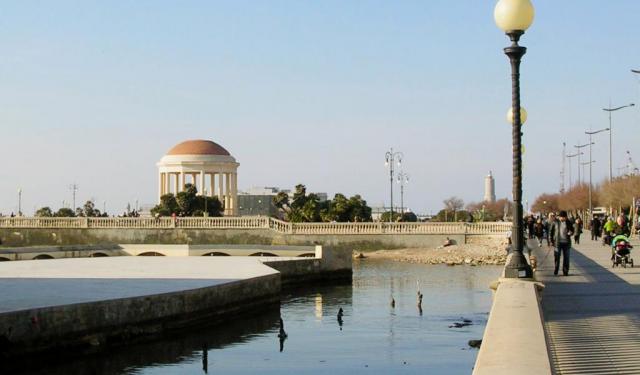
A Stroll Along Livorno's Waterfront
When the weather permits and you fancy a walk, whilst in Livorno, taking a stroll along the local seafront is a good idea. The curvy walkway, running along the coast, south of the city, is dotted with numerous points of interest. The first of them, marking the outset of the long stretch of intriguing sights further ahead, is the former Orlando shipyard.
Practically next door to it is the... view more
Tour Duration: 2 Hours
Travel Distance: 2.3 Km or 1.4 Miles
Practically next door to it is the... view more
Tour Duration: 2 Hours
Travel Distance: 2.3 Km or 1.4 Miles
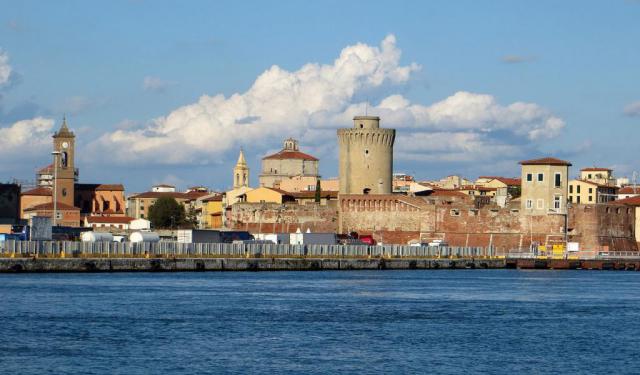
A Walk Through Livorno's Historic Old Town
Livorno was never meant to impress, it was meant to work. Travelers liked to note that “every language of the Mediterranean seemed to be spoken at once”. It was built on purpose, as a refuge for merchants, minorities, and outsiders
Livorno is a relatively young Italian city by historical standards, yet its story is unusually layered. Located on the Tyrrhenian coast of Tuscany, Livorno... view more
Tour Duration: 2 Hours
Travel Distance: 3 Km or 1.9 Miles
Livorno is a relatively young Italian city by historical standards, yet its story is unusually layered. Located on the Tyrrhenian coast of Tuscany, Livorno... view more
Tour Duration: 2 Hours
Travel Distance: 3 Km or 1.9 Miles
City Walks Overview
