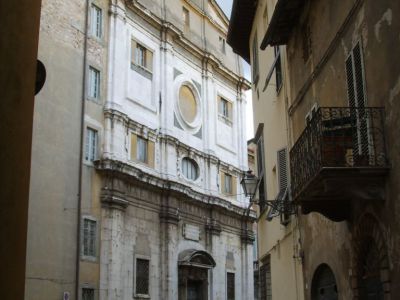


Church of Santa Maria Corteorlandini, Lucca
The Church of Santa Maria Corteorlandini, also known as Santa Maria Nera, is a remarkable Baroque-style Roman Catholic church in Lucca. Situated on the street of the same name, the church has deep historical roots dating back to at least 1099. The church’s grand Baroque style still preserves Romanesque traces, notably in a surviving south portal. Its name, Corteorlandini, comes from the Curtis Rolandinga, the court of the Lombard Rolandinghi family.
By 1188, Santa Maria Corteorlandini was complete, though only parts of its medieval design, like the lateral apses, remain. In 1580, the Clerics Regular of the Mother of God of Lucca, founded by Saint Giovanni Leonardi, took over, expanding the church with convent rooms and a library, now part of the State Library of Lucca.
The church’s Baroque embellishments make it one of Lucca’s finest examples of the style. Inside, stucco decorations, frescoed vaults, and grand ceilings impress, along with 16th-century holy water fonts and an octagonal pulpit. It houses notable artworks, including copies of Guido Reni and Luca Giordano’s Assunta, as well as pieces by Tuscan artists like Francesco Vanni. The Eucharistic tabernacle, crafted from silver and lapis lazuli, is attributed to Flemish goldsmith Giovanni Vambre the Old.
Santa Maria Corteorlandini is affectionately known as “Santa Maria Nera” due to its brick chapel of the Madonna di Loreto, built in 1662. This chapel contains an exact replica of the revered Loreto Tabernacle, featuring a black-faced Madonna, which also served as a model for the restoration of the original shrine after it was destroyed by fire.
During December, the church is adorned with a lavish nativity scene, showcasing life-sized statues of the Three Wise Men dressed in opulent silk and velvet robes, a tribute to Lucca’s textile heritage. Despite its artistic and historical significance, Santa Maria Corteorlandini remains somewhat off the beaten path, making it a hidden treasure in Lucca’s rich architectural and cultural landscape.
By 1188, Santa Maria Corteorlandini was complete, though only parts of its medieval design, like the lateral apses, remain. In 1580, the Clerics Regular of the Mother of God of Lucca, founded by Saint Giovanni Leonardi, took over, expanding the church with convent rooms and a library, now part of the State Library of Lucca.
The church’s Baroque embellishments make it one of Lucca’s finest examples of the style. Inside, stucco decorations, frescoed vaults, and grand ceilings impress, along with 16th-century holy water fonts and an octagonal pulpit. It houses notable artworks, including copies of Guido Reni and Luca Giordano’s Assunta, as well as pieces by Tuscan artists like Francesco Vanni. The Eucharistic tabernacle, crafted from silver and lapis lazuli, is attributed to Flemish goldsmith Giovanni Vambre the Old.
Santa Maria Corteorlandini is affectionately known as “Santa Maria Nera” due to its brick chapel of the Madonna di Loreto, built in 1662. This chapel contains an exact replica of the revered Loreto Tabernacle, featuring a black-faced Madonna, which also served as a model for the restoration of the original shrine after it was destroyed by fire.
During December, the church is adorned with a lavish nativity scene, showcasing life-sized statues of the Three Wise Men dressed in opulent silk and velvet robes, a tribute to Lucca’s textile heritage. Despite its artistic and historical significance, Santa Maria Corteorlandini remains somewhat off the beaten path, making it a hidden treasure in Lucca’s rich architectural and cultural landscape.
Want to visit this sight? Check out these Self-Guided Walking Tours in Lucca. Alternatively, you can download the mobile app "GPSmyCity: Walks in 1K+ Cities" from Apple App Store or Google Play Store. The app turns your mobile device to a personal tour guide and it works offline, so no data plan is needed when traveling abroad.
Download The GPSmyCity App



Church of Santa Maria Corteorlandini on Map
Sight Name: Church of Santa Maria Corteorlandini
Sight Location: Lucca, Italy (See walking tours in Lucca)
Sight Type: Religious
Sight Location: Lucca, Italy (See walking tours in Lucca)
Sight Type: Religious
Nearby Sights

Walking Tours in Lucca, Italy

Create Your Own Walk in Lucca
Creating your own self-guided walk in Lucca is easy and fun. Choose the city attractions that you want to see and a walk route map will be created just for you. You can even set your hotel as the start point of the walk.
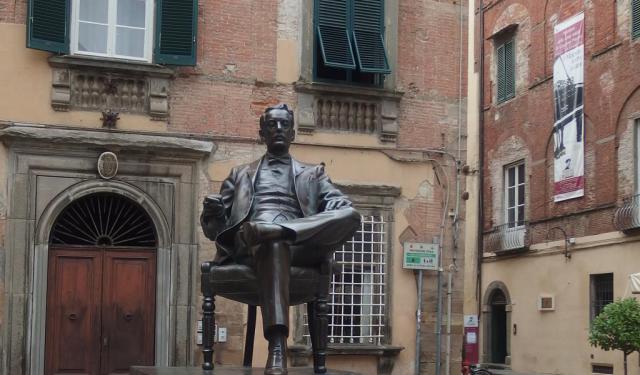
Discover Puccini's Lucca on Foot
One of the greatest musical talents of mankind, Italian composer Giacomo Puccini, was born and spent a substantial part of his life in the Tuscan city of Lucca. Today the legacy of Puccini resonates all over the world and even more so here.
Puccini's ancestors, also musicians, moved to Lucca in 1719. The future maestro was born in a house that had belonged to his family since 1815 – Casa... view more
Tour Duration: 1 Hour(s)
Travel Distance: 1.5 Km or 0.9 Miles
Puccini's ancestors, also musicians, moved to Lucca in 1719. The future maestro was born in a house that had belonged to his family since 1815 – Casa... view more
Tour Duration: 1 Hour(s)
Travel Distance: 1.5 Km or 0.9 Miles
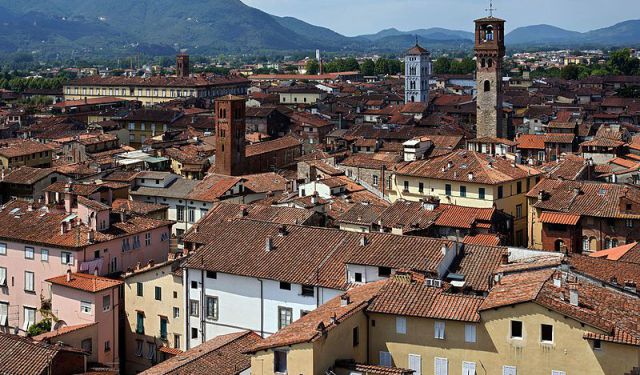
Lucca Old Town Walking Tour
Lucca is called many things: a city of arts, a city of churches, gardens, towers. Most of all it is known for its walls. From Roman times until now the walls have stood. It is the only city in Italy that has kept its walls intact.
The inner walled city is laid out in the ancient Roman grid plan. The Piazza San Michele is the site of the old forum. Bits of the Roman amphitheater can be found in... view more
Tour Duration: 2 Hour(s)
Travel Distance: 2.9 Km or 1.8 Miles
The inner walled city is laid out in the ancient Roman grid plan. The Piazza San Michele is the site of the old forum. Bits of the Roman amphitheater can be found in... view more
Tour Duration: 2 Hour(s)
Travel Distance: 2.9 Km or 1.8 Miles
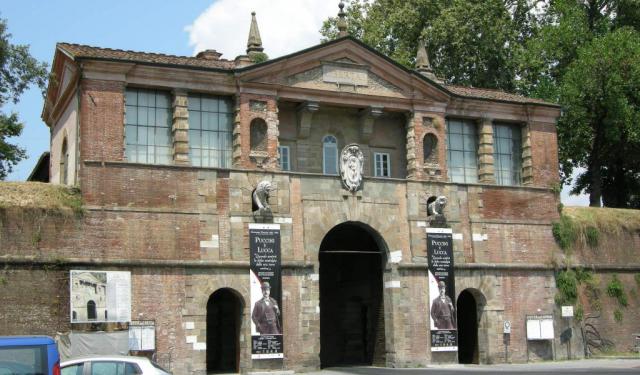
Lucca's City Wall and Gates Walking Tour
As one of Italy's Città d'arte's (arts towns), Lucca is famous, among other things, for its well-preserved ancient walls encircling the historic center. From about 570 AD until 1847 the city had been the center of the Longobard administration and the capital of old Tuscany, and as such required a defense system to render it an impenetrable fortress.
Back in the Middle Ages, the... view more
Tour Duration: 2 Hour(s)
Travel Distance: 3.7 Km or 2.3 Miles
Back in the Middle Ages, the... view more
Tour Duration: 2 Hour(s)
Travel Distance: 3.7 Km or 2.3 Miles