


Circular Congregational Church, Charleston
Wind the clock back to 1681, when Charleston was still finding its footing. Back then, this congregation was already getting organized under the rather formal name, the Independent Church of Charles Towne. It brought together a mix of English Congregationalists, Scots Presbyterians, and French Huguenots, being one of the first two congregations, alongside Saint Philip's Church, established in the settlement.
The first building didn’t try too hard to impress-just a neat white brick structure locals casually called the “White Meeting House.” Simple, memorable, and influential enough to name an entire street: Meeting Street. Then came 1780, and with it a British cannonball during the siege of Charleston-which, indeed, wasn't too great for property value...
By 1806, the church came back with flair, reinvented as the “Circular Church”-a bold, Pantheon-inspired design by architect Robert Mills. People at the time didn’t hold back, calling it “the most extraordinary building in the U.S.” Seven doors, twenty-six windows, and a room for 2,000 worshipers-it was as much a statement as it was a sanctuary.
But Charleston has a habit of testing its landmarks. The great fire of 1861 swept through and reduced the Circular Church to memory.
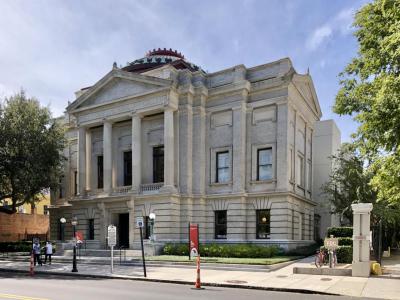
Not one to stay down, the congregation rebuilt once again. The current church, completed in 1892, keeps the spirit of the circle but tweaks it into a cloverleaf shape-close enough to honor the past, different enough to stand on its own. Some of the original bricks even made a comeback, quietly carrying history into the present structure. These days, beyond its architectural quirks, the space doubles as a venue for concerts, giving it a second life filled with music.
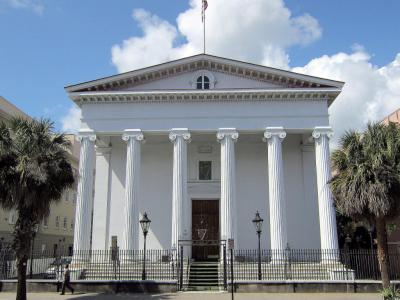
Just beside it, the parish house adds another layer to the story. Also designed by Robert Mills, it takes full advantage of the Greek Revival, complete with twin staircases and elegant ironwork. The building has aged far more gracefully than some of its neighbors, earning National Historic Landmark status in 1973. And then there’s the cemetery-Charleston’s oldest-where gravestones dating back to the 1690s line the grounds, offering a quiet, lasting reminder that this place has been part of the city’s story almost from the very beginning...
The first building didn’t try too hard to impress-just a neat white brick structure locals casually called the “White Meeting House.” Simple, memorable, and influential enough to name an entire street: Meeting Street. Then came 1780, and with it a British cannonball during the siege of Charleston-which, indeed, wasn't too great for property value...
By 1806, the church came back with flair, reinvented as the “Circular Church”-a bold, Pantheon-inspired design by architect Robert Mills. People at the time didn’t hold back, calling it “the most extraordinary building in the U.S.” Seven doors, twenty-six windows, and a room for 2,000 worshipers-it was as much a statement as it was a sanctuary.
But Charleston has a habit of testing its landmarks. The great fire of 1861 swept through and reduced the Circular Church to memory.
Not one to stay down, the congregation rebuilt once again. The current church, completed in 1892, keeps the spirit of the circle but tweaks it into a cloverleaf shape-close enough to honor the past, different enough to stand on its own. Some of the original bricks even made a comeback, quietly carrying history into the present structure. These days, beyond its architectural quirks, the space doubles as a venue for concerts, giving it a second life filled with music.
Just beside it, the parish house adds another layer to the story. Also designed by Robert Mills, it takes full advantage of the Greek Revival, complete with twin staircases and elegant ironwork. The building has aged far more gracefully than some of its neighbors, earning National Historic Landmark status in 1973. And then there’s the cemetery-Charleston’s oldest-where gravestones dating back to the 1690s line the grounds, offering a quiet, lasting reminder that this place has been part of the city’s story almost from the very beginning...
Want to visit this sight? Check out these Self-Guided Walking Tours in Charleston. Alternatively, you can download the mobile app "GPSmyCity: Walks in 1K+ Cities" from Apple App Store or Google Play Store. The app turns your mobile device to a personal tour guide and it works offline, so no data plan is needed when traveling abroad.
Download The GPSmyCity App



Circular Congregational Church on Map
Sight Name: Circular Congregational Church
Sight Location: Charleston, USA (See walking tours in Charleston)
Sight Type: Religious
Guide(s) Containing This Sight:
Sight Location: Charleston, USA (See walking tours in Charleston)
Sight Type: Religious
Guide(s) Containing This Sight:
Nearby Sights

Walking Tours in Charleston, South Carolina

Create Your Own Walk in Charleston
Creating your own self-guided walk in Charleston is easy and fun. Choose the city attractions that you want to see and a walk route map will be created just for you. You can even set your hotel as the start point of the walk.
Harleston Village Walking Tour
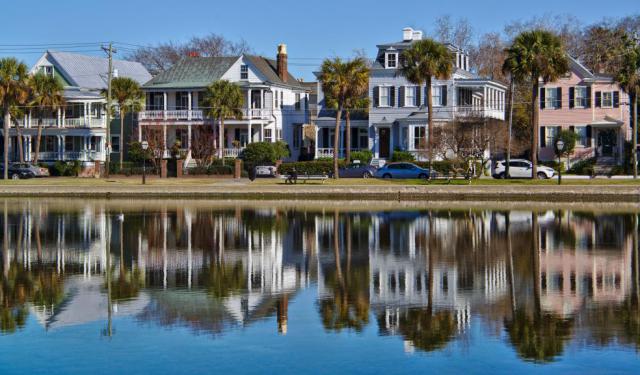
Founded in the 18th century, the historic Harleston Village is a charming neighborhood in Charleston, South Carolina. The rich past and vibrant present of this area make it a popular destination for tourists.
At the heart of Harleston Village lies the College of Charleston, an esteemed institution of higher learning, established in 1770, adding a great deal of academic flair to the... view more
Tour Duration: 2 Hour(s)
Travel Distance: 2.3 Km or 1.4 Miles
At the heart of Harleston Village lies the College of Charleston, an esteemed institution of higher learning, established in 1770, adding a great deal of academic flair to the... view more
Tour Duration: 2 Hour(s)
Travel Distance: 2.3 Km or 1.4 Miles
Charleston Historic City Center Walking Tour
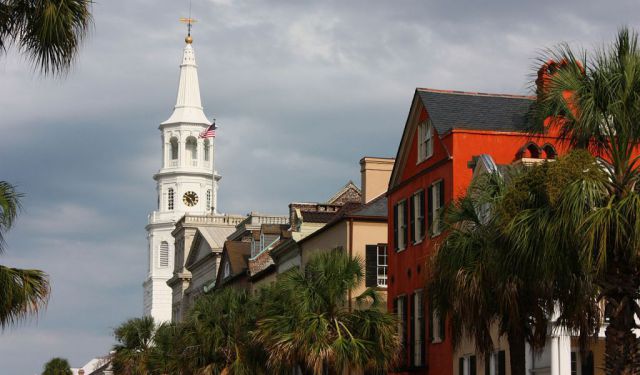
A major port on the South Carolina coast and a favorite stop for travelers, Charleston is the kind of place that knows how to make an entrance-with its Southern charm, easygoing friendliness, and a long, layered history. Founded in 1670 as Charles Town, named so after King Charles II of England, it also holds an important distinction as the first comprehensively planned town in what would later... view more
Tour Duration: 2 Hour(s)
Travel Distance: 2.8 Km or 1.7 Miles
Tour Duration: 2 Hour(s)
Travel Distance: 2.8 Km or 1.7 Miles
French Quarter Walking Tour
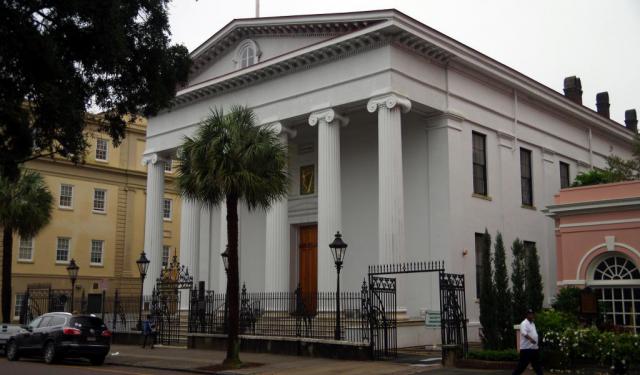
Charleston’s French Quarter is a district with a long memory and a relatively new name. Once filled with French merchants trading goods and gossip, this neighborhood carries its legacy more in atmosphere than language. The name itself is a modern touch-coined in 1973, when locals decided these old warehouse-lined streets were worth saving. That same year, the area earned a spot on the National... view more
Tour Duration: 1 Hour(s)
Travel Distance: 1.7 Km or 1.1 Miles
Tour Duration: 1 Hour(s)
Travel Distance: 1.7 Km or 1.1 Miles
Historical Houses Tour
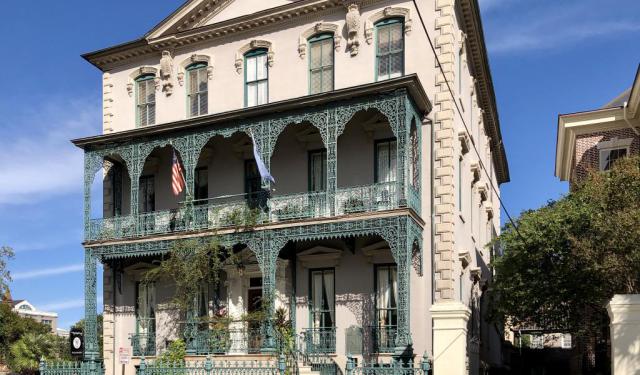
To say that Charleston has history is an understatement, to say the least-it practically drips with it. Walk the city's narrow cobblestone streets, framed by pastel façades and intricate wrought iron of the carefully preserved colonial homes, and you get the sense that the past hasn’t gone anywhere-it’s simply waiting on cue at the next corner.
As one of America’s oldest cities,... view more
Tour Duration: 2 Hour(s)
Travel Distance: 4.3 Km or 2.7 Miles
As one of America’s oldest cities,... view more
Tour Duration: 2 Hour(s)
Travel Distance: 4.3 Km or 2.7 Miles
Downtown Historical Churches Tour
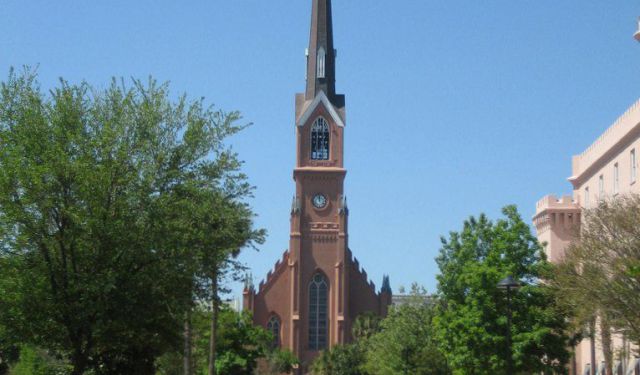
Charleston, South Carolina, is also sometimes called the “Holy City.” This is due to the large number of churches found here. Needless to say, the most fascinating of them are concentrated in the Downtown area, each with its unique charm and significance.
Among such temples of distinction is Saint Matthew's Church, an enduring symbol of Charleston's German Lutheran community. Its... view more
Tour Duration: 1 Hour(s)
Travel Distance: 1.3 Km or 0.8 Miles
Among such temples of distinction is Saint Matthew's Church, an enduring symbol of Charleston's German Lutheran community. Its... view more
Tour Duration: 1 Hour(s)
Travel Distance: 1.3 Km or 0.8 Miles