

City Museum of Split, Split
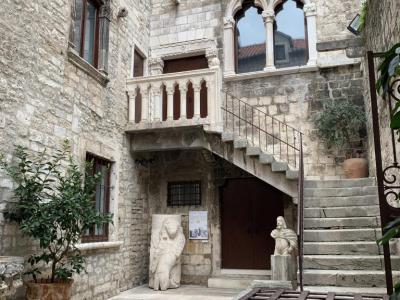
The City Museum of Split has been telling Split’s story since 1946, although the building itself had already been around for a few centuries before that. Tucked into the northeastern corner of Diocletian's Palace, inside the former Papalić Palace, it was once home to one of Split’s noble families. Just pause here for a closer look at the portal, and you’ll spot their coat of arms.
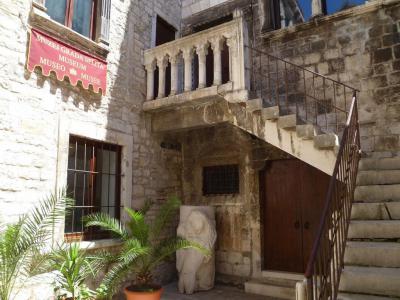
The palace was designed in the 15th century by Juraj of Dalmatia. The courtyard alone is worth a pause: a richly decorated portal, an elegant loggia, and a Renaissance hall crowned with a beautifully preserved wooden ceiling. In essence, this wasn't any average medieval townhouse. This was the kind of place where architecture quietly shows off.
Head upstairs, and the story of Split unfolds in layers. The permanent collection walks you from Roman times-back to Diocletian-through the centuries when Split functioned as an autonomous medieval commune, and onward into later periods. Expect medieval weaponry, paintings, fragments of sculptures once attached to city buildings, and stone monuments that have seen more history than most textbooks.
One room even recreates the Papalić family dining hall, fully furnished to reflect the noble life of the time. It’s like stepping into a dinner party where everyone has been waiting 500 years for dessert.
You’ll also find the city’s statute, seal, and coins, Romanesque sculptures from the cathedral’s belfry dating to Venetian rule, and a wealth of documents, maps, and photographs tracing Split’s more recent past. And just when you think you’ve reached the end, there’s a gallery dedicated to Emanuel Vidović, one of the leading figures of Croatian modern painting-proof that Split didn’t stop creating after the Renaissance...
So, take your time and pay attention-because in this palace within a palace, history isn’t some background noise; it’s the main storyteller...
The palace was designed in the 15th century by Juraj of Dalmatia. The courtyard alone is worth a pause: a richly decorated portal, an elegant loggia, and a Renaissance hall crowned with a beautifully preserved wooden ceiling. In essence, this wasn't any average medieval townhouse. This was the kind of place where architecture quietly shows off.
Head upstairs, and the story of Split unfolds in layers. The permanent collection walks you from Roman times-back to Diocletian-through the centuries when Split functioned as an autonomous medieval commune, and onward into later periods. Expect medieval weaponry, paintings, fragments of sculptures once attached to city buildings, and stone monuments that have seen more history than most textbooks.
One room even recreates the Papalić family dining hall, fully furnished to reflect the noble life of the time. It’s like stepping into a dinner party where everyone has been waiting 500 years for dessert.
You’ll also find the city’s statute, seal, and coins, Romanesque sculptures from the cathedral’s belfry dating to Venetian rule, and a wealth of documents, maps, and photographs tracing Split’s more recent past. And just when you think you’ve reached the end, there’s a gallery dedicated to Emanuel Vidović, one of the leading figures of Croatian modern painting-proof that Split didn’t stop creating after the Renaissance...
So, take your time and pay attention-because in this palace within a palace, history isn’t some background noise; it’s the main storyteller...
Want to visit this sight? Check out these Self-Guided Walking Tours in Split. Alternatively, you can download the mobile app "GPSmyCity: Walks in 1K+ Cities" from Apple App Store or Google Play Store. The app turns your mobile device to a personal tour guide and it works offline, so no data plan is needed when traveling abroad.
Download The GPSmyCity App



City Museum of Split on Map
Sight Name: City Museum of Split
Sight Location: Split, Croatia (See walking tours in Split)
Sight Type: Attraction/Landmark
Guide(s) Containing This Sight:
Sight Location: Split, Croatia (See walking tours in Split)
Sight Type: Attraction/Landmark
Guide(s) Containing This Sight:
Nearby Sights
Walking Tours in Split, Croatia

Create Your Own Walk in Split
Creating your own self-guided walk in Split is easy and fun. Choose the city attractions that you want to see and a walk route map will be created just for you. You can even set your hotel as the start point of the walk.
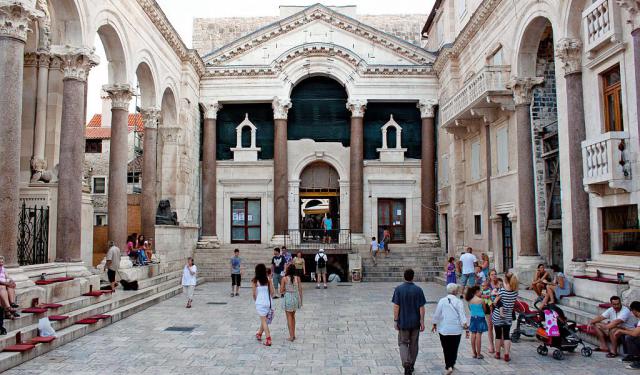
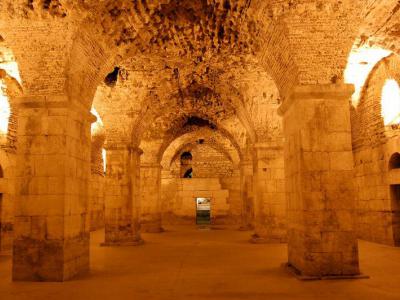
Diocletian Palace Tour
One of the best-preserved monuments of Roman architecture in the world, Diocletian’s Palace is also probably the most impressive “retirement home” in history. Imagine quitting a job at the age of sixty and deciding your quiet seaside cottage should also function as a fortress. That was exactly the plan of Roman emperor Diocletian... In 305 AD, after abdicating-which is something Roman... view more
Tour Duration: 1 Hour(s)
Travel Distance: 0.6 Km or 0.4 Miles
Tour Duration: 1 Hour(s)
Travel Distance: 0.6 Km or 0.4 Miles
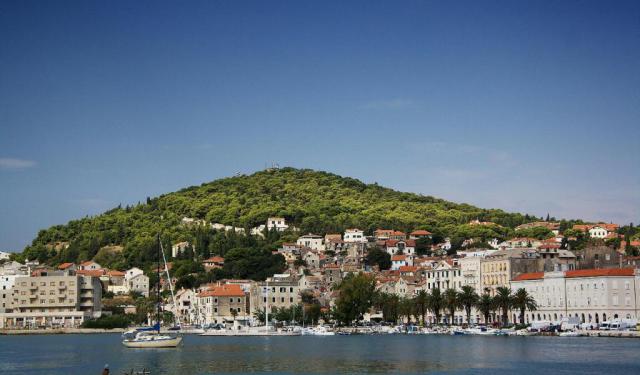
Marjan Hill Walking Tour
Marjan Hill is a picturesque natural wonder – a unique landform – located on the Split peninsula in Croatia. The majestic hill (or the low mountain, if you like) is surrounded by the sea and the city, and represents the green oasis ideal for walks, excursions, and rock climbing. Visitors to the area are greeted with a plethora of sights catering to various interests and equally enjoyed by... view more
Tour Duration: 1 Hour(s)
Travel Distance: 1.4 Km or 0.9 Miles
Tour Duration: 1 Hour(s)
Travel Distance: 1.4 Km or 0.9 Miles
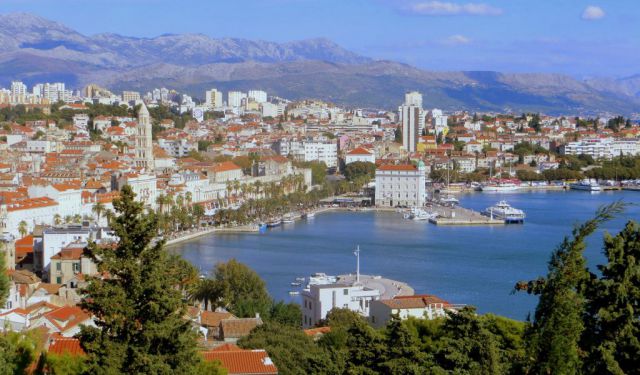
Split Old Town Walking Tour
Welcome to Split, Dalmatia’s sun-drenched heart and, believe it or not, the ultimate ancient retirement plan.
Its story has a bit of a botanical side and dates back more than two millennia, when Greek settlers from Issa (or modern-day Vis) founded here a colony they called Aspalathos, named after a prickly, yellow-flowering shrub that still dots the coastline. The Romans called it Spalatum,... view more
Tour Duration: 1 Hour(s)
Travel Distance: 1.2 Km or 0.7 Miles
Its story has a bit of a botanical side and dates back more than two millennia, when Greek settlers from Issa (or modern-day Vis) founded here a colony they called Aspalathos, named after a prickly, yellow-flowering shrub that still dots the coastline. The Romans called it Spalatum,... view more
Tour Duration: 1 Hour(s)
Travel Distance: 1.2 Km or 0.7 Miles