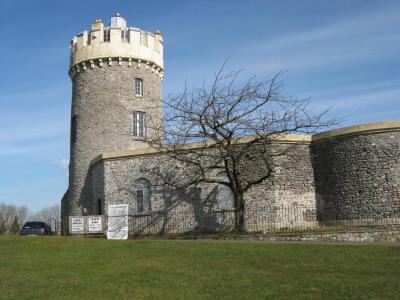


Clifton Observatory and Caves, Bristol (must see)
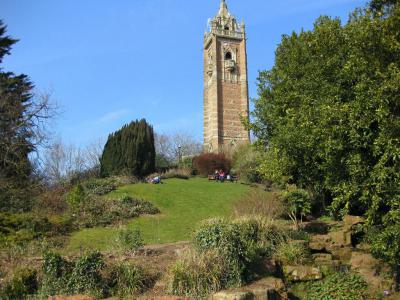
The Clifton Observatory in Bristol is a historic site with a rich and fascinating history. The building, which is now used as an observatory, was originally erected in 1766 as a windmill for corn. It later became known as the Snuff Mill after being converted to the grinding of snuff. Unfortunately, it was damaged by fire in 1777 and remained derelict for over 50 years until it was rented by artist William West in 1828.
West transformed the old mill into a studio, installing telescopes and a camera obscura, which were used by artists of the Bristol School to draw the Avon Gorge and Leigh Woods. He called his photographic technique 'photogenic drawing' and it was based on the work of William Fox Talbot. Today, many examples of these paintings can be seen in the Bristol City Museum and Art Gallery.
The Observatory is now home to a 5 inches (13 cm) convex lens and sloping mirror which projects a panoramic view vertically downward into the darkened room below. Visitors can view the true image (not a mirror image) on a fixed circular table 5 feet (1.5 meters) in diameter with a concave metal surface and can turn the mirror by hand to change the direction of view. This unique attraction has been on top of Clifton Tower since 1828.
In addition to the observatory, West also built a tunnel from the Observatory to Saint Vincent's Cave (also known as Ghyston's Cave or Giants' Cave), which opens onto Saint Vincent's Rocks on the cliff face, 250 feet (76 meters) above the floor of the Avon gorge and 90 feet (27 meters) below the cliff top. The tunnel, which took two years to build, was first opened to the public in 1837.
Saint Vincent's Cave has an interesting history of its own. It was first mentioned as a chapel in AD 305 and has been used as a holy place and a place of refuge throughout history. Although the cave is in limestone, there are few formations in the natural passages.
The Clifton Observatory has been designated by English Heritage as a grade II* listed building and is on the Buildings at Risk Register.
West transformed the old mill into a studio, installing telescopes and a camera obscura, which were used by artists of the Bristol School to draw the Avon Gorge and Leigh Woods. He called his photographic technique 'photogenic drawing' and it was based on the work of William Fox Talbot. Today, many examples of these paintings can be seen in the Bristol City Museum and Art Gallery.
The Observatory is now home to a 5 inches (13 cm) convex lens and sloping mirror which projects a panoramic view vertically downward into the darkened room below. Visitors can view the true image (not a mirror image) on a fixed circular table 5 feet (1.5 meters) in diameter with a concave metal surface and can turn the mirror by hand to change the direction of view. This unique attraction has been on top of Clifton Tower since 1828.
In addition to the observatory, West also built a tunnel from the Observatory to Saint Vincent's Cave (also known as Ghyston's Cave or Giants' Cave), which opens onto Saint Vincent's Rocks on the cliff face, 250 feet (76 meters) above the floor of the Avon gorge and 90 feet (27 meters) below the cliff top. The tunnel, which took two years to build, was first opened to the public in 1837.
Saint Vincent's Cave has an interesting history of its own. It was first mentioned as a chapel in AD 305 and has been used as a holy place and a place of refuge throughout history. Although the cave is in limestone, there are few formations in the natural passages.
The Clifton Observatory has been designated by English Heritage as a grade II* listed building and is on the Buildings at Risk Register.
Want to visit this sight? Check out these Self-Guided Walking Tours in Bristol. Alternatively, you can download the mobile app "GPSmyCity: Walks in 1K+ Cities" from Apple App Store or Google Play Store. The app turns your mobile device to a personal tour guide and it works offline, so no data plan is needed when traveling abroad.
Download The GPSmyCity App



Clifton Observatory and Caves on Map
Sight Name: Clifton Observatory and Caves
Sight Location: Bristol, England (See walking tours in Bristol)
Sight Type: Attraction/Landmark
Sight Location: Bristol, England (See walking tours in Bristol)
Sight Type: Attraction/Landmark
Nearby Sights
Walking Tours in Bristol, England

Create Your Own Walk in Bristol
Creating your own self-guided walk in Bristol is easy and fun. Choose the city attractions that you want to see and a walk route map will be created just for you. You can even set your hotel as the start point of the walk.
Bristol City Center Walking Tour
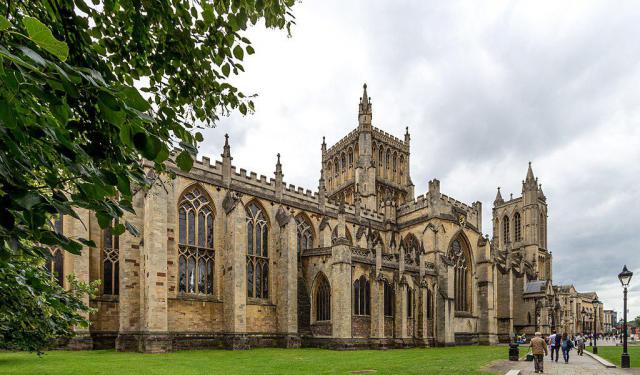
If you listen closely, Bristol doesn’t just speak-it mutters, shouts, and occasionally winks. This southwest city in England has been shaping itself for over a thousand years, starting as a settlement where the rivers Frome and Avon meet. Long before that, the surrounding hills hid Iron Age hillforts and Roman villas. Its name, Brycgstow in Old English, meant “place at the bridge”-a... view more
Tour Duration: 2 Hours
Travel Distance: 3.4 Km or 2.1 Miles
Tour Duration: 2 Hours
Travel Distance: 3.4 Km or 2.1 Miles
Banksy Tour in Bristol
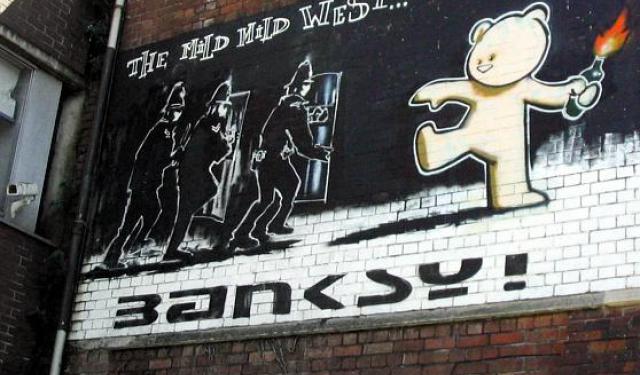
Bristol wears its street art like a second skin-layered, loud, and impossible to ignore. In the middle of this visual conversation is a figure who went from spray-painting in the shadows to shaping the way the world looks at graffiti: Banksy. Growing up here in the 1970s, he first made his mark in the late ’80s and early ’90s with crews like the DryBreadZ Crew, working freehand under cover of... view more
Tour Duration: 3 Hours
Travel Distance: 6.9 Km or 4.3 Miles
Tour Duration: 3 Hours
Travel Distance: 6.9 Km or 4.3 Miles
Famous Bristol Statues Walking Tour
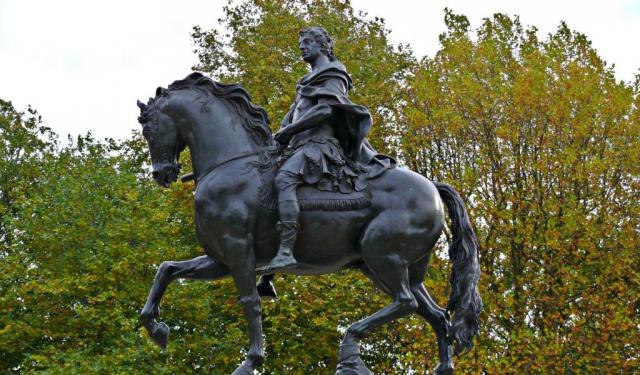
Throughout its more than 1,000-year-long history, Bristol, England, has generated a wealth of cultural and historical heritage. Reflecting it now, and in some way matching it too, are a number of statues that celebrate personalities who made their mark and once graced the city with their association. These statues are scattered throughout the city, each with its unique story and importance.
The... view more
Tour Duration: 2 Hours
Travel Distance: 2.6 Km or 1.6 Miles
The... view more
Tour Duration: 2 Hours
Travel Distance: 2.6 Km or 1.6 Miles
City Walks Overview
