


Cloitre Saint-Trophime (St. Trophime Cloister), Arles (must see)
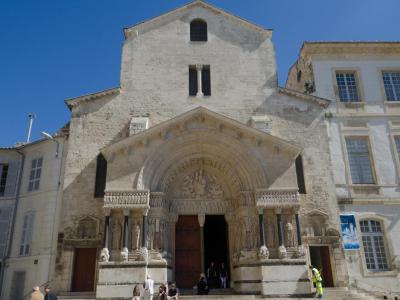
The Cloister of Saint Trophime in Arles is one of the finest examples of Romanesque and early Gothic architecture in southern France, offering visitors a peaceful retreat steeped in art and spirituality. Built between the 12th and 14th centuries, it adjoins the Church of Saint Trophime, which was once the cathedral of Arles. The cloister served as the residence and contemplative space for the cathedral’s canons, providing a serene environment for prayer, study, and reflection.
What makes the Saint Trophime Cloister particularly exceptional is its remarkable sculptural decoration. Each gallery is adorned with intricately carved capitals and reliefs depicting biblical narratives, saints, and symbolic motifs that illustrate the transition from Romanesque to Gothic art. Visitors can observe this evolution firsthand: the older northern and eastern galleries feature rounded Romanesque arches, while the later southern and western galleries display the pointed arches characteristic of the Gothic style.
Unusually, the cloister connects to the church’s choir by a staircase of twenty-five steps - a rare arrangement, as cloisters are typically accessed from the nave or transept. Despite this distinctive layout, the cloister’s significance has long been recognized: it was designated a historic monument in 1846 and, like the Arles Obelisk, was inscribed on the UNESCO World Heritage list in 1981.
Beyond its artistic beauty, the cloister holds deep historical resonance. It was here that ecclesiastical councils were held and important decisions shaping the city’s spiritual life were made. Today, the site exudes an atmosphere of timeless calm, perfect for its meditative purposes. Go ahead and feel the silence yourself, but everyone has to work for it. Those steps will not climb themselves.
What makes the Saint Trophime Cloister particularly exceptional is its remarkable sculptural decoration. Each gallery is adorned with intricately carved capitals and reliefs depicting biblical narratives, saints, and symbolic motifs that illustrate the transition from Romanesque to Gothic art. Visitors can observe this evolution firsthand: the older northern and eastern galleries feature rounded Romanesque arches, while the later southern and western galleries display the pointed arches characteristic of the Gothic style.
Unusually, the cloister connects to the church’s choir by a staircase of twenty-five steps - a rare arrangement, as cloisters are typically accessed from the nave or transept. Despite this distinctive layout, the cloister’s significance has long been recognized: it was designated a historic monument in 1846 and, like the Arles Obelisk, was inscribed on the UNESCO World Heritage list in 1981.
Beyond its artistic beauty, the cloister holds deep historical resonance. It was here that ecclesiastical councils were held and important decisions shaping the city’s spiritual life were made. Today, the site exudes an atmosphere of timeless calm, perfect for its meditative purposes. Go ahead and feel the silence yourself, but everyone has to work for it. Those steps will not climb themselves.
Want to visit this sight? Check out these Self-Guided Walking Tours in Arles. Alternatively, you can download the mobile app "GPSmyCity: Walks in 1K+ Cities" from Apple App Store or Google Play Store. The app turns your mobile device to a personal tour guide and it works offline, so no data plan is needed when traveling abroad.
Download The GPSmyCity App



Cloitre Saint-Trophime (St. Trophime Cloister) on Map
Sight Name: Cloitre Saint-Trophime (St. Trophime Cloister)
Sight Location: Arles, France (See walking tours in Arles)
Sight Type: Religious
Guide(s) Containing This Sight:
Sight Location: Arles, France (See walking tours in Arles)
Sight Type: Religious
Guide(s) Containing This Sight:
Nearby Sights



Walking Tours in Arles, France

Create Your Own Walk in Arles
Creating your own self-guided walk in Arles is easy and fun. Choose the city attractions that you want to see and a walk route map will be created just for you. You can even set your hotel as the start point of the walk.
Arles Introduction Walking Tour
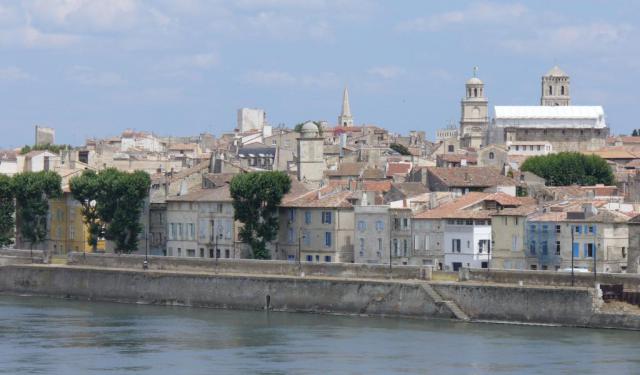
While living in Arles, Vincent van Gogh wrote to his brother Theo about the “soft and tender light” of the region. Although he called the town home for only 15 months, this brief period became the most productive of his career, yielding more than 300 works.
The town’s name comes from the ancient Ligurian and Celtic term Arelate, meaning “the dwelling by the marshes,” a nod to its... view more
Tour Duration: 1 Hour(s)
Travel Distance: 1.3 Km or 0.8 Miles
The town’s name comes from the ancient Ligurian and Celtic term Arelate, meaning “the dwelling by the marshes,” a nod to its... view more
Tour Duration: 1 Hour(s)
Travel Distance: 1.3 Km or 0.8 Miles
Vincent van Gogh Walking Tour
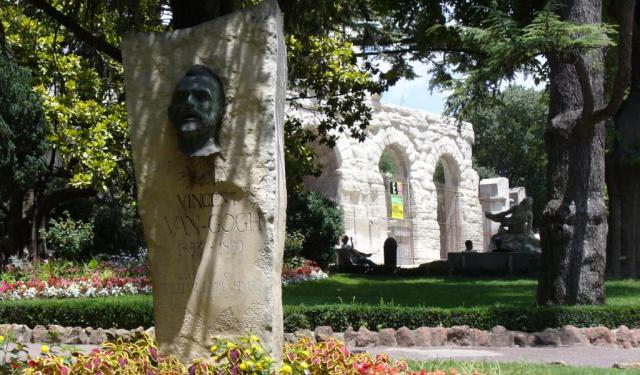
"There's no place quite like it for painters. It's so beautiful and peaceful..." These words, reportedly attributed to Vincent van Gogh, emphasize the beauty and exceptional qualities of Arles with which the renowned Dutch painter had a special connection.
Vincent van Gogh moved to this town in 1888, after having worked in Paris for two years. In the late 19th century,... view more
Tour Duration: 1 Hour(s)
Travel Distance: 2.1 Km or 1.3 Miles
Vincent van Gogh moved to this town in 1888, after having worked in Paris for two years. In the late 19th century,... view more
Tour Duration: 1 Hour(s)
Travel Distance: 2.1 Km or 1.3 Miles