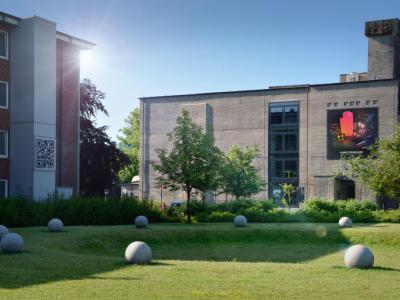


Computermuseum der Fachhochschule Kiel (Computer Museum of the Kiel University of Applied Sciences), Kiel
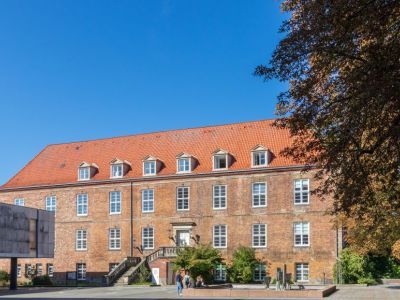
The Computer Museum of the Kiel University of Applied Sciences is a museum in the Kiel district of Neumühlen-Dietrichsdorf. It was opened on June 14, 2011. The museum building is a four-storey bunker from the Second World War, which was converted into a modern museum over the course of a year. The computer museum displays around 360 exhibits from past decades of computer history on around 800 square metres. The spectrum ranges from the listed electromechanical relay computer Z11 from Zuse KG from 1958 and the first fully transistorised German computer Siemens in 2002 to giants such as the 1.6 tonne former supercomputer "Cyber 76" to the microcomputers of the 1990s. A total of 16 media stations offer background information in the form of audio documents and films, and three emulation stations allow visitors to play old computer games on authentic old computer systems. In the lecture hall on the ground floor, visitors can get in the mood for their museum visit with a specially produced 3D film. The Berlin computer scientist Dr. Ralf Bülow was responsible for curating and developing the exhibition from a scientific perspective. The spatial, lighting and color concept for the exhibition rooms was developed by a team of students from the “Spatial Strategies” department at the Muthesius Art Academy in Kiel under the direction of Ludwig Fromm and Michael Breda. Implementation: Fedor Sukatus and Ludwig Fromm. The driving force and overall manager of the Computer Museum project was the Chancellor of the Kiel University of Applied Sciences, Klaus Michael Heinze. The museum is now operated by the Center for Cultural and Scientific Communication at the Kiel University of Applied Sciences, headed by Markus Schack. The Media Dome, the Bunker-D Culture and Communication Center, the Howaldt Metal Foundry Industrial Museum and the Computer Museum of the Kiel University of Applied Sciences, together with over 60 works of art in public spaces, form a cultural offering in Kiel-Dietrichsdorf known as the “Dietrichsdorf Culture Island.” The foundation stone for the computer collection at Kiel University of Applied Sciences was laid by a private association. Under the association name "Schleswig-Holstein Museum for Computing and Writing Technology e. V.", the founding members committed themselves in December 1981 to the goal of saving milestones in computing technology from being scrapped. As early as March 1982, the association opened the first computer exhibition collection in Germany in the rooms of the former Schleswig-Holstein Data Center (now Dataport ). In 1990, the association handed over the collection, which had grown considerably by then, to the Kiel University of Applied Sciences and transformed itself into the "Förderverein Computermuseum Kiel eV", which continues to support the collection and museum to this day. Due to a lack of space and money, most of the many hundreds of exhibits had to wait a long time in various warehouses after the Kiel University of Applied Sciences took over until they were shown in a real museum. It was not until 2006 that the decision was made to buy the high-rise bunker on Eichenbergskamp from the federal government and convert it into a computer museum. In recent years, only a few pieces could be shown to the public provisionally in a barracks on campus or at traveling exhibitions.
More into surfing the net than the sea? Check out the unique computer museum and learn how the revolutionary invention got its start. The museum's extensive collection takes you on an entertaining journey from the roots of information technology in the 1960s, where a computer filled an entire room, to more recent times where it can fit in our pocket. There are guided tours every Saturday, but it's also fun to walk around on your own and closely examine the many gadgets and gizmos, which are unconventional attractions for both young and old. ***PH***
More into surfing the net than the sea? Check out the unique computer museum and learn how the revolutionary invention got its start. The museum's extensive collection takes you on an entertaining journey from the roots of information technology in the 1960s, where a computer filled an entire room, to more recent times where it can fit in our pocket. There are guided tours every Saturday, but it's also fun to walk around on your own and closely examine the many gadgets and gizmos, which are unconventional attractions for both young and old. ***PH***
Want to visit this sight? Check out these Self-Guided Walking Tours in Kiel. Alternatively, you can download the mobile app "GPSmyCity: Walks in 1K+ Cities" from Apple App Store or Google Play Store. The app turns your mobile device to a personal tour guide and it works offline, so no data plan is needed when traveling abroad.
Download The GPSmyCity App



Computermuseum der Fachhochschule Kiel (Computer Museum of the Kiel University of Applied Sciences) on Map
Sight Name: Computermuseum der Fachhochschule Kiel (Computer Museum of the Kiel University of Applied Sciences)
Sight Location: Kiel, Germany (See walking tours in Kiel)
Sight Type: Museum/Gallery
Sight Location: Kiel, Germany (See walking tours in Kiel)
Sight Type: Museum/Gallery
Nearby Sights
Walking Tours in Kiel, Germany

Create Your Own Walk in Kiel
Creating your own self-guided walk in Kiel is easy and fun. Choose the city attractions that you want to see and a walk route map will be created just for you. You can even set your hotel as the start point of the walk.
Kiel Introduction Walking Tour
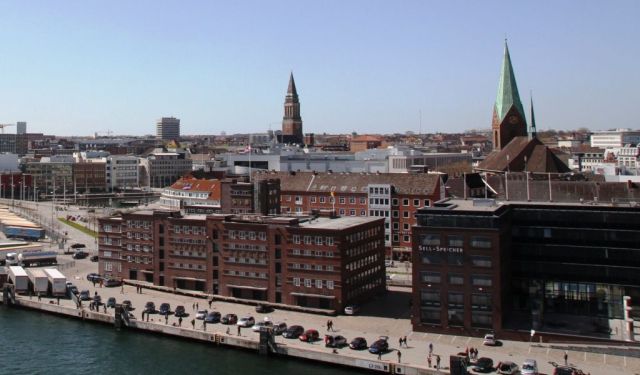
Kiel, nestled along Germany’s Baltic coast, is steeped in maritime lore and history. First a Viking settlement, it grew into a humble fishing village before shining in the Middle Ages as a member of the influential Hanseatic League trade confederation. By the 13th century, Kiel had secured its place as a thriving port town strategically positioned on key trade routes.
Fast forward to the 19th... view more
Tour Duration: 2 Hours
Travel Distance: 2.6 Km or 1.6 Miles
Fast forward to the 19th... view more
Tour Duration: 2 Hours
Travel Distance: 2.6 Km or 1.6 Miles
City Walks Overview
