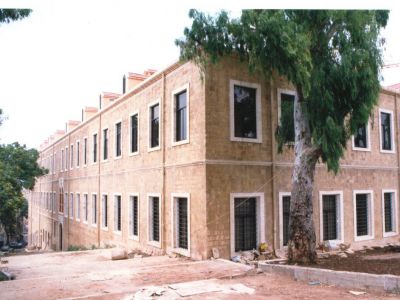


Council for Development and Reconstruction, Beirut
The Council for Development and Reconstruction (CDR) is a significant Lebanese governmental organization, created in January 1977 amid the Lebanese civil war. The CDR operates under the direct supervision of the prime minister and was originally established to address the infrastructural damage caused by the civil war, by assessing needs and allocating both international and local aid for reconstruction efforts.
A pivotal moment for the CDR came after the signing of the Ta'if Accord, which marked a new chapter for Lebanon. Post-accord, the CDR was revitalized and granted new legal powers in 1992, coinciding with Rafic Hariri's tenure as prime minister. Under these new provisions, the CDR became a crucial instrument in Lebanon's national recovery and development strategy.
The CDR original building was built on a hill that slopes down. It had a vaulted basement which helped make the ground level flat enough to build the ground and first floors. The renovation aimed to create a main building to accommodate the CDR, which will be at the heart of the Council's activities in the future. Upgrades included central air conditioning, telephones, a computer network, lighting, and power generation systems.
Today, the CDR is involved in all aspects of project implementation ranging from planning, feasibility analysis, and detailed design to bidding, expropriation, execution, and operation and maintenance of most public facilities. It collaborates extensively with both local and international contractors and consulting firms, ensuring that the construction and operational processes of various public facilities are well-managed and efficient.
A pivotal moment for the CDR came after the signing of the Ta'if Accord, which marked a new chapter for Lebanon. Post-accord, the CDR was revitalized and granted new legal powers in 1992, coinciding with Rafic Hariri's tenure as prime minister. Under these new provisions, the CDR became a crucial instrument in Lebanon's national recovery and development strategy.
The CDR original building was built on a hill that slopes down. It had a vaulted basement which helped make the ground level flat enough to build the ground and first floors. The renovation aimed to create a main building to accommodate the CDR, which will be at the heart of the Council's activities in the future. Upgrades included central air conditioning, telephones, a computer network, lighting, and power generation systems.
Today, the CDR is involved in all aspects of project implementation ranging from planning, feasibility analysis, and detailed design to bidding, expropriation, execution, and operation and maintenance of most public facilities. It collaborates extensively with both local and international contractors and consulting firms, ensuring that the construction and operational processes of various public facilities are well-managed and efficient.
Want to visit this sight? Check out these Self-Guided Walking Tours in Beirut. Alternatively, you can download the mobile app "GPSmyCity: Walks in 1K+ Cities" from Apple App Store or Google Play Store. The app turns your mobile device to a personal tour guide and it works offline, so no data plan is needed when traveling abroad.
Download The GPSmyCity App



Council for Development and Reconstruction on Map
Sight Name: Council for Development and Reconstruction
Sight Location: Beirut, Lebanon (See walking tours in Beirut)
Sight Type: Attraction/Landmark
Sight Location: Beirut, Lebanon (See walking tours in Beirut)
Sight Type: Attraction/Landmark
Nearby Sights




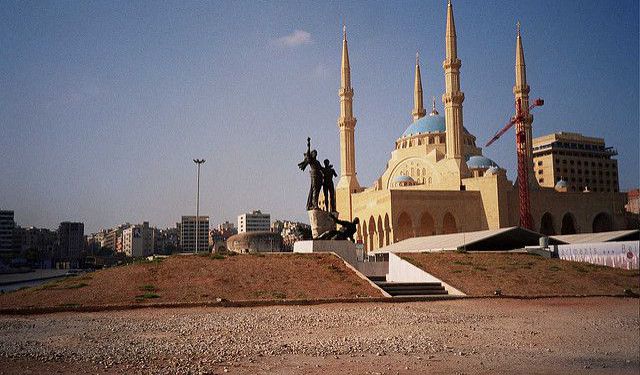
Walking Tours in Beirut, Lebanon

Create Your Own Walk in Beirut
Creating your own self-guided walk in Beirut is easy and fun. Choose the city attractions that you want to see and a walk route map will be created just for you. You can even set your hotel as the start point of the walk.
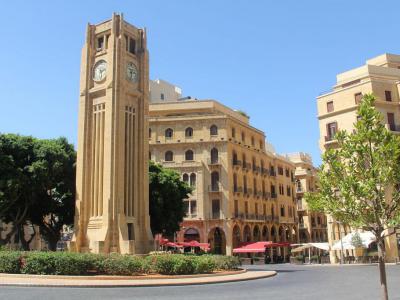
Beirut Downtown Walking Tour
How many times can a city die? Beirut, in 5,000 years, has died and come back many times. Archeological digs downtown have revealed Phoenician, Greek, Roman, Byzantine, Arab, Crusader and Ottoman remains and signs of influence.
In 140 BC the city was destroyed by Diodotus Tryphon, a king of the Seleucid Empire. His Hellenistic city lies over the Phoenician one. Pompey the Great arrived in 64 BC... view more
Tour Duration: 2 Hour(s)
Travel Distance: 3.3 Km or 2.1 Miles
In 140 BC the city was destroyed by Diodotus Tryphon, a king of the Seleucid Empire. His Hellenistic city lies over the Phoenician one. Pompey the Great arrived in 64 BC... view more
Tour Duration: 2 Hour(s)
Travel Distance: 3.3 Km or 2.1 Miles
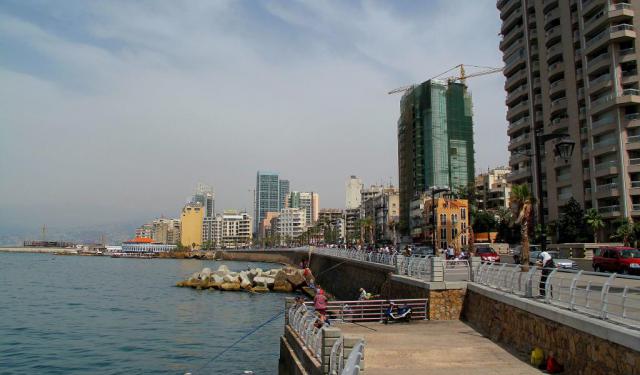
Seaside Walking Tour
If you wish to unwind or, perhaps, seek some quality time with your family and friends in a completely safe environment, while in Beirut, the local seaside area offers ample opportunities for both. Lined with palm trees, the city's waterfront guarantees a truly joyful experience and is as much fun for watching the Mediterranean, beautiful people and breathing the air as it is for exploring... view more
Tour Duration: 2 Hour(s)
Travel Distance: 3.2 Km or 2 Miles
Tour Duration: 2 Hour(s)
Travel Distance: 3.2 Km or 2 Miles