

Cripta di Santa Restituta (Crypt of Santa Restituta), Cagliari
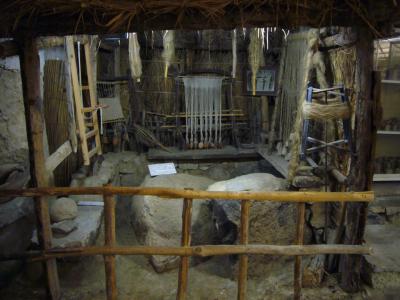
The crypt of Santa Restituta is a partly natural and partly artificial hypogeum used as a quarry for materials and later as a place of worship. The crypt of Santa Restituta is a hypogeum located under the 17th century church of the same name. Probably of natural origin, it was used as a quarry for materials in the late Punic and Roman ages, as demonstrated by the materials found during archaeological investigations. It was then converted into a place of pagan worship, as evidenced by the votive objects found. It was later used as a storage area for amphorae until the 1st century. AD, only to be abandoned. From the 13th century there was a period of reuse as a Byzantine-Orthodox church of which a fresco depicting Saint John the Baptist remains, part of a larger wall decoration, which was followed by another period of abandonment, until the 17th century. In 1614, during the search campaigns for the relics of the holy martyrs, the remains of Santa Restituta were found, probably brought to Sardinia as early as the 5th century. AD from Northern Africa. Following the discovery, Bishop Francisco de Esquivel ordered the renovation of the crypt, with the construction of a brick main altar, which houses the statue of Santa Restituta, and a small crypt below to house the presumed column of martyrdom, in reality a element linked to pagan cults. The hypogeum has an elongated irregular shape, with a main room connected to smaller rooms by narrow passages and with two staircases accessing from the outside; part of the rooms are the result of the breaking down and annexation of ancient cisterns. During the Second World War, the hypogeum was used as a refuge during the Anglo-American air raids, as evidenced by a plaque placed outside. In this period the relics were removed and hidden, to be found, at the end of the 90s, in the church of Sant'Anna, where they are still preserved.
In one of the historic and most characteristic districts of the Sardinian capital, there is a hypogeum which has marked a good part of the city's history, from the Phoenician-Punic age to the contemporary era. Quarry of limestone blocks, site of Phoenician worship, deposit of amphorae, place of Christian devotion, refuge in the Second World War. The crypt of Santa Restituta, one of the symbols of the picturesque Stampace district, has had a troubled history, punctuated by moments of abandonment and closed with the happy ending of the definitive restoration in the 1970s. The hypogeum has a central room connected to the outside by two stairways carved into the rock. The walls were painted: the one with Saint John the Baptist as a sign of blessing with his right hand (13th century) is preserved. On the main altar there is the marble statue of Santa Restituta, in the smaller one there were the simulacra of Saints Giusta, Giustina and Enedina. That it is carved into the rock, you feel it in your bones as soon as you cross the entrance, in the small square of the same name a few steps from the crypt of Sant'Efisio.
This crypt has been in use since pre-Christian times. It’s a huge, eerie, natural cavern where the echo of leaking water drip-drips. Originally a place of pagan worship, it became the home of the martyr Restituta in the 5th century and a reference point for Cagliari’s early Christians. The Orthodox Christians then took it over – you can still see remnants of their frescoes – until the 13th century, when it was abandoned. In WWII the crypt was used as an air-raid shelter, a task it wasn’t up to, since many died while holed up here in February 1943. It’s interesting to make out the wartime graffiti that covers the walls. ***PH***
In one of the historic and most characteristic districts of the Sardinian capital, there is a hypogeum which has marked a good part of the city's history, from the Phoenician-Punic age to the contemporary era. Quarry of limestone blocks, site of Phoenician worship, deposit of amphorae, place of Christian devotion, refuge in the Second World War. The crypt of Santa Restituta, one of the symbols of the picturesque Stampace district, has had a troubled history, punctuated by moments of abandonment and closed with the happy ending of the definitive restoration in the 1970s. The hypogeum has a central room connected to the outside by two stairways carved into the rock. The walls were painted: the one with Saint John the Baptist as a sign of blessing with his right hand (13th century) is preserved. On the main altar there is the marble statue of Santa Restituta, in the smaller one there were the simulacra of Saints Giusta, Giustina and Enedina. That it is carved into the rock, you feel it in your bones as soon as you cross the entrance, in the small square of the same name a few steps from the crypt of Sant'Efisio.
This crypt has been in use since pre-Christian times. It’s a huge, eerie, natural cavern where the echo of leaking water drip-drips. Originally a place of pagan worship, it became the home of the martyr Restituta in the 5th century and a reference point for Cagliari’s early Christians. The Orthodox Christians then took it over – you can still see remnants of their frescoes – until the 13th century, when it was abandoned. In WWII the crypt was used as an air-raid shelter, a task it wasn’t up to, since many died while holed up here in February 1943. It’s interesting to make out the wartime graffiti that covers the walls. ***PH***
Want to visit this sight? Check out these Self-Guided Walking Tours in Cagliari. Alternatively, you can download the mobile app "GPSmyCity: Walks in 1K+ Cities" from Apple App Store or Google Play Store. The app turns your mobile device to a personal tour guide and it works offline, so no data plan is needed when traveling abroad.
Download The GPSmyCity App



Cripta di Santa Restituta (Crypt of Santa Restituta) on Map
Sight Name: Cripta di Santa Restituta (Crypt of Santa Restituta)
Sight Location: Cagliari, Italy (See walking tours in Cagliari)
Sight Type: Attraction/Landmark
Sight Location: Cagliari, Italy (See walking tours in Cagliari)
Sight Type: Attraction/Landmark
Nearby Sights
Walking Tours in Cagliari, Italy

Create Your Own Walk in Cagliari
Creating your own self-guided walk in Cagliari is easy and fun. Choose the city attractions that you want to see and a walk route map will be created just for you. You can even set your hotel as the start point of the walk.
Cagliari Introduction Walking Tour
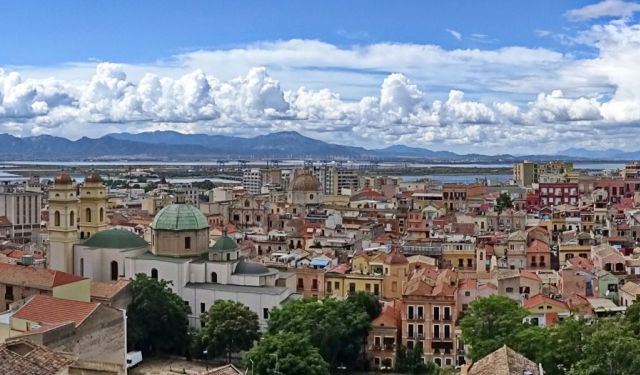
Welcome to Cagliari, Sardinia’s beating heart! Perched along the shimmering Mediterranean, this sun-soeaked city blends centuries-old history with modern charm. With stunning beaches, colorful lagoons, and lush greenery, it’s also a place where natural beauty meets cultural riches.
Cagliari’s story began long before our time. Around the 8th century BC, the Phoenicians founded Karaly as a... view more
Tour Duration: 2 Hour(s)
Travel Distance: 2.9 Km or 1.8 Miles
Cagliari’s story began long before our time. Around the 8th century BC, the Phoenicians founded Karaly as a... view more
Tour Duration: 2 Hour(s)
Travel Distance: 2.9 Km or 1.8 Miles