

Cagliari Introduction Walking Tour (Self Guided), Cagliari
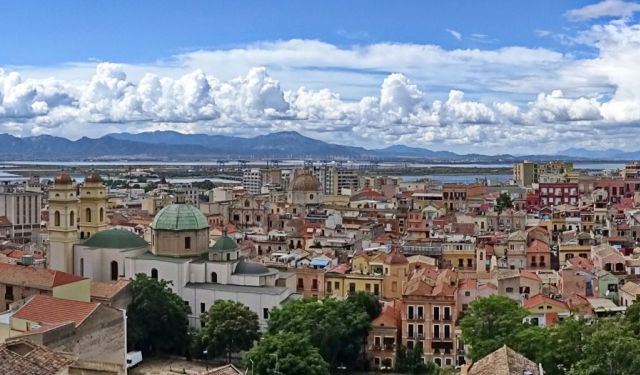
Welcome to Cagliari, Sardinia’s beating heart! Perched along the shimmering Mediterranean, this sun-soeaked city blends centuries-old history with modern charm. With stunning beaches, colorful lagoons, and lush greenery, it’s also a place where natural beauty meets cultural riches.
Cagliari’s story began long before our time. Around the 8th century BC, the Phoenicians founded Karaly as a crucial trade hub. Under Roman rule, the city thrived thanks to its strategic location on the Mediterranean trade routes. The Middle Ages saw Cagliari fortified by the Pisans, who constructed impressive defenses that still stand today. By the 14th century, it was under the Crown of Aragon, later joining the Spanish Empire. These layers of history left their mark, shaping the city’s architecture, language, and traditions.
In the 18th and 19th centuries, Sardinia became part of the House of Savoy, and eventually, unified Italy in 1861. Despite enduring heavy bombing during World War II, Cagliari rebounded, preserving its historic charm while evolving into a lively cultural and economic hub.
To get your bearings, start at the historic port, the city’s age-old gateway. From there, wander upward through streets that reveal layer upon layer of Cagliari’s colorful history. At the top, you’ll find the Bastion of Saint Remy, offering sweeping views of the city and the sea-proof of Cagliari’s long-standing role as a strategic stronghold. Nearby, the medieval Elephant Tower and San Pancrazio Tower stand tall as reminders of the Pisan era’s fortifications.
Cagliari’s spiritual and regal heritage shines in its Cathedral, a beautiful blend of Romanesque and Baroque architecture, and the Royal Palace, which once housed Spanish viceroys and Sardinian rulers. For an even deeper dive into the past, visit the National Archaeological Museum, home to stunning Nuragic artifacts that tell the tale of Sardinia’s ancient civilization.
To experience the city’s lively contemporary side, head to the San Benedetto market. Here, you’ll find a feast for the senses, from fresh Sardinian seafood and cheeses to aromatic spices and local delicacies.
Cagliari is a city of contrasts-ancient yet modern, coastal yet steeped in tradition. From its winding alleyways and historic landmarks to its relaxing beaches and lively markets, this is more than just a destination; it’s a journey through time. Let Cagliari’s stories unfold as you lose yourself in this ancient city with the aid of our self-guided walking tour.
Cagliari’s story began long before our time. Around the 8th century BC, the Phoenicians founded Karaly as a crucial trade hub. Under Roman rule, the city thrived thanks to its strategic location on the Mediterranean trade routes. The Middle Ages saw Cagliari fortified by the Pisans, who constructed impressive defenses that still stand today. By the 14th century, it was under the Crown of Aragon, later joining the Spanish Empire. These layers of history left their mark, shaping the city’s architecture, language, and traditions.
In the 18th and 19th centuries, Sardinia became part of the House of Savoy, and eventually, unified Italy in 1861. Despite enduring heavy bombing during World War II, Cagliari rebounded, preserving its historic charm while evolving into a lively cultural and economic hub.
To get your bearings, start at the historic port, the city’s age-old gateway. From there, wander upward through streets that reveal layer upon layer of Cagliari’s colorful history. At the top, you’ll find the Bastion of Saint Remy, offering sweeping views of the city and the sea-proof of Cagliari’s long-standing role as a strategic stronghold. Nearby, the medieval Elephant Tower and San Pancrazio Tower stand tall as reminders of the Pisan era’s fortifications.
Cagliari’s spiritual and regal heritage shines in its Cathedral, a beautiful blend of Romanesque and Baroque architecture, and the Royal Palace, which once housed Spanish viceroys and Sardinian rulers. For an even deeper dive into the past, visit the National Archaeological Museum, home to stunning Nuragic artifacts that tell the tale of Sardinia’s ancient civilization.
To experience the city’s lively contemporary side, head to the San Benedetto market. Here, you’ll find a feast for the senses, from fresh Sardinian seafood and cheeses to aromatic spices and local delicacies.
Cagliari is a city of contrasts-ancient yet modern, coastal yet steeped in tradition. From its winding alleyways and historic landmarks to its relaxing beaches and lively markets, this is more than just a destination; it’s a journey through time. Let Cagliari’s stories unfold as you lose yourself in this ancient city with the aid of our self-guided walking tour.
How it works: Download the app "GPSmyCity: Walks in 1K+ Cities" from Apple App Store or Google Play Store to your mobile phone or tablet. The app turns your mobile device into a personal tour guide and its built-in GPS navigation functions guide you from one tour stop to next. The app works offline, so no data plan is needed when traveling abroad.
Cagliari Introduction Walking Tour Map
Guide Name: Cagliari Introduction Walking Tour
Guide Location: Italy » Cagliari (See other walking tours in Cagliari)
Guide Type: Self-guided Walking Tour (Sightseeing)
# of Attractions: 11
Tour Duration: 2 Hour(s)
Travel Distance: 2.9 Km or 1.8 Miles
Author: DanaOffice
Sight(s) Featured in This Guide:
Guide Location: Italy » Cagliari (See other walking tours in Cagliari)
Guide Type: Self-guided Walking Tour (Sightseeing)
# of Attractions: 11
Tour Duration: 2 Hour(s)
Travel Distance: 2.9 Km or 1.8 Miles
Author: DanaOffice
Sight(s) Featured in This Guide:
- Portus Karalis (Port of Cagliari)
- Palazzo Civico (Civic Palace)
- Museo del Tesoro e Area Archeologica di Sant'Eulalia (Treasure Museum and Archaeological Area of Sant'Eulalia)
- Bastione di Saint Remy (Saint Remy Bastion)
- Torre dell'Elefante (Elephant Tower)
- Cattedrale di Santa Maria Assunta e Santa Cecilia (Cathedral of Cagliari)
- Palazzo Regio (Royal Palace)
- Torre di San Pancrazio (Tower of San Pancrazio)
- Cittadella dei Musei (Citadel of Giovanni Lilliu Museums)
- Museo Archeologico Nazionale di Cagliari (National Archaeological Museum of Cagliari)
- Mercato Civico di San Benedetto (San Benedetto Civic Market)
1) Portus Karalis (Port of Cagliari)
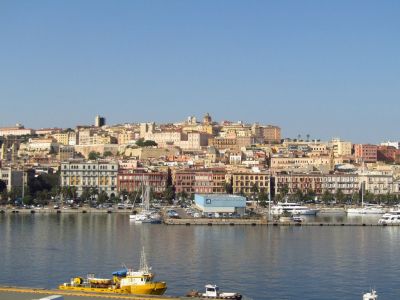
The Port of Cagliari has served as a strategic and commercial hub for over 2,000 years. Originally founded by the Phoenicians and later shaped by Carthaginian and Roman influences, the port has continuously evolved to meet the demands of maritime trade and tourism. Positioned just 11 miles from the Gibraltar–Suez shipping route, it remains a key location for transshipment activities in the western Mediterranean. The Port Authority of Cagliari manages an extensive 30-kilometer coastline, dividing the port into two main sections: the Old Harbour, which caters to passenger and yacht traffic, and the Canal Port, designed for larger cargo vessels and industrial shipping.
At the heart of the Port of Cagliari lies Portus Karalis, an exclusive marina renowned for its luxury amenities and prime location. With 118 berths, it is the only marina in southern Sardinia capable of accommodating yachts and superyachts up to 90 meters in length. Ideal for both long-term mooring and short-term stopovers, Portus Karalis offers a range of services, including electricity and water outlets, Wi-Fi, mooring assistance, security, weather updates, and waste collection.
Beyond its maritime significance, the Port of Cagliari is seamlessly integrated with the city’s vibrant life. The historic center, cultural attractions, and shopping streets are just steps away, offering visitors a smooth transition from sea to city. From the marina, the elegant Via Roma is immediately visible, lined with boutiques, cafés, and restaurants, while Piazza Yenne and the lively Marina and Castello districts provide a glimpse into Cagliari’s rich history and nightlife. With its coastal views, deep-rooted maritime legacy, and modern facilities, the Port of Cagliari remains one of the most prestigious and convenient gateways to Sardinia and the Mediterranean.
At the heart of the Port of Cagliari lies Portus Karalis, an exclusive marina renowned for its luxury amenities and prime location. With 118 berths, it is the only marina in southern Sardinia capable of accommodating yachts and superyachts up to 90 meters in length. Ideal for both long-term mooring and short-term stopovers, Portus Karalis offers a range of services, including electricity and water outlets, Wi-Fi, mooring assistance, security, weather updates, and waste collection.
Beyond its maritime significance, the Port of Cagliari is seamlessly integrated with the city’s vibrant life. The historic center, cultural attractions, and shopping streets are just steps away, offering visitors a smooth transition from sea to city. From the marina, the elegant Via Roma is immediately visible, lined with boutiques, cafés, and restaurants, while Piazza Yenne and the lively Marina and Castello districts provide a glimpse into Cagliari’s rich history and nightlife. With its coastal views, deep-rooted maritime legacy, and modern facilities, the Port of Cagliari remains one of the most prestigious and convenient gateways to Sardinia and the Mediterranean.
2) Palazzo Civico (Civic Palace)
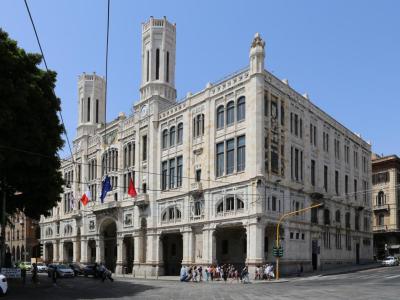
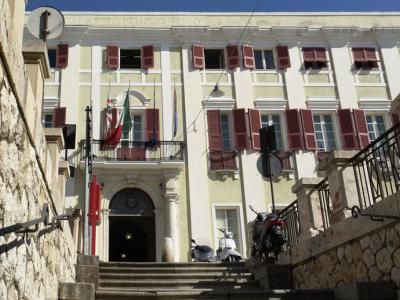
The Civic Palace of Cagliari, the seat of the municipal government, is a striking example of early 20th-century architecture, blending Aragonese Gothic style with Liberty-style decorations. Built from white limestone, the palace stands prominently along Via Roma, overlooking the port, symbolizing a city that has shifted from fortification to openness.
Originally, the municipal seat was located in Piazza Palazzo, within the fortified Castello district, offering protection in times of conflict. However, under the guidance of Ottone Bacaredda, a visionary mayor at the turn of the 20th century, the headquarters moved to its current location in the Marina district, a growing cultural and economic hub. The new Civic Palace reflects Cagliari’s evolution, embracing a more outward-facing identity while still preserving its deep-rooted traditions.
Inside the palace, visitors can admire an array of artistic and historical treasures, with each room offering a unique glimpse into Sardinian heritage. One of the most remarkable spaces is the Wedding Room, featuring a mural cycle by Filippo Figari, painted between 1912 and 1914. This artwork celebrates Sardinian love and tradition, depicting rural life, traditional clothing, and colorful landscapes. Figari spent time in Busachi, an area known for its strong agro-pastoral culture, to capture the essence of Sardinia in his work. His murals, far from being mere folklore, present a powerful and romanticized vision of the island, highlighting its vitality and beauty.
The Mayor’s Room is another highlight, dominated by a Flemish tapestry by Francesco Spiringius, measuring 4.5 meters high and 7 meters wide, a masterpiece of 16th-century Brussels craftsmanship. Opposite, a large canvas by Giovanni Marghinotti pays tribute to King Carlo Felice of Savoy, who was responsible for Sardinia’s first major road network, based on ancient Roman routes.
Another prestigious chamber within the Civic Palace is the Sabauda Room, now serving as the office of the vice-mayor. The room’s red and gold furnishings, complemented by three portraits of the Savoy monarchs painted by Giovanni Marghinotti, create an atmosphere of noble authority. A particularly significant piece in the room is a miniature replica of the chariot used in the Feast of Saint Efisio, the religious festival celebrated every May 1st, when the statue of Saint Efisio is paraded through the city in a long-standing tradition.
Originally, the municipal seat was located in Piazza Palazzo, within the fortified Castello district, offering protection in times of conflict. However, under the guidance of Ottone Bacaredda, a visionary mayor at the turn of the 20th century, the headquarters moved to its current location in the Marina district, a growing cultural and economic hub. The new Civic Palace reflects Cagliari’s evolution, embracing a more outward-facing identity while still preserving its deep-rooted traditions.
Inside the palace, visitors can admire an array of artistic and historical treasures, with each room offering a unique glimpse into Sardinian heritage. One of the most remarkable spaces is the Wedding Room, featuring a mural cycle by Filippo Figari, painted between 1912 and 1914. This artwork celebrates Sardinian love and tradition, depicting rural life, traditional clothing, and colorful landscapes. Figari spent time in Busachi, an area known for its strong agro-pastoral culture, to capture the essence of Sardinia in his work. His murals, far from being mere folklore, present a powerful and romanticized vision of the island, highlighting its vitality and beauty.
The Mayor’s Room is another highlight, dominated by a Flemish tapestry by Francesco Spiringius, measuring 4.5 meters high and 7 meters wide, a masterpiece of 16th-century Brussels craftsmanship. Opposite, a large canvas by Giovanni Marghinotti pays tribute to King Carlo Felice of Savoy, who was responsible for Sardinia’s first major road network, based on ancient Roman routes.
Another prestigious chamber within the Civic Palace is the Sabauda Room, now serving as the office of the vice-mayor. The room’s red and gold furnishings, complemented by three portraits of the Savoy monarchs painted by Giovanni Marghinotti, create an atmosphere of noble authority. A particularly significant piece in the room is a miniature replica of the chariot used in the Feast of Saint Efisio, the religious festival celebrated every May 1st, when the statue of Saint Efisio is paraded through the city in a long-standing tradition.
3) Museo del Tesoro e Area Archeologica di Sant'Eulalia (Treasure Museum and Archaeological Area of Sant'Eulalia)
The Treasure Museum and Archaeological Area of Saint Eulalia is one of Cagliari’s most significant cultural and historical sites, located in the Marina district. Housed in a building adjacent to the Church of Saint Eulalia, the museum showcases an extensive collection of religious artifacts, artworks, and historical documents from various churches in the district. The ground floor hosts the parish archive of Saint Eulalia, preserving valuable records and manuscripts. Meanwhile, the first floor is dedicated to artistic exhibits, including silverware crafted by Ligurian and Sardinian artisans, religious paintings, and statues. The museum also preserves heritage salvaged from churches affected by World War II bombings, such as Santa Lucia, which was destroyed in 1943.
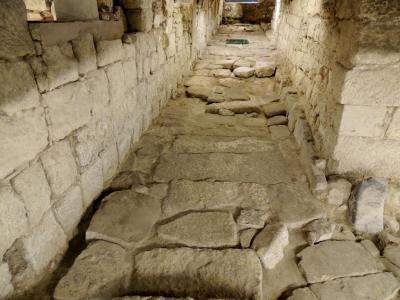
A key highlight of the museum is its archaeological area, discovered in 1990 during renovation work on the building. The site reveals an ancient Roman road dating back to the 1st and 2nd centuries AD, believed to have once connected the area to the nearby port of Cagliari. In addition to the road, structures from the Republican era have also been uncovered, offering a glimpse into the daily life of ancient Cagliari. The museum is part of a broader complex that includes the Church of Saint Eulalia, the monumental crypt, and the excavations beneath Santa Lucia, bringing together more than 2,000 years of history, from the Punic period to the Catalan-Aragonese era and into modern times.
Beyond its archaeological features, the museum also houses a notable collection of religious art. The upstairs treasury includes religious vestments, silverware, wooden sculptures, and medieval codices. Among the standout pieces is an Ecce Homo painting, attributed to a 17th-century Flemish artist, depicting Christ after his flagellation in a striking double-sided composition.
A key highlight of the museum is its archaeological area, discovered in 1990 during renovation work on the building. The site reveals an ancient Roman road dating back to the 1st and 2nd centuries AD, believed to have once connected the area to the nearby port of Cagliari. In addition to the road, structures from the Republican era have also been uncovered, offering a glimpse into the daily life of ancient Cagliari. The museum is part of a broader complex that includes the Church of Saint Eulalia, the monumental crypt, and the excavations beneath Santa Lucia, bringing together more than 2,000 years of history, from the Punic period to the Catalan-Aragonese era and into modern times.
Beyond its archaeological features, the museum also houses a notable collection of religious art. The upstairs treasury includes religious vestments, silverware, wooden sculptures, and medieval codices. Among the standout pieces is an Ecce Homo painting, attributed to a 17th-century Flemish artist, depicting Christ after his flagellation in a striking double-sided composition.
4) Bastione di Saint Remy (Saint Remy Bastion) (must see)
The Saint Remy Bastion is one of the most recognizable landmarks in Cagliari, built at the end of the 19th century on top of older defensive walls that once protected the historic Castello district. Instead of functioning as a military structure, it was designed as a monumental public space, transforming the former fortifications into an architectural focal point for the city. Its location between the lower town and the elevated Castello area makes it both a visual landmark and an important connection between different parts of Cagliari.
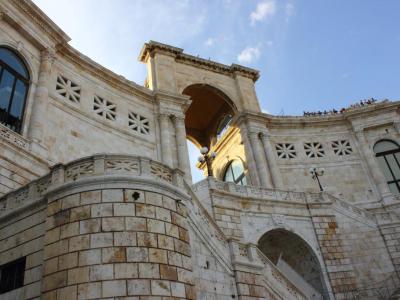
As you approach from the lower city, you can notice the wide double staircase rising toward the upper level of the bastion. The steps lead up to a large triumphal arch framed by classical columns, which marks the entrance to the terrace above. The pale stone and symmetrical design reflect the Neoclassical style, giving the structure a formal and balanced appearance. From this lower perspective, the scale of the staircase and arch already gives a sense of the monumentality that defines the bastion.
Once you reach the top and step onto the Umberto I Terrace, the view opens up across the city, the harbor, and the surrounding hills. The terrace is a broad, open space, allowing you to move freely and take in different angles of the landscape. The white stone balustrades frame the edges of the viewpoint, while the height of the terrace makes it one of the most accessible panoramic spots in Cagliari. If you look behind the arch, you will notice a short set of steps leading upward to a smaller upper level known as the Santa Caterina Bastion, which provides a slightly higher vantage point and a different perspective over the city.
The bastion is also used as a public gathering space, with both locals and visitors coming here throughout the day. The large terrace often serves as a place to pause, meet, or simply spend some time outdoors. Beneath the terrace, interior spaces are occasionally used for exhibitions or cultural events, adding another layer of activity to the site. In the evening, the atmosphere changes as the city lights begin to appear and the structure is softly illuminated, making it a popular place to stop and look out over Cagliari.
As you approach from the lower city, you can notice the wide double staircase rising toward the upper level of the bastion. The steps lead up to a large triumphal arch framed by classical columns, which marks the entrance to the terrace above. The pale stone and symmetrical design reflect the Neoclassical style, giving the structure a formal and balanced appearance. From this lower perspective, the scale of the staircase and arch already gives a sense of the monumentality that defines the bastion.
Once you reach the top and step onto the Umberto I Terrace, the view opens up across the city, the harbor, and the surrounding hills. The terrace is a broad, open space, allowing you to move freely and take in different angles of the landscape. The white stone balustrades frame the edges of the viewpoint, while the height of the terrace makes it one of the most accessible panoramic spots in Cagliari. If you look behind the arch, you will notice a short set of steps leading upward to a smaller upper level known as the Santa Caterina Bastion, which provides a slightly higher vantage point and a different perspective over the city.
The bastion is also used as a public gathering space, with both locals and visitors coming here throughout the day. The large terrace often serves as a place to pause, meet, or simply spend some time outdoors. Beneath the terrace, interior spaces are occasionally used for exhibitions or cultural events, adding another layer of activity to the site. In the evening, the atmosphere changes as the city lights begin to appear and the structure is softly illuminated, making it a popular place to stop and look out over Cagliari.
5) Torre dell'Elefante (Elephant Tower)
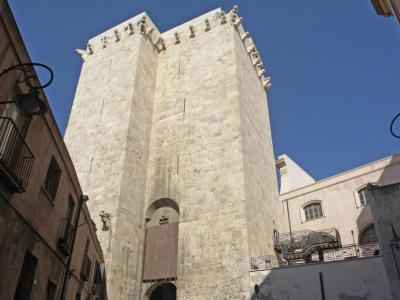
The Elephant Tower is one of the most significant medieval landmarks in Cagliari, standing as the second tallest medieval tower in the city after the San Pancrazio Tower. Located in the historic Castello district, the tower can be accessed from Via Santa Croce, Via Università, and Cammino Nuovo, and offers panoramic views of Cagliari and its surrounding landscapes. Constructed from Cagliari hard limestone, a white limestone quarried from Bonaria, the tower follows the typical Pisan architectural style, with three solid limestone sides and an open fourth side facing Castello, revealing four floors supported by wooden mezzanines.
Defensive elements included three massive doors, two shutters, and a wooden scaffolding structure used to repel invaders from above. The tower’s most distinctive feature, from which it derives its name, is a small stone elephant sculpture protruding from the south-facing wall, a symbol commonly used by the Republic of Pisa. The Elephant Tower also features several medieval coats of arms, including those of the Pisan castellans, carved into the limestone walls.
Built in 1307 by the Pisan architect Giovanni Capula, the Elephant Tower was designed to protect the Castello district, the city's political and military stronghold during Pisan rule. It was constructed alongside its twin, the San Pancrazio Tower, to fortify Cagliari against external threats. When the Aragonese took control of Sardinia between 1323 and 1327, they closed off the north-facing side, converting the interior into storage spaces and housing for Spanish officials. Over the following centuries, the tower saw multiple transformations, with additional buildings constructed around it in the 17th and 18th centuries, partially obscuring its façade.
By the mid-19th century, the tower had been repurposed as a prison before undergoing a major restoration in 1906, which removed later modifications and restored its original Pisan design. A further restoration in the 1980s rebuilt the wooden mezzanine floors, allowing visitors to experience the structure much as it was in medieval times.
Defensive elements included three massive doors, two shutters, and a wooden scaffolding structure used to repel invaders from above. The tower’s most distinctive feature, from which it derives its name, is a small stone elephant sculpture protruding from the south-facing wall, a symbol commonly used by the Republic of Pisa. The Elephant Tower also features several medieval coats of arms, including those of the Pisan castellans, carved into the limestone walls.
Built in 1307 by the Pisan architect Giovanni Capula, the Elephant Tower was designed to protect the Castello district, the city's political and military stronghold during Pisan rule. It was constructed alongside its twin, the San Pancrazio Tower, to fortify Cagliari against external threats. When the Aragonese took control of Sardinia between 1323 and 1327, they closed off the north-facing side, converting the interior into storage spaces and housing for Spanish officials. Over the following centuries, the tower saw multiple transformations, with additional buildings constructed around it in the 17th and 18th centuries, partially obscuring its façade.
By the mid-19th century, the tower had been repurposed as a prison before undergoing a major restoration in 1906, which removed later modifications and restored its original Pisan design. A further restoration in the 1980s rebuilt the wooden mezzanine floors, allowing visitors to experience the structure much as it was in medieval times.
6) Cattedrale di Santa Maria Assunta e Santa Cecilia (Cathedral of Cagliari) (must see)
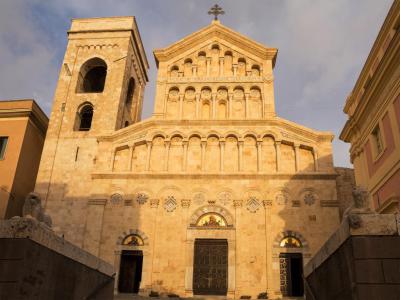
The Cathedral of Saint Mary of the Assumption and Saint Cecilia is the main religious building in Cagliari, located in the elevated Castello district. Originally built in the 13th century during the Pisan period, the cathedral began as a Romanesque structure, later incorporating Gothic and Baroque elements as it was expanded and redesigned over time. Its current façade, reconstructed in the 20th century, reflects a return to its earlier Pisan-inspired appearance, giving the building a clean and balanced exterior.
As you approach the cathedral, you can notice its position within the Castello district, slightly elevated above the surrounding streets. The façade, with its pale stone and layered detailing, stands out against the surrounding buildings. This area also offers occasional views over parts of the city, reinforcing the cathedral’s role as both a religious and visual landmark within Cagliari.
Step inside and take a moment near the entrance, where you can find the cathedral’s main highlight: the ambo (also called a pulpit). This 12th-century work, originally created for the Cathedral of Pisa, was brought to Cagliari in 1312 and later divided into two separate pulpits in the 17th century. As you look at them, you can notice the detailed marble carvings depicting scenes from the New Testament. The original structure was supported by four marble lions, which you can now see placed at the base of the presbytery balustrade. As you continue along the central nave, the richly decorated Baroque interior opens up, with marble surfaces, side chapels, and sculptural details leading your attention toward the main altar, distinguished by its use of polychrome marble and layered design.
If you continue exploring, you can also find several notable artworks and monuments throughout the cathedral. Among them is a 15th-century Flemish triptych, often associated with the early Netherlandish painter Rogier van der Weyden, as well as the Baroque funerary monument of Archbishop Bernardo de La Cabra. In the left transept, there is a 14th-century chapel and the mausoleum of Martin I of Sicily.
Descending below the cathedral, you reach the Sanctuary of the Martyrs, part of the crypt, where 179 niches hold relics discovered in the 17th century near the Basilica of San Saturnino. The sanctuary is arranged into three chapels with rich Baroque decoration, offering a more enclosed and atmospheric contrast to the space above.
As you approach the cathedral, you can notice its position within the Castello district, slightly elevated above the surrounding streets. The façade, with its pale stone and layered detailing, stands out against the surrounding buildings. This area also offers occasional views over parts of the city, reinforcing the cathedral’s role as both a religious and visual landmark within Cagliari.
Step inside and take a moment near the entrance, where you can find the cathedral’s main highlight: the ambo (also called a pulpit). This 12th-century work, originally created for the Cathedral of Pisa, was brought to Cagliari in 1312 and later divided into two separate pulpits in the 17th century. As you look at them, you can notice the detailed marble carvings depicting scenes from the New Testament. The original structure was supported by four marble lions, which you can now see placed at the base of the presbytery balustrade. As you continue along the central nave, the richly decorated Baroque interior opens up, with marble surfaces, side chapels, and sculptural details leading your attention toward the main altar, distinguished by its use of polychrome marble and layered design.
If you continue exploring, you can also find several notable artworks and monuments throughout the cathedral. Among them is a 15th-century Flemish triptych, often associated with the early Netherlandish painter Rogier van der Weyden, as well as the Baroque funerary monument of Archbishop Bernardo de La Cabra. In the left transept, there is a 14th-century chapel and the mausoleum of Martin I of Sicily.
Descending below the cathedral, you reach the Sanctuary of the Martyrs, part of the crypt, where 179 niches hold relics discovered in the 17th century near the Basilica of San Saturnino. The sanctuary is arranged into three chapels with rich Baroque decoration, offering a more enclosed and atmospheric contrast to the space above.
7) Palazzo Regio (Royal Palace)
The Royal Palace of Cagliari, also known as the Viceregal Palace (Royal Palace), is a historic landmark in the Castello district, serving as the former residence of the viceroy during the Aragonese, Spanish, and Savoy periods. Originally built in the 14th century, the palace became the official seat of the viceroy in 1337, under the orders of Peter IV of Aragon. Over the centuries, it underwent numerous modifications and expansions, adapting to the architectural styles and needs of each ruling power. Today, the Royal Palace houses the Prefecture of the Metropolitan City of Cagliari and the offices of the Province of Southern Sardinia, continuing its long tradition as an institutional and administrative center.
Architecturally, the Royal Palace reflects its rich history through various renovations, particularly those carried out during the 18th century by the Savoy dynasty. The Piedmontese engineers de Guibert and de Vincenti were responsible for the grand staircase leading to the main floor, while in 1735, the interiors were redesigned by Della Vallea, emphasizing elegant halls and refined decorations. The building’s west-facing façade, with its main portal and central balcony, was restored in 1769, as indicated by an inscription on the lunette above the French window.
One of the most significant periods in the palace's history was from 1799 to 1814, when the Savoy royal family took refuge in Cagliari after fleeing Napoleon’s invasion of Piedmont. The palace became their temporary residence, further reinforcing its political importance.
Inside, the Council Hall stands out for its decorations, completed during renovation works in 1885 when the building became the representative seat of the Province of Cagliari. The Perugian artist Domenico Bruschi painted the frescoes, while Angeletti worked on the stucco decorations, giving the hall a refined atmosphere. The palace's long façade, marked by monumental pilasters, faces Palace Square, while its high supporting arches extend along the rocky ridge overlooking the Villanova district.
Architecturally, the Royal Palace reflects its rich history through various renovations, particularly those carried out during the 18th century by the Savoy dynasty. The Piedmontese engineers de Guibert and de Vincenti were responsible for the grand staircase leading to the main floor, while in 1735, the interiors were redesigned by Della Vallea, emphasizing elegant halls and refined decorations. The building’s west-facing façade, with its main portal and central balcony, was restored in 1769, as indicated by an inscription on the lunette above the French window.
One of the most significant periods in the palace's history was from 1799 to 1814, when the Savoy royal family took refuge in Cagliari after fleeing Napoleon’s invasion of Piedmont. The palace became their temporary residence, further reinforcing its political importance.
Inside, the Council Hall stands out for its decorations, completed during renovation works in 1885 when the building became the representative seat of the Province of Cagliari. The Perugian artist Domenico Bruschi painted the frescoes, while Angeletti worked on the stucco decorations, giving the hall a refined atmosphere. The palace's long façade, marked by monumental pilasters, faces Palace Square, while its high supporting arches extend along the rocky ridge overlooking the Villanova district.
8) Torre di San Pancrazio (Tower of San Pancrazio)
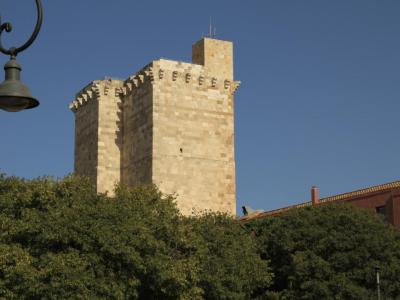
The Tower of San Pancrazio is the tallest medieval tower in Cagliari, standing as a symbol of the city’s Pisan heritage. Built in 1305 under the direction of the architect Giovanni Capula, the tower was constructed during the Pisan period, from 1258 to 1326, to fortify the Castello district, the city’s political, military, and religious hub. Located at Cagliari’s highest point, the tower offers panoramic views of the city and the surrounding coastline.
It is made of Cagliari limestone, a white stone extracted from Bonaria Hill, and features three enclosed sides with narrow slits for defense, while the fourth side remains open, exposing the interior galleries. Along with the Elephant Tower, it served as a key defensive structure, securing the main access points to Castello. It also played a role in mapping Sardinia, as the Piedmontese general Alberto Della Marmora used the tower as a reference point to create the island’s first geographical map in the 19th century.
Following the Aragonese conquest of Sardinia, from 1323 to 1327, the south side of the tower was enclosed, repurposing its interior as warehouses and residences for Spanish officials. By the 16th century, the construction of the Dusay Bastion reduced its strategic importance, and the tower was transformed into a prison, a role it maintained until the late 19th century. In 1903, extensive restoration work was undertaken to return the structure to its original Pisan-era condition.
Today, visitors to the Tower of San Pancrazio can explore its architecture, admire the coats of arms of Pisan castellans embedded in its walls, and walk along its wooden mezzanines, reconstructed during 20th-century restorations. Though its original wooden doors and iron-covered shutters have been lost, the 35 stone corbels that once supported a wooden balcony remain intact. The tower’s name is believed to originate from the nearby Church of Saint Lawrence, which was dedicated to Saint Pancras during the Pisan period.
It is made of Cagliari limestone, a white stone extracted from Bonaria Hill, and features three enclosed sides with narrow slits for defense, while the fourth side remains open, exposing the interior galleries. Along with the Elephant Tower, it served as a key defensive structure, securing the main access points to Castello. It also played a role in mapping Sardinia, as the Piedmontese general Alberto Della Marmora used the tower as a reference point to create the island’s first geographical map in the 19th century.
Following the Aragonese conquest of Sardinia, from 1323 to 1327, the south side of the tower was enclosed, repurposing its interior as warehouses and residences for Spanish officials. By the 16th century, the construction of the Dusay Bastion reduced its strategic importance, and the tower was transformed into a prison, a role it maintained until the late 19th century. In 1903, extensive restoration work was undertaken to return the structure to its original Pisan-era condition.
Today, visitors to the Tower of San Pancrazio can explore its architecture, admire the coats of arms of Pisan castellans embedded in its walls, and walk along its wooden mezzanines, reconstructed during 20th-century restorations. Though its original wooden doors and iron-covered shutters have been lost, the 35 stone corbels that once supported a wooden balcony remain intact. The tower’s name is believed to originate from the nearby Church of Saint Lawrence, which was dedicated to Saint Pancras during the Pisan period.
9) Cittadella dei Musei (Citadel of Giovanni Lilliu Museums)
The Citadel of Giovanni Lilliu Museums is Cagliari’s premier museum complex. It stands on the site of the former Royal Arsenal, a military facility established by the Piedmontese and later repurposed into a cultural hub. The citadel features a large central courtyard surrounded by buildings that house several significant collections, making it a must-visit for history and art enthusiasts.
Among the most notable institutions within the complex is the National Archaeological Museum, which holds an extensive collection of Nuragic bronzes, Phoenician relics, Punic artifacts, and Roman sculptures, providing insight into Sardinia’s ancient civilizations. Another highlight is the National Art Gallery, which showcases medieval and Baroque-era Sardinian and Catalan paintings, including intricate altarpieces salvaged from churches destroyed during World War II.
Beyond archaeology and fine art, the Citadel also houses some more unusual exhibits, making it an intriguing destination for a wide range of visitors. One such collection is the Anatomical Wax Museum, which contains meticulously crafted wax models of human anatomy, historically used for medical studies. While some visitors find the exhibition fascinating, others consider it slightly unsettling due to the detailed nature of the models.
Additionally, the Museum of Siamese Art presents a contrast to the other displays, offering a collection of artifacts and artwork from Thailand, a rare find in European museums. Completing the complex is the Luigi Cocco Ethnographic Collection, which highlights Sardinian folk art, textiles, ceramics, and traditional crafts, offering a glimpse into the island’s cultural heritage.
The Citadel’s historical significance extends beyond its museums, as the site itself reflects centuries of Cagliari’s past. Originally located outside the Pisan-era walls, it was later incorporated into the city’s fortifications, with remnants of its defensive structures, including bastions and prison towers, still visible today. During Spanish rule, it became one of the most fortified areas of Cagliari, featuring barbicans, drawbridges, and bastions. However, by the 16th century, advancements in artillery led to modifications and the demolition of some defensive walls.
Among the most notable institutions within the complex is the National Archaeological Museum, which holds an extensive collection of Nuragic bronzes, Phoenician relics, Punic artifacts, and Roman sculptures, providing insight into Sardinia’s ancient civilizations. Another highlight is the National Art Gallery, which showcases medieval and Baroque-era Sardinian and Catalan paintings, including intricate altarpieces salvaged from churches destroyed during World War II.
Beyond archaeology and fine art, the Citadel also houses some more unusual exhibits, making it an intriguing destination for a wide range of visitors. One such collection is the Anatomical Wax Museum, which contains meticulously crafted wax models of human anatomy, historically used for medical studies. While some visitors find the exhibition fascinating, others consider it slightly unsettling due to the detailed nature of the models.
Additionally, the Museum of Siamese Art presents a contrast to the other displays, offering a collection of artifacts and artwork from Thailand, a rare find in European museums. Completing the complex is the Luigi Cocco Ethnographic Collection, which highlights Sardinian folk art, textiles, ceramics, and traditional crafts, offering a glimpse into the island’s cultural heritage.
The Citadel’s historical significance extends beyond its museums, as the site itself reflects centuries of Cagliari’s past. Originally located outside the Pisan-era walls, it was later incorporated into the city’s fortifications, with remnants of its defensive structures, including bastions and prison towers, still visible today. During Spanish rule, it became one of the most fortified areas of Cagliari, featuring barbicans, drawbridges, and bastions. However, by the 16th century, advancements in artillery led to modifications and the demolition of some defensive walls.
10) Museo Archeologico Nazionale di Cagliari (National Archaeological Museum of Cagliari) (must see)
The National Archaeological Museum of Cagliari is the most important museum for understanding the ancient history of Cagliari and the wider island of Sardinia. Located within the Citadel of Museums in the Castello district, it presents a wide-ranging collection that spans nearly 7,000 years of history, from prehistoric times to the early Middle Ages. The museum holds over 4,000 archaeological artifacts, offering a broad and detailed overview of the island’s cultural development.
As you move through the galleries, you can follow a chronological layout that guides you through different historical periods. One of the first major highlights is the section dedicated to the Nuragic civilization, unique to Sardinia. Look for the small bronze figurines, often called “bronzetti,” which depict warriors, animals, and scenes of daily life. These objects are not only detailed but also important sources of information, as there are no written records from this period. The museum’s collection of these figurines is considered one of the most significant of its kind.
Continuing through the museum, you will come across the remains of the Giants of Mont’e Prama, large stone statues dating from around the 8th century BCE. These figures, representing warriors, archers, and boxers, are among the earliest monumental sculptures in the western Mediterranean. Nearby displays also include Phoenician and Punic jewelry and funerary objects, followed by Roman-era artifacts such as mosaics, sculptures, coins, and everyday items. As you look through these sections, you can see how different cultures influenced Sardinia over time.
The museum is spread across multiple levels, each focusing on a different period or theme, making it easy to navigate while still offering a large amount of material. Because the collection brings together finds from across the entire island, it serves as a useful introduction before visiting archaeological sites in Sardinia. Rather than focusing on a single highlight, the museum stands out for the range and continuity of its collection, allowing you to follow how life on the island changed across thousands of years.
As you move through the galleries, you can follow a chronological layout that guides you through different historical periods. One of the first major highlights is the section dedicated to the Nuragic civilization, unique to Sardinia. Look for the small bronze figurines, often called “bronzetti,” which depict warriors, animals, and scenes of daily life. These objects are not only detailed but also important sources of information, as there are no written records from this period. The museum’s collection of these figurines is considered one of the most significant of its kind.
Continuing through the museum, you will come across the remains of the Giants of Mont’e Prama, large stone statues dating from around the 8th century BCE. These figures, representing warriors, archers, and boxers, are among the earliest monumental sculptures in the western Mediterranean. Nearby displays also include Phoenician and Punic jewelry and funerary objects, followed by Roman-era artifacts such as mosaics, sculptures, coins, and everyday items. As you look through these sections, you can see how different cultures influenced Sardinia over time.
The museum is spread across multiple levels, each focusing on a different period or theme, making it easy to navigate while still offering a large amount of material. Because the collection brings together finds from across the entire island, it serves as a useful introduction before visiting archaeological sites in Sardinia. Rather than focusing on a single highlight, the museum stands out for the range and continuity of its collection, allowing you to follow how life on the island changed across thousands of years.
11) Mercato Civico di San Benedetto (San Benedetto Civic Market) (must see)
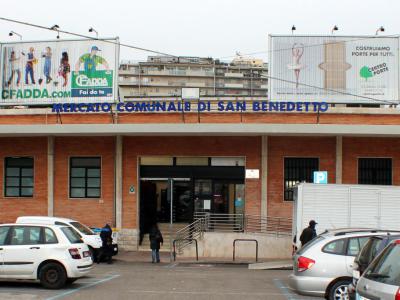
The San Benedetto Civic Market is one of the largest covered markets in Cagliari, offering a direct look into the city’s daily life and food culture. Covering around 8,000 square meters, it stands out not only for its size but also for the variety of products available. Unlike markets designed mainly for visitors, this one is still used primarily by locals, which gives it a more authentic and active atmosphere, especially in the morning hours.
As you enter the market, you will likely find yourself on the ground floor, where the focus is on fresh fish and seafood. Walk through this section and you can see long rows of stalls displaying fish laid out on ice, with a wide range of Mediterranean species available. The variety is noticeable, from whole fish to shellfish, reflecting the importance of fishing in Sardinian cuisine. The layout is open and organized, making it easy to move between the different vendors.
If you make your way upstairs, the atmosphere changes slightly as you reach the upper floor, which is dedicated to other food products. Here you can find meat, cheeses, fruits, vegetables, bread, and local specialties. As you walk through this level, you may notice the presence of Sardinian products such as cured meats, local cheeses, and traditional baked goods. Some stalls also offer prepared food, giving you the opportunity to try simple dishes made with fresh ingredients from the market itself.
The structure of the market, with its two clearly divided levels, helps keep everything easy to navigate despite its size. Throughout the space, the steady flow of people—locals shopping, vendors preparing their products, and visitors exploring—creates a lively but functional environment. Visiting in the morning gives the best sense of its everyday rhythm, when the market is at its busiest and most representative of life in Cagliari.
As you enter the market, you will likely find yourself on the ground floor, where the focus is on fresh fish and seafood. Walk through this section and you can see long rows of stalls displaying fish laid out on ice, with a wide range of Mediterranean species available. The variety is noticeable, from whole fish to shellfish, reflecting the importance of fishing in Sardinian cuisine. The layout is open and organized, making it easy to move between the different vendors.
If you make your way upstairs, the atmosphere changes slightly as you reach the upper floor, which is dedicated to other food products. Here you can find meat, cheeses, fruits, vegetables, bread, and local specialties. As you walk through this level, you may notice the presence of Sardinian products such as cured meats, local cheeses, and traditional baked goods. Some stalls also offer prepared food, giving you the opportunity to try simple dishes made with fresh ingredients from the market itself.
The structure of the market, with its two clearly divided levels, helps keep everything easy to navigate despite its size. Throughout the space, the steady flow of people—locals shopping, vendors preparing their products, and visitors exploring—creates a lively but functional environment. Visiting in the morning gives the best sense of its everyday rhythm, when the market is at its busiest and most representative of life in Cagliari.
The Most Popular Cities
/ view all