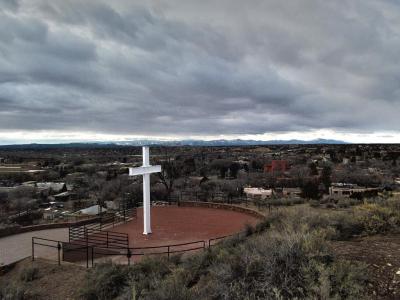


Cross of the Martyrs, Santa Fe
The Cross of the Martyrs stands on a hilltop a short walk northeast of Santa Fe Plaza. Dedicated to the 21 Franciscan friars killed during the Pueblo Revolt of 1680, the site offers panoramic views across the city. The climb is relatively short, although the paved walkway includes several stairways and switchbacks. Handrails and resting places make the ascent easier, while a series of plaques recounts episodes from Santa Fe’s history.
Spanish contact with the Pueblo peoples began with Francisco Vázquez de Coronado’s expedition in 1540, while permanent colonization followed in 1598. During the decades that followed, Pueblo communities endured demands for tribute and forced labor, the suppression of their religious traditions, and episodes of violence and enslavement. By the 1670s, severe drought, famine, disease, and raids by neighboring groups had intensified the region’s hardships.
Tensions reached a critical point in 1675, when Governor Juan Francisco Treviño ordered the arrest of 47 Pueblo religious leaders on charges of “sorcery.” Four were sentenced to death, while the others were publicly whipped and imprisoned. A large delegation of Pueblo warriors confronted the governor in Santa Fe and secured the release of the surviving prisoners. Among them was Po’pay, a religious leader from Ohkay Owingeh.
Po’pay later settled at Taos Pueblo, where he worked with leaders from numerous Pueblo communities to organize a coordinated uprising. In August 1680, Pueblo forces attacked Spanish settlements and besieged Santa Fe, eventually forcing the surviving colonists to retreat south to El Paso. The Spanish remained outside northern New Mexico for 12 years, returning under Diego de Vargas in 1692.
Spanish contact with the Pueblo peoples began with Francisco Vázquez de Coronado’s expedition in 1540, while permanent colonization followed in 1598. During the decades that followed, Pueblo communities endured demands for tribute and forced labor, the suppression of their religious traditions, and episodes of violence and enslavement. By the 1670s, severe drought, famine, disease, and raids by neighboring groups had intensified the region’s hardships.
Tensions reached a critical point in 1675, when Governor Juan Francisco Treviño ordered the arrest of 47 Pueblo religious leaders on charges of “sorcery.” Four were sentenced to death, while the others were publicly whipped and imprisoned. A large delegation of Pueblo warriors confronted the governor in Santa Fe and secured the release of the surviving prisoners. Among them was Po’pay, a religious leader from Ohkay Owingeh.
Po’pay later settled at Taos Pueblo, where he worked with leaders from numerous Pueblo communities to organize a coordinated uprising. In August 1680, Pueblo forces attacked Spanish settlements and besieged Santa Fe, eventually forcing the surviving colonists to retreat south to El Paso. The Spanish remained outside northern New Mexico for 12 years, returning under Diego de Vargas in 1692.
Want to visit this sight? Check out these Self-Guided Walking Tours in Santa Fe. Alternatively, you can download the mobile app "GPSmyCity: Walks in 1K+ Cities" from Apple App Store or Google Play Store. The app turns your mobile device to a personal tour guide and it works offline, so no data plan is needed when traveling abroad.
Download The GPSmyCity App



Cross of the Martyrs on Map
Sight Name: Cross of the Martyrs
Sight Location: Santa Fe, USA (See walking tours in Santa Fe)
Sight Type: Attraction/Landmark
Guide(s) Containing This Sight:
Sight Location: Santa Fe, USA (See walking tours in Santa Fe)
Sight Type: Attraction/Landmark
Guide(s) Containing This Sight:
Nearby Sights
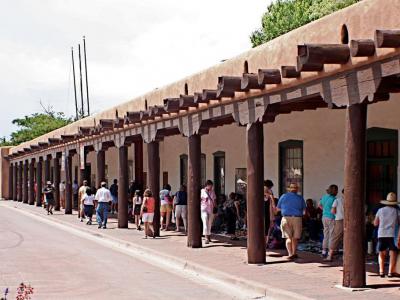
Walking Tours in Santa Fe, New Mexico

Create Your Own Walk in Santa Fe
Creating your own self-guided walk in Santa Fe is easy and fun. Choose the city attractions that you want to see and a walk route map will be created just for you. You can even set your hotel as the start point of the walk.
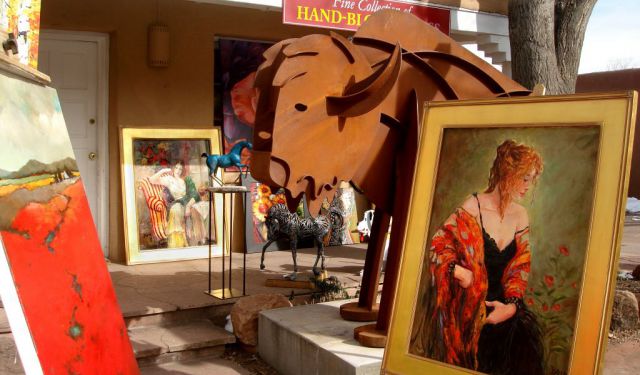
Canyon Road Art and Architecture Tour
In 1921, sculptor and ceramics teacher Frank Applegate came to Santa Fe to study clay, camped for a week in an artist’s orchard, and decided never to leave.
Canyon Road began not as an art district but as a route between the Santa Fe River valley and the foothills of the Sangre de Cristo Mountains. Long before Spanish settlement, Indigenous travelers followed a path through this corridor.... view more
Tour Duration: 1 Hour(s)
Travel Distance: 1.0 Km or 0.6 Miles
Canyon Road began not as an art district but as a route between the Santa Fe River valley and the foothills of the Sangre de Cristo Mountains. Long before Spanish settlement, Indigenous travelers followed a path through this corridor.... view more
Tour Duration: 1 Hour(s)
Travel Distance: 1.0 Km or 0.6 Miles
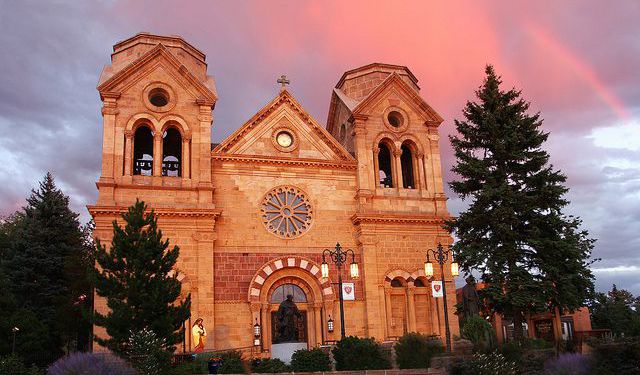
Walking Through Santa Fe's Charming Historic Downtown
“Every calculation based on experience elsewhere fails in New Mexico”, Governor Lew Wallace once observed. Santa Fe proves his point: few American capitals combine Pueblo traditions, Spanish colonial streets, Mexican history, and modern art.
Santa Fe, the capital of New Mexico, stands on a high plateau near the southern end of the Rocky Mountains. Long before Europeans arrived, Pueblo... view more
Tour Duration: 2 Hour(s)
Travel Distance: 3.4 Km or 2.1 Miles
Santa Fe, the capital of New Mexico, stands on a high plateau near the southern end of the Rocky Mountains. Long before Europeans arrived, Pueblo... view more
Tour Duration: 2 Hour(s)
Travel Distance: 3.4 Km or 2.1 Miles
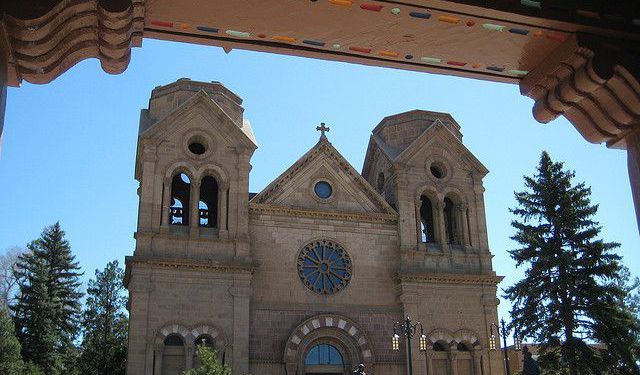
Historical Churches
In Santa Fe, there's no shortage of religious sites fit to impress. Some of the local churches date back as far as the foundation of the city itself. As you immerse in their hallowed halls, prepare yourself to be enraptured by their architectural and spiritual splendor.
One such venerable place is undoubtedly the San Miguel Mission. The oldest church in the United States, it was built... view more
Tour Duration: 1 Hour(s)
Travel Distance: 2.8 Km or 1.7 Miles
One such venerable place is undoubtedly the San Miguel Mission. The oldest church in the United States, it was built... view more
Tour Duration: 1 Hour(s)
Travel Distance: 2.8 Km or 1.7 Miles