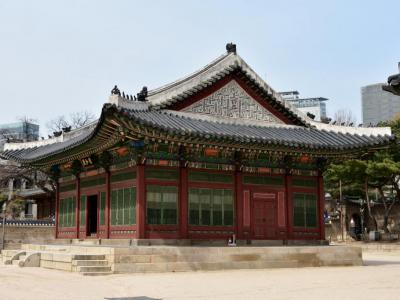


Deoksugung Palace, Seoul
Deoksugung Palace is the smallest of Seoul’s Five Grand Palaces, but its compact grounds contain an unusual mix of traditional Korean and Western architecture. The site became a royal residence after Seoul’s main palaces were destroyed during the Japanese invasion of 1592. Much of Deoksugung was later demolished or altered during Japanese colonial rule, leaving the palace only a fraction of its former size.
Begin your exploration outside Daehanmun Gate, which is the main entrance facing the boulevard beside Seoul City Hall. This is also where the colorful Royal Palace Guard Changing Ceremony takes place. After entering, follow the main path through Junghwamun Gate into the broad courtyard of Junghwajeon Hall, the palace’s throne hall. Look for the rows of stone markers in front; these indicated where court officials stood according to rank during royal ceremonies.
From here, head toward the cluster of traditional wooden buildings behind the throne hall. Jeukjodang Hall, connected to neighboring Junmyeongdang, is especially significant because King Gwanghaegun and King Injo both ascended the throne here back in the 1600s.
Continue toward the rear of the palace to Hamnyeongjeon Hall, Emperor Gojong’s sleeping residence after he returned here in 1897. Nearby, see Jeonggwanheon Pavilion, easily spotted by its Western-style columns and veranda combined with Korean decorative motifs. Emperor Gojong used this area for receptions and relaxation.
Next, walk toward the western side of the grounds, where the large white Seokjojeon Hall is impossible to miss. Completed in 1910, its tall classical columns and triangular pediment make it look more like a European palace than a traditional Korean residence. Today, it houses the Daehan Empire History Museum. In front, the Western-style garden and fountain provide one of the palace’s best photo opportunities.
Deoksugung is particularly atmospheric in the evening, when the illuminated buildings can be enjoyed during a moonlit stroll. Afterward, follow the famous Deoksugung Stonewall Walkway along the palace walls.
Tip:
Visitors wearing traditional hanbok can enter the palace free of charge. For an elevated view, visit the nearby Jeong-dong Observatory in the Seoul City Hall Seosomun Building, where the 13th-floor viewpoint overlooks the palace grounds and downtown skyline.
Want to visit this sight? Check out these Self-Guided Walking Tours in Seoul. Alternatively, you can download the mobile app "GPSmyCity: Walks in 1K+ Cities" from Apple App Store or Google Play Store. The app turns your mobile device to a personal tour guide and it works offline, so no data plan is needed when traveling abroad.
Download The GPSmyCity App



Deoksugung Palace on Map
Sight Name: Deoksugung Palace
Sight Location: Seoul, South Korea (See walking tours in Seoul)
Sight Type: Attraction/Landmark
Guide(s) Containing This Sight:
Sight Location: Seoul, South Korea (See walking tours in Seoul)
Sight Type: Attraction/Landmark
Guide(s) Containing This Sight:
Nearby Sights



Walking Tours in Seoul, South Korea
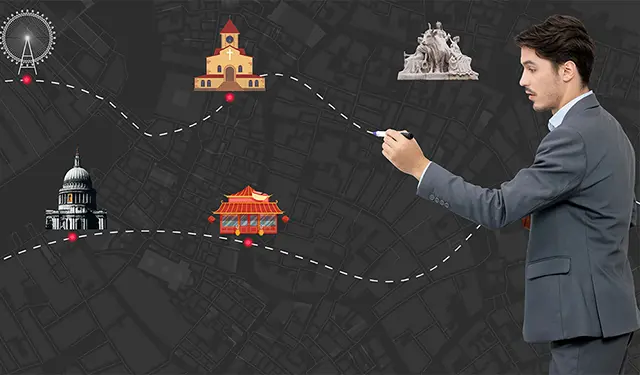
Create Your Own Walk in Seoul
Creating your own self-guided walk in Seoul is easy and fun. Choose the city attractions that you want to see and a walk route map will be created just for you. You can even set your hotel as the start point of the walk.
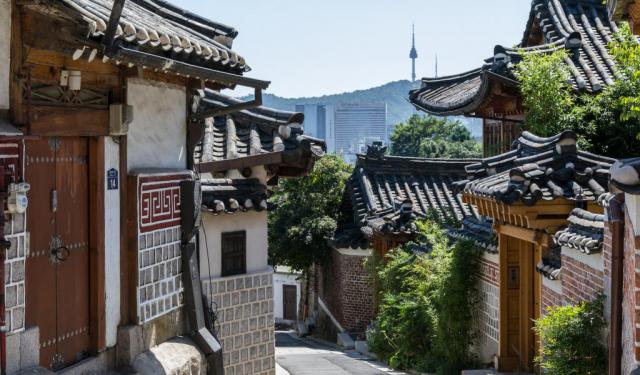
Bukchon Hanok Village Walk
Bukchon Hanok, the traditional Korean village in downtown Seoul, is famous for its well-preserved 600-year-old setting. Once home to the nation’s nobility, the village sits on a hill near the Changdeokgung Palace.
One notable attraction here is Baek In-je's House Museum, which provides insight into the life of a prominent Korean politician from the early 20th century. Meanwhile, the... view more
Tour Duration: 1 Hour
Travel Distance: 1.7 Km or 1.1 Miles
One notable attraction here is Baek In-je's House Museum, which provides insight into the life of a prominent Korean politician from the early 20th century. Meanwhile, the... view more
Tour Duration: 1 Hour
Travel Distance: 1.7 Km or 1.1 Miles
Insa-dong Walking Tour
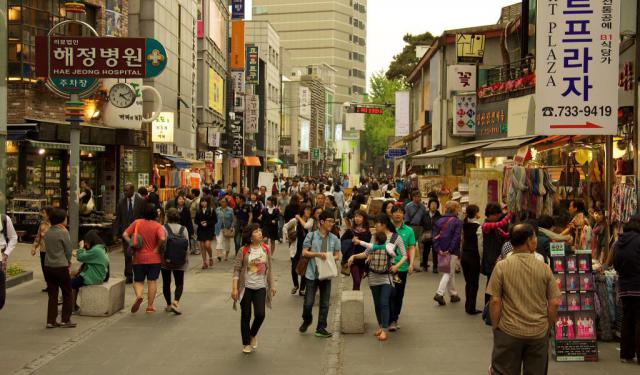
Originating 500 years ago as a residential quarter for government officials, today's Insa-dong is a buzzing shopping and dining district in Seoul where the past meets the present. During the Japanese occupation of the country in the first half of the 20th century, wealthy Koreans were forced to move out and sell their belongings, at which point the district became a center of antique trading.... view more
Tour Duration: 1 Hour
Travel Distance: 0.8 Km or 0.5 Miles
Tour Duration: 1 Hour
Travel Distance: 0.8 Km or 0.5 Miles
Seoul Introduction Walking Tour
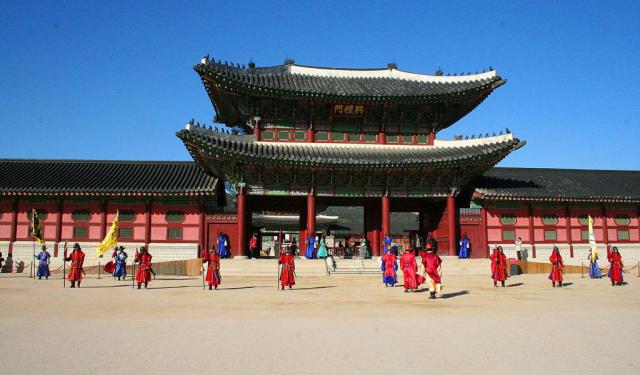
The bustling capital of South Korea, Seoul, seamlessly blends modern innovation with a more than 2,000-year history. Remarkably, until 1972, the city was claimed by North Korea as its de jure capital and even specified as such in its constitution.
Seoul was founded in 18 BC by the people of Baekje. The three ancient kingdoms of Korea - Baekje, Goguryeo, and Silla - fought over its possession... view more
Tour Duration: 2 Hours
Travel Distance: 3.5 Km or 2.2 Miles
Seoul was founded in 18 BC by the people of Baekje. The three ancient kingdoms of Korea - Baekje, Goguryeo, and Silla - fought over its possession... view more
Tour Duration: 2 Hours
Travel Distance: 3.5 Km or 2.2 Miles
Useful Travel Guides for Planning Your Trip
17 Uniquely Korean Souvenirs to Buy in Seoul
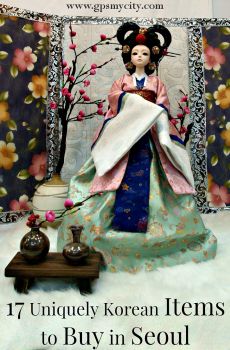
Back in the mid 20th century, a certain gentleman once spoke of Korea saying, it won't be possible to grow a rose in a waste bin. Certainly, one would hardly subscribe to his point of view today in every respect, given the image of contemporary South Korea and its capital city of Seoul in...
City Walks Overview
