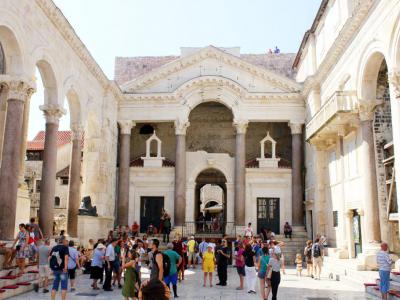


Diocletian's Palace, Split (must see)
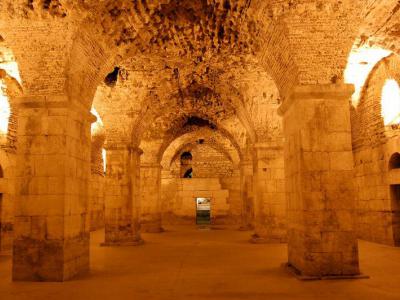
Call it a palace if you like, but Diocletian’s masterpiece is really part imperial retirement villa, part military fortress, and part living city. Built at the end of the third century AD for the Roman emperor who gave up power in favor of peace (and yes, cabbages), it’s a place where stone walls once sheltered soldiers, emperors, monks-and today, generations of Split’s residents.
Perched on a peninsula near Salona-then Dalmatia’s Roman capital and Diocletian’s birthplace-the palace originally served as a seaside sanctuary for the emperor’s final years. When he died in 312, the complex remained under Roman control and occasionally offered refuge to members of the imperial family who needed to lay low.
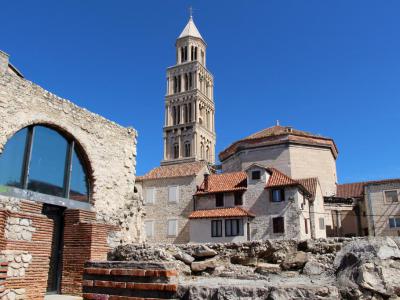
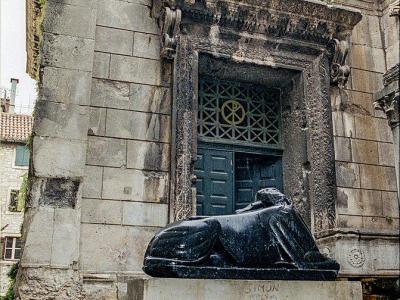
In the 7th century, when Slavic and Avar invaders destroyed Salona, survivors escaped behind these formidable walls, founding a new settlement right inside the palace. And here’s the surprise-they never left. Today, Split’s Old Town literally lives within those ancient foundations: temples transformed into churches, courtyards became vibrant squares, and homes sprang up between columns.
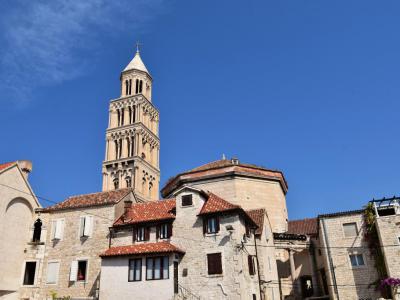
Later transformations added layers of history. The emperor’s mausoleum was converted into what is now recognized as the world’s oldest Catholic cathedral still in use in its original structure-the Cathedral of Domnius. In the 18th century, Scottish architect Robert Adam studied the palace ruins and helped inspire the elegance of Neoclassical architecture across Europe.
The palace’s layout originally formed an irregular rectangle, once fortified by 16 defensive towers. Its southern façade opened directly to the sea, with ships docking at what is still known as the Sea Gate. Three other gates connected the city walls to external routes: the Golden Gate to the north, leading toward Salona; the Silver Gate to the east, facing Stobreč; and the Iron Gate on the west, reserved for military access.
Indeed, there are few places like this, where centuries layer so vividly in stone-Roman ambition, medieval resilience, and Venetian finesse all mingle beneath your footsteps...
Perched on a peninsula near Salona-then Dalmatia’s Roman capital and Diocletian’s birthplace-the palace originally served as a seaside sanctuary for the emperor’s final years. When he died in 312, the complex remained under Roman control and occasionally offered refuge to members of the imperial family who needed to lay low.
In the 7th century, when Slavic and Avar invaders destroyed Salona, survivors escaped behind these formidable walls, founding a new settlement right inside the palace. And here’s the surprise-they never left. Today, Split’s Old Town literally lives within those ancient foundations: temples transformed into churches, courtyards became vibrant squares, and homes sprang up between columns.
Later transformations added layers of history. The emperor’s mausoleum was converted into what is now recognized as the world’s oldest Catholic cathedral still in use in its original structure-the Cathedral of Domnius. In the 18th century, Scottish architect Robert Adam studied the palace ruins and helped inspire the elegance of Neoclassical architecture across Europe.
The palace’s layout originally formed an irregular rectangle, once fortified by 16 defensive towers. Its southern façade opened directly to the sea, with ships docking at what is still known as the Sea Gate. Three other gates connected the city walls to external routes: the Golden Gate to the north, leading toward Salona; the Silver Gate to the east, facing Stobreč; and the Iron Gate on the west, reserved for military access.
Indeed, there are few places like this, where centuries layer so vividly in stone-Roman ambition, medieval resilience, and Venetian finesse all mingle beneath your footsteps...
Want to visit this sight? Check out these Self-Guided Walking Tours in Split. Alternatively, you can download the mobile app "GPSmyCity: Walks in 1K+ Cities" from Apple App Store or Google Play Store. The app turns your mobile device to a personal tour guide and it works offline, so no data plan is needed when traveling abroad.
Download The GPSmyCity App



Diocletian's Palace on Map
Sight Name: Diocletian's Palace
Sight Location: Split, Croatia (See walking tours in Split)
Sight Type: Attraction/Landmark
Guide(s) Containing This Sight:
Sight Location: Split, Croatia (See walking tours in Split)
Sight Type: Attraction/Landmark
Guide(s) Containing This Sight:
Nearby Sights
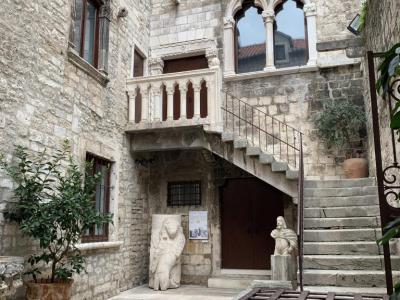
Walking Tours in Split, Croatia

Create Your Own Walk in Split
Creating your own self-guided walk in Split is easy and fun. Choose the city attractions that you want to see and a walk route map will be created just for you. You can even set your hotel as the start point of the walk.
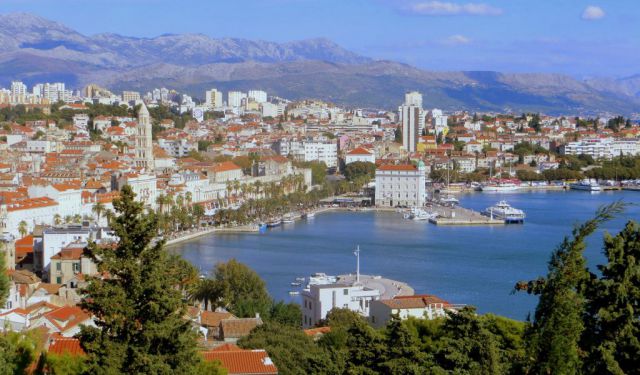
Split Old Town Walking Tour
Welcome to Split, Dalmatia’s sun-drenched heart and, believe it or not, the ultimate ancient retirement plan.
Its story has a bit of a botanical side and dates back more than two millennia, when Greek settlers from Issa (or modern-day Vis) founded here a colony they called Aspalathos, named after a prickly, yellow-flowering shrub that still dots the coastline. The Romans called it Spalatum,... view more
Tour Duration: 1 Hour(s)
Travel Distance: 1.2 Km or 0.7 Miles
Its story has a bit of a botanical side and dates back more than two millennia, when Greek settlers from Issa (or modern-day Vis) founded here a colony they called Aspalathos, named after a prickly, yellow-flowering shrub that still dots the coastline. The Romans called it Spalatum,... view more
Tour Duration: 1 Hour(s)
Travel Distance: 1.2 Km or 0.7 Miles
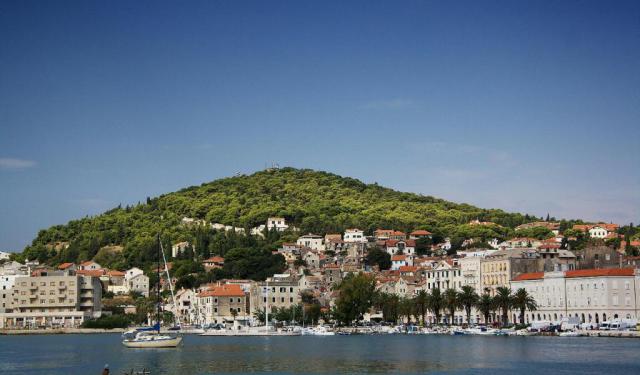
Marjan Hill Walking Tour
Marjan Hill is a picturesque natural wonder – a unique landform – located on the Split peninsula in Croatia. The majestic hill (or the low mountain, if you like) is surrounded by the sea and the city, and represents the green oasis ideal for walks, excursions, and rock climbing. Visitors to the area are greeted with a plethora of sights catering to various interests and equally enjoyed by... view more
Tour Duration: 1 Hour(s)
Travel Distance: 1.4 Km or 0.9 Miles
Tour Duration: 1 Hour(s)
Travel Distance: 1.4 Km or 0.9 Miles
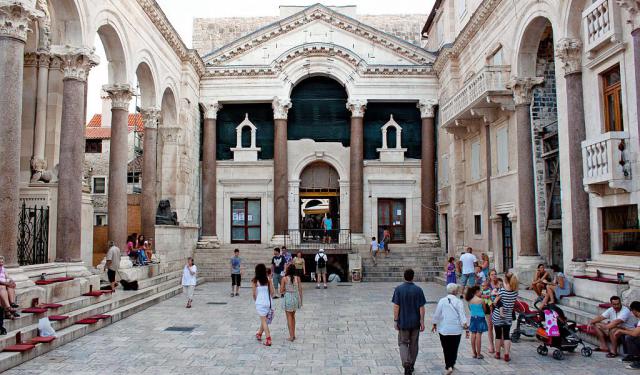
Diocletian Palace Tour
One of the best-preserved monuments of Roman architecture in the world, Diocletian’s Palace is also probably the most impressive “retirement home” in history. Imagine quitting a job at the age of sixty and deciding your quiet seaside cottage should also function as a fortress. That was exactly the plan of Roman emperor Diocletian... In 305 AD, after abdicating-which is something Roman... view more
Tour Duration: 1 Hour(s)
Travel Distance: 0.6 Km or 0.4 Miles
Tour Duration: 1 Hour(s)
Travel Distance: 0.6 Km or 0.4 Miles