


Earth Sciences Museum, Bristol
The origins of the School of Earth Sciences at the University of Bristol can be traced back to 1876 when geology became a subject offered at the original University College. Initially, geology was taught within the Department of Zoology and Geology after the university received its charter in 1909. It gained independent status in 1910 under the leadership of Professor S. H. Reynolds.
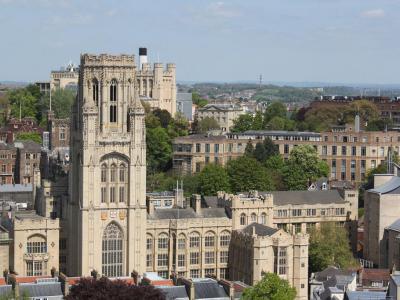
In 1985, after almost a century of gradual growth, the department relocated to its current site in the impressive Wills Memorial Building, showcasing neo-Gothic architecture. Following the Oxburgh Review of Earth Sciences in 1987, the department experienced significant expansion, investment, and enhancements in infrastructure, personnel, research output, and rankings.
In 1992, the school's name was expanded to Earth Sciences to encompass a wide range of research and teaching activities. Subsequent expansion took place in 2003 with the addition of state-of-the-art laboratories and teaching spaces in the Inner Court building. Since 2001, the University of Bristol's Earth Science department has consistently ranked among the top four in the UK.
The Earth Science Collection at the University of Bristol comprises more than 100,000 scientifically and historically significant palaeontological, petrological, and mineralogical samples. This extensive collection includes over 1,600 types, figured, and cited specimens, along with 10,000 geological thin sections and slides, and an archive of international geological maps. Additionally, there are 16,000 handling specimens available for teaching purposes.
The Earth Sciences Collection showcases the rich and illustrious history of geology education at the University of Bristol, with some of the earliest contributions dating back to 1876.
In 1985, after almost a century of gradual growth, the department relocated to its current site in the impressive Wills Memorial Building, showcasing neo-Gothic architecture. Following the Oxburgh Review of Earth Sciences in 1987, the department experienced significant expansion, investment, and enhancements in infrastructure, personnel, research output, and rankings.
In 1992, the school's name was expanded to Earth Sciences to encompass a wide range of research and teaching activities. Subsequent expansion took place in 2003 with the addition of state-of-the-art laboratories and teaching spaces in the Inner Court building. Since 2001, the University of Bristol's Earth Science department has consistently ranked among the top four in the UK.
The Earth Science Collection at the University of Bristol comprises more than 100,000 scientifically and historically significant palaeontological, petrological, and mineralogical samples. This extensive collection includes over 1,600 types, figured, and cited specimens, along with 10,000 geological thin sections and slides, and an archive of international geological maps. Additionally, there are 16,000 handling specimens available for teaching purposes.
The Earth Sciences Collection showcases the rich and illustrious history of geology education at the University of Bristol, with some of the earliest contributions dating back to 1876.
Want to visit this sight? Check out these Self-Guided Walking Tours in Bristol. Alternatively, you can download the mobile app "GPSmyCity: Walks in 1K+ Cities" from Apple App Store or Google Play Store. The app turns your mobile device to a personal tour guide and it works offline, so no data plan is needed when traveling abroad.
Download The GPSmyCity App



Earth Sciences Museum on Map
Sight Name: Earth Sciences Museum
Sight Location: Bristol, England (See walking tours in Bristol)
Sight Type: Museum/Gallery
Sight Location: Bristol, England (See walking tours in Bristol)
Sight Type: Museum/Gallery
Nearby Sights


Walking Tours in Bristol, England

Create Your Own Walk in Bristol
Creating your own self-guided walk in Bristol is easy and fun. Choose the city attractions that you want to see and a walk route map will be created just for you. You can even set your hotel as the start point of the walk.
Bristol City Center Walking Tour
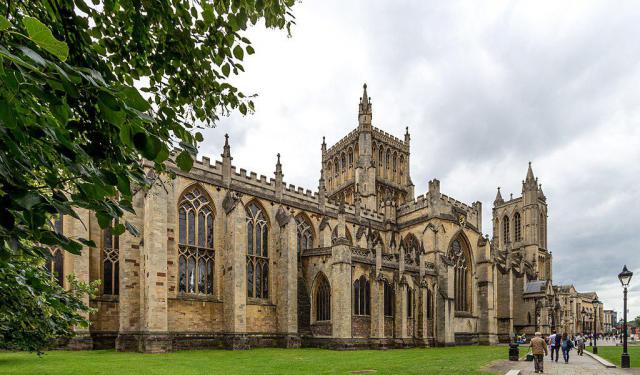
If you listen closely, Bristol doesn’t just speak-it mutters, shouts, and occasionally winks. This southwest city in England has been shaping itself for over a thousand years, starting as a settlement where the rivers Frome and Avon meet. Long before that, the surrounding hills hid Iron Age hillforts and Roman villas. Its name, Brycgstow in Old English, meant “place at the bridge”-a... view more
Tour Duration: 2 Hour(s)
Travel Distance: 3.4 Km or 2.1 Miles
Tour Duration: 2 Hour(s)
Travel Distance: 3.4 Km or 2.1 Miles

Banksy Tour in Bristol
Bristol wears its street art like a second skin-layered, loud, and impossible to ignore. In the middle of this visual conversation is a figure who went from spray-painting in the shadows to shaping the way the world looks at graffiti: Banksy. Growing up here in the 1970s, he first made his mark in the late ’80s and early ’90s with crews like the DryBreadZ Crew, working freehand under cover of... view more
Tour Duration: 3 Hour(s)
Travel Distance: 6.9 Km or 4.3 Miles
Tour Duration: 3 Hour(s)
Travel Distance: 6.9 Km or 4.3 Miles
Famous Bristol Statues Walking Tour
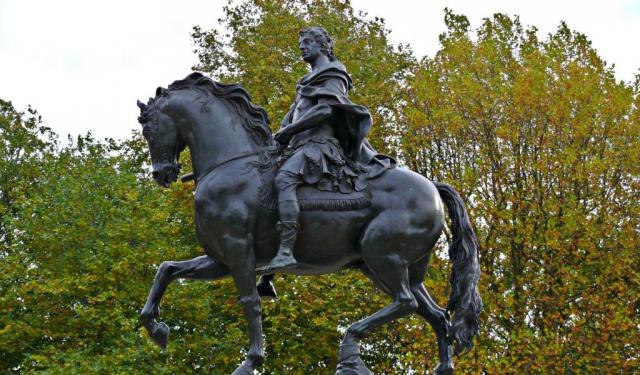
Throughout its more than 1,000-year-long history, Bristol, England, has generated a wealth of cultural and historical heritage. Reflecting it now, and in some way matching it too, are a number of statues that celebrate personalities who made their mark and once graced the city with their association. These statues are scattered throughout the city, each with its unique story and importance.
The... view more
Tour Duration: 2 Hour(s)
Travel Distance: 2.6 Km or 1.6 Miles
The... view more
Tour Duration: 2 Hour(s)
Travel Distance: 2.6 Km or 1.6 Miles