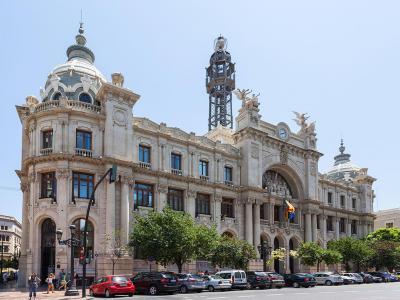


Edificio de Correos y Telegrafos (Post Office Building), Valencia
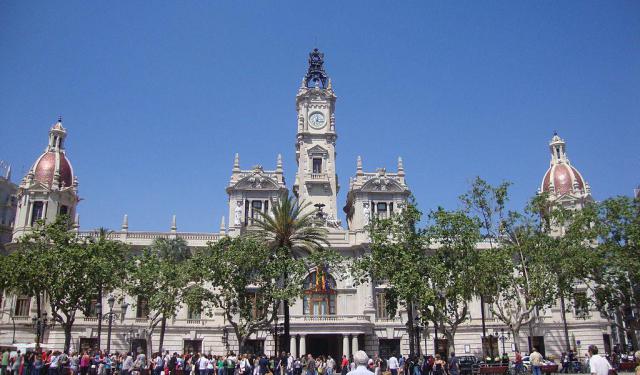
The Palace of Post and Telegraphs, also called the Post Office Building, is located in Plaza del Ayuntamiento, Valencia. It was built between 1915 and 1922, officially opening in 1923. The site used to be a fishermen's neighborhood, represented by Las Barcas Street. The Maura government funded the project to modernize postal services in Spain. Designed by architect Miguel Ángel Navarro, it showcases Valencian modernism within the eclectic style of official architecture.
Like many Post Office buildings of its time, this edifice symbolizes the significance of postal and telegraphic communications in the early 20th century, evident in its monumental scale.
Although the main facade appears symmetrical, the building itself follows an irregular plan. Notable features include the entrance adorned with double Ionic columns and a semicircular arch embellished with allegorical figures on the ground floor. The tympanum sculptures on the main facade depict the five continents, while the copings flanking the clock showcase trios of angels carrying letters and telegraphic symbols. Additionally, a boat and a locomotive train serve as symbols of communication by land and sea.
Atop the building, a metallic tower stands tall, providing access to a spiral staircase that leads to a viewpoint. Inside, an oval room mimics the architectural style of the façade, featuring Ionic-style columns. The centerpiece of the room is an artistic window designed by the Mauméjean brothers, consisting of 370 panels displaying the shields of Spain's 48 provinces. In the center, crafted from brass, is the emblem of the city of Valencia, representing the Post and Telegraphs company.
This monumental structure remains an integral part of the city's architectural and cultural heritage, standing as a testament to its significance.
Like many Post Office buildings of its time, this edifice symbolizes the significance of postal and telegraphic communications in the early 20th century, evident in its monumental scale.
Although the main facade appears symmetrical, the building itself follows an irregular plan. Notable features include the entrance adorned with double Ionic columns and a semicircular arch embellished with allegorical figures on the ground floor. The tympanum sculptures on the main facade depict the five continents, while the copings flanking the clock showcase trios of angels carrying letters and telegraphic symbols. Additionally, a boat and a locomotive train serve as symbols of communication by land and sea.
Atop the building, a metallic tower stands tall, providing access to a spiral staircase that leads to a viewpoint. Inside, an oval room mimics the architectural style of the façade, featuring Ionic-style columns. The centerpiece of the room is an artistic window designed by the Mauméjean brothers, consisting of 370 panels displaying the shields of Spain's 48 provinces. In the center, crafted from brass, is the emblem of the city of Valencia, representing the Post and Telegraphs company.
This monumental structure remains an integral part of the city's architectural and cultural heritage, standing as a testament to its significance.
Want to visit this sight? Check out these Self-Guided Walking Tours in Valencia. Alternatively, you can download the mobile app "GPSmyCity: Walks in 1K+ Cities" from Apple App Store or Google Play Store. The app turns your mobile device to a personal tour guide and it works offline, so no data plan is needed when traveling abroad.
Download The GPSmyCity App



Edificio de Correos y Telegrafos (Post Office Building) on Map
Sight Name: Edificio de Correos y Telegrafos (Post Office Building)
Sight Location: Valencia, Spain (See walking tours in Valencia)
Sight Type: Attraction/Landmark
Sight Location: Valencia, Spain (See walking tours in Valencia)
Sight Type: Attraction/Landmark
Nearby Sights


Walking Tours in Valencia, Spain

Create Your Own Walk in Valencia
Creating your own self-guided walk in Valencia is easy and fun. Choose the city attractions that you want to see and a walk route map will be created just for you. You can even set your hotel as the start point of the walk.
Valencia Top Attractions Walking Tour
Valencia, Spain’s third-largest city, has been around since 138 BC, when it was founded by the Romans as a colony for battle-tested veterans. Known then as Valentia, which means “valor,” it honored the courage of its first inhabitants. The city was destroyed in 75 BC by Pompey the Great, but was rebuilt within a century, later becoming home to Visigoths and then the Moors, who transformed... view more
Tour Duration: 2 Hour(s)
Travel Distance: 3.0 Km or 1.9 Miles
Tour Duration: 2 Hour(s)
Travel Distance: 3.0 Km or 1.9 Miles
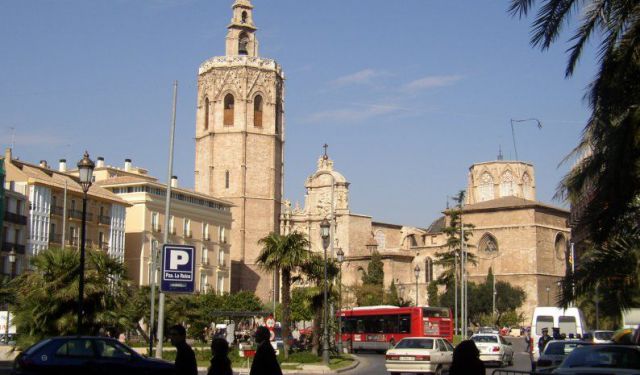
Valencia Old Town Walking Tour
Valencia’s Old Town is the sort of place where the Romans, Moors, medieval merchants, Gothic builders, Baroque decorators, and modern shoppers all seem to have comfortably found their place (albeit at different times). Beneath today’s squares, Roman streets and forum remains sit quietly underground, while above them, the city’s Islamic-era street plan still winds and twists, refusing to... view more
Tour Duration: 2 Hour(s)
Travel Distance: 3.0 Km or 1.9 Miles
Tour Duration: 2 Hour(s)
Travel Distance: 3.0 Km or 1.9 Miles
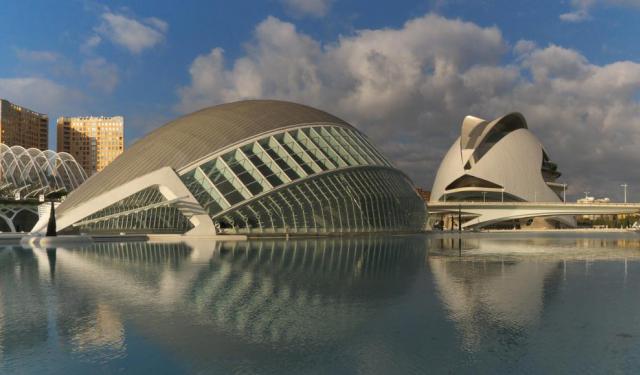
Contemporary Architecture Walk
With one foot in the past and the other planted firmly in the future, Valencia manages a balancing act few European cities can pull off. Gothic bell towers, Baroque façades, bustling markets, and centuries-old plazas all share the stage with structures that look as though they were delivered directly from the year 2150. Among the city’s many architectural personalities, contemporary design... view more
Tour Duration: 1 Hour(s)
Travel Distance: 1.4 Km or 0.9 Miles
Tour Duration: 1 Hour(s)
Travel Distance: 1.4 Km or 0.9 Miles
Valencia's Classical Architecture Tour
In Valencia, the architecture tells you right away-this city has layers. Indeed, this is not just a coastal getaway with sunshine, beaches, and a well-earned reputation for paella. Beneath the bright skies, “Spain’s Third Capital” reveals a rich and sometimes surprising blend of styles, bold in contrast yet delicate in detail. Nowhere is this more visible than in the Old Town, where nearly... view more
Tour Duration: 2 Hour(s)
Travel Distance: 3.3 Km or 2.1 Miles
Tour Duration: 2 Hour(s)
Travel Distance: 3.3 Km or 2.1 Miles