

Emir Munzer Mosque, Beirut
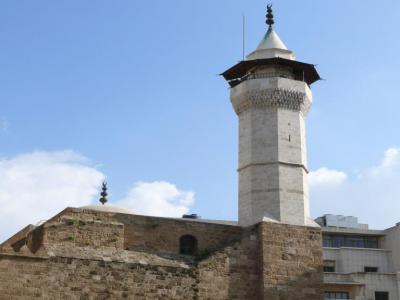
The Emir Munzer Mosque is a historically significant structure in the Beirut Central District. Constructed in 1620 by Emir Munzer Al-Tannoukhi, who served as the Governor of Beirut from 1616 to 1633, this mosque represents a blend of Lebanese and Ottoman architectural styles. Emir Munzer is also known for other architectural contributions, including a palace in Abei town.
One of the mosque's distinct features is its two entrances: an original 17th-century arched portal from Souk Al-Bazarkhan and a secondary entrance with three arches, added during later expansions. These additions were made to accommodate the creation of Emir Fakhreddine Street, now known as Riad Al-Solh Street. The mosque incorporates materials from earlier eras, notably Roman granite columns that are evident in the mosque's courtyard.
Emir Munzer Mosque has a rich history, having undergone several restorations. The most significant ones were in 1749 by Emir Melhem and Emir Mansour Haydar Al-Shehab and in 2002 following damage from the Lebanese Civil War (1975-1990). This restoration helped preserve its splendid traditional Lebanese architecture and Mamluk-style octagonal minaret. The mosque's courtyard is particularly notable for its lofty portico of pointed arches supported by pre-existing Roman grey granite columns.
Additional elements like the sabil, an alabaster fountain that once stood at the eastern entrance, and the iconic phrase on the minbar reading "God is true, there is no doubt" - a saying still prevalent in Beirut today - contribute to the mosque's cultural and historical significance. The mosque's location near the Bazarkan market and proximity to other historic sites like the Omari Grand Mosque adds to its importance as a cultural and religious landmark in Beirut.
One of the mosque's distinct features is its two entrances: an original 17th-century arched portal from Souk Al-Bazarkhan and a secondary entrance with three arches, added during later expansions. These additions were made to accommodate the creation of Emir Fakhreddine Street, now known as Riad Al-Solh Street. The mosque incorporates materials from earlier eras, notably Roman granite columns that are evident in the mosque's courtyard.
Emir Munzer Mosque has a rich history, having undergone several restorations. The most significant ones were in 1749 by Emir Melhem and Emir Mansour Haydar Al-Shehab and in 2002 following damage from the Lebanese Civil War (1975-1990). This restoration helped preserve its splendid traditional Lebanese architecture and Mamluk-style octagonal minaret. The mosque's courtyard is particularly notable for its lofty portico of pointed arches supported by pre-existing Roman grey granite columns.
Additional elements like the sabil, an alabaster fountain that once stood at the eastern entrance, and the iconic phrase on the minbar reading "God is true, there is no doubt" - a saying still prevalent in Beirut today - contribute to the mosque's cultural and historical significance. The mosque's location near the Bazarkan market and proximity to other historic sites like the Omari Grand Mosque adds to its importance as a cultural and religious landmark in Beirut.
Want to visit this sight? Check out these Self-Guided Walking Tours in Beirut. Alternatively, you can download the mobile app "GPSmyCity: Walks in 1K+ Cities" from Apple App Store or Google Play Store. The app turns your mobile device to a personal tour guide and it works offline, so no data plan is needed when traveling abroad.
Download The GPSmyCity App



Emir Munzer Mosque on Map
Sight Name: Emir Munzer Mosque
Sight Location: Beirut, Lebanon (See walking tours in Beirut)
Sight Type: Religious
Sight Location: Beirut, Lebanon (See walking tours in Beirut)
Sight Type: Religious
Nearby Sights


Walking Tours in Beirut, Lebanon

Create Your Own Walk in Beirut
Creating your own self-guided walk in Beirut is easy and fun. Choose the city attractions that you want to see and a walk route map will be created just for you. You can even set your hotel as the start point of the walk.
Beirut Downtown Walking Tour
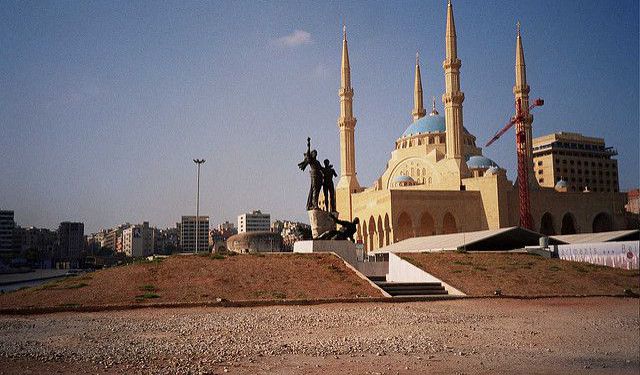
How many times can a city die? Beirut, in 5,000 years, has died and come back many times. Archeological digs downtown have revealed Phoenician, Greek, Roman, Byzantine, Arab, Crusader and Ottoman remains and signs of influence.
In 140 BC the city was destroyed by Diodotus Tryphon, a king of the Seleucid Empire. His Hellenistic city lies over the Phoenician one. Pompey the Great arrived in 64 BC... view more
Tour Duration: 2 Hour(s)
Travel Distance: 3.3 Km or 2.1 Miles
In 140 BC the city was destroyed by Diodotus Tryphon, a king of the Seleucid Empire. His Hellenistic city lies over the Phoenician one. Pompey the Great arrived in 64 BC... view more
Tour Duration: 2 Hour(s)
Travel Distance: 3.3 Km or 2.1 Miles
Seaside Walking Tour
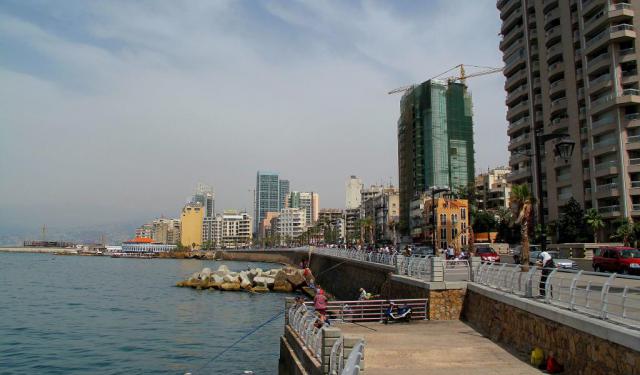
If you wish to unwind or, perhaps, seek some quality time with your family and friends in a completely safe environment, while in Beirut, the local seaside area offers ample opportunities for both. Lined with palm trees, the city's waterfront guarantees a truly joyful experience and is as much fun for watching the Mediterranean, beautiful people and breathing the air as it is for exploring... view more
Tour Duration: 2 Hour(s)
Travel Distance: 3.2 Km or 2 Miles
Tour Duration: 2 Hour(s)
Travel Distance: 3.2 Km or 2 Miles