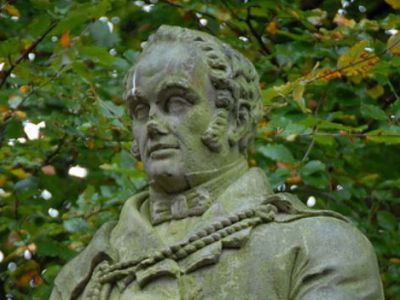


Feargus O'Connor the Chartist, Nottingham
Tucked away in a quiet corner of Nottingham’s Arboretum stands a statue that nods to the city’s proud radical spirit: Feargus O’Connor, the firebrand Irish politician and leader of the Chartist movement. Erected in 1859 despite the local controversy, the statue honors a man once at the center of Britain’s first mass working-class movement.
Chartism, a 1830s movement for democratic reform, called for universal male suffrage, secret ballots, and fairer representation-ideas now seen as basic rights. Its leading voice, Feargus O’Connor, was a powerful orator and editor of the Northern Star, drawing huge crowds as he campaigned for workers' rights and against the harsh Poor Laws.
Nottingham embraced him. He was elected MP for the city in 1847, following a dramatic campaign that included a legendary confrontation with his rival in the Market Place. As MP, he launched his utopian but doomed Land Plan to resettle workers on small plots of farmland-an effort that ended in financial chaos.
Although he presented the final great Chartist petition to Parliament in 1848, the movement had lost steam. Accusations of forged signatures and internal divisions marred his legacy, and by 1850 Chartism had collapsed. O’Connor’s health declined rapidly; he was declared insane in 1852 and died three years later. Yet the 50,000 mourners at his funeral showed just how deeply he had touched the public.
His statue, sculpted by J.B. Robinson of Derby, remains one of Nottingham’s lesser-known monuments-a tribute to a flawed visionary who stirred hope in Britain’s industrial heartlands. Today, it stands not only as a memorial to O’Connor but as a symbol of the struggle for democratic rights in Victorian England.
Chartism, a 1830s movement for democratic reform, called for universal male suffrage, secret ballots, and fairer representation-ideas now seen as basic rights. Its leading voice, Feargus O’Connor, was a powerful orator and editor of the Northern Star, drawing huge crowds as he campaigned for workers' rights and against the harsh Poor Laws.
Nottingham embraced him. He was elected MP for the city in 1847, following a dramatic campaign that included a legendary confrontation with his rival in the Market Place. As MP, he launched his utopian but doomed Land Plan to resettle workers on small plots of farmland-an effort that ended in financial chaos.
Although he presented the final great Chartist petition to Parliament in 1848, the movement had lost steam. Accusations of forged signatures and internal divisions marred his legacy, and by 1850 Chartism had collapsed. O’Connor’s health declined rapidly; he was declared insane in 1852 and died three years later. Yet the 50,000 mourners at his funeral showed just how deeply he had touched the public.
His statue, sculpted by J.B. Robinson of Derby, remains one of Nottingham’s lesser-known monuments-a tribute to a flawed visionary who stirred hope in Britain’s industrial heartlands. Today, it stands not only as a memorial to O’Connor but as a symbol of the struggle for democratic rights in Victorian England.
Want to visit this sight? Check out these Self-Guided Walking Tours in Nottingham. Alternatively, you can download the mobile app "GPSmyCity: Walks in 1K+ Cities" from Apple App Store or Google Play Store. The app turns your mobile device to a personal tour guide and it works offline, so no data plan is needed when traveling abroad.
Download The GPSmyCity App



Feargus O'Connor the Chartist on Map
Sight Name: Feargus O'Connor the Chartist
Sight Location: Nottingham, England (See walking tours in Nottingham)
Sight Type: Attraction/Landmark
Sight Location: Nottingham, England (See walking tours in Nottingham)
Sight Type: Attraction/Landmark
Nearby Sights
Walking Tours in Nottingham, England

Create Your Own Walk in Nottingham
Creating your own self-guided walk in Nottingham is easy and fun. Choose the city attractions that you want to see and a walk route map will be created just for you. You can even set your hotel as the start point of the walk.
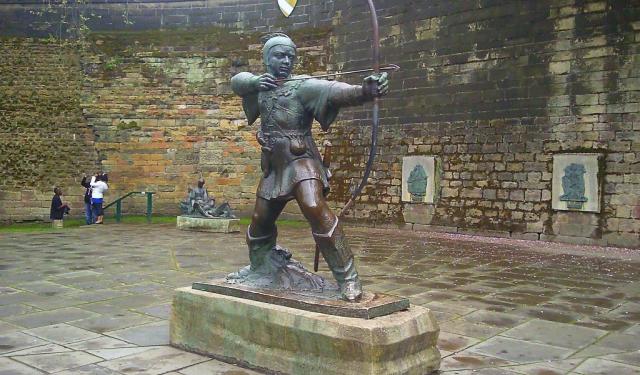
Robin Hood Trail
There's hardly anyone on this planet who hasn't heard of Robin Hood. Apparently, a Saxon nobleman born in 1160 in Loxley, this hero of numerous ballads, some dating back as far as the 14th century, earned fame by robbing from the rich and giving it back to the poor. A skilled archer and sword fighter as he was, Robin Hood famously defended villagers from attacks by corrupt noblemen,... view more
Tour Duration: 1 Hour
Travel Distance: 1.5 Km or 0.9 Miles
Tour Duration: 1 Hour
Travel Distance: 1.5 Km or 0.9 Miles
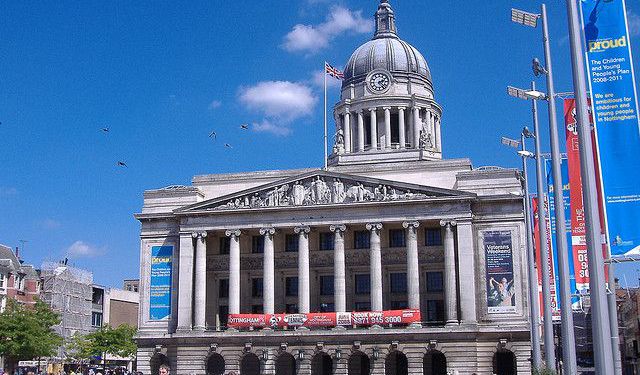
Nottingham's Historical Buildings Tour
Given the variety of architectural styles and designs in Nottingham, England, it is safe to call it the city of contrasts. The tapestry of historical buildings found here, each weaving a unique story of the city's past, is quite rich and worthy of attention.
Among these architectural treasures is the Bell Inn, a charming establishment steeped in history and character. Its traditional... view more
Tour Duration: 2 Hours
Travel Distance: 3.9 Km or 2.4 Miles
Among these architectural treasures is the Bell Inn, a charming establishment steeped in history and character. Its traditional... view more
Tour Duration: 2 Hours
Travel Distance: 3.9 Km or 2.4 Miles

Nottingham's Historic City Center Walking Tour
Nottingham was known only as "The Place of Caves" in 600 AD. A Saxon chief named Snot ruled "Snotingaham", or, "the home of Snot's people." It was part of Danelaw in the 7th century, administered from a stone Hall on High Pavement, the first street of Nottingham.
In 1068 Norman invaders built a wooden motte-and-bailey fortress on a high sandstone promontory.... view more
Tour Duration: 2 Hours
Travel Distance: 2.5 Km or 1.6 Miles
In 1068 Norman invaders built a wooden motte-and-bailey fortress on a high sandstone promontory.... view more
Tour Duration: 2 Hours
Travel Distance: 2.5 Km or 1.6 Miles