

Fort Amsterdam, Philipsburg
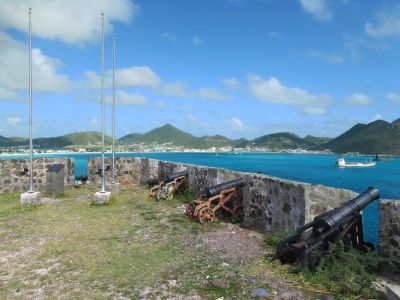
Fort Amsterdam occupies a prominent headland overlooking Great Bay and holds a special place in Caribbean history as the oldest Dutch fort in the region. Originally built in 1631, the fort was constructed to protect Dutch interests on Sint Maarten, particularly the valuable salt ponds that were central to early trade. Its elevated position allowed clear surveillance of maritime traffic entering the bay, making it a key defensive site from the very beginning.
The fort’s early years were marked by conflict. In 1633, Spanish forces arrived and expelled the Dutch from the island, taking control of the fort. The following year, in 1634, the Spanish rebuilt and significantly enlarged the structure, strengthening its defenses to secure their hold on Sint Maarten. These improvements transformed Fort Amsterdam into a more formidable military installation, reflecting the island’s strategic importance in regional power struggles.
One of the fort’s most dramatic episodes occurred in 1644, when Dutch forces led by Peter Stuyvesant attempted to reclaim the island. The attack failed, and Stuyvesant was seriously wounded during the battle, an injury that ultimately led to the amputation of his leg. Despite this setback, Spanish control did not last. In 1648, the Spanish abandoned the fort, allowing the Dutch to return and reestablish their presence on the island.
Fort Amsterdam continued to evolve after these early conflicts. In 1737, the fort was reconstructed under the direction of John Philips, after whom the town of Philipsburg is named. Although much of the original structure no longer survives, the remaining walls and foundations still convey its defensive role. Today, Fort Amsterdam is also known as a protected nesting site for brown pelicans, limiting access to the interior. For visitors, the fort offers a layered view of Sint Maarten’s early colonial struggles, later development, and its ongoing connection to the natural environment overlooking Philipsburg.
The fort’s early years were marked by conflict. In 1633, Spanish forces arrived and expelled the Dutch from the island, taking control of the fort. The following year, in 1634, the Spanish rebuilt and significantly enlarged the structure, strengthening its defenses to secure their hold on Sint Maarten. These improvements transformed Fort Amsterdam into a more formidable military installation, reflecting the island’s strategic importance in regional power struggles.
One of the fort’s most dramatic episodes occurred in 1644, when Dutch forces led by Peter Stuyvesant attempted to reclaim the island. The attack failed, and Stuyvesant was seriously wounded during the battle, an injury that ultimately led to the amputation of his leg. Despite this setback, Spanish control did not last. In 1648, the Spanish abandoned the fort, allowing the Dutch to return and reestablish their presence on the island.
Fort Amsterdam continued to evolve after these early conflicts. In 1737, the fort was reconstructed under the direction of John Philips, after whom the town of Philipsburg is named. Although much of the original structure no longer survives, the remaining walls and foundations still convey its defensive role. Today, Fort Amsterdam is also known as a protected nesting site for brown pelicans, limiting access to the interior. For visitors, the fort offers a layered view of Sint Maarten’s early colonial struggles, later development, and its ongoing connection to the natural environment overlooking Philipsburg.
Want to visit this sight? Check out these Self-Guided Walking Tours in Philipsburg. Alternatively, you can download the mobile app "GPSmyCity: Walks in 1K+ Cities" from Apple App Store or Google Play Store. The app turns your mobile device to a personal tour guide and it works offline, so no data plan is needed when traveling abroad.
Download The GPSmyCity App



Fort Amsterdam on Map
Sight Name: Fort Amsterdam
Sight Location: Philipsburg, St. Maarten (See walking tours in Philipsburg)
Sight Type: Attraction/Landmark
Sight Location: Philipsburg, St. Maarten (See walking tours in Philipsburg)
Sight Type: Attraction/Landmark
Nearby Sights
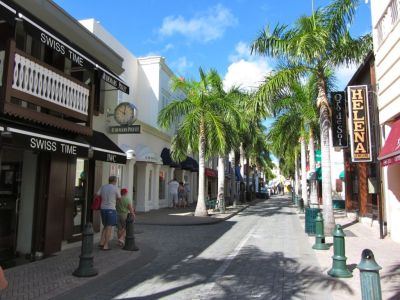
Walking Tours in Philipsburg, St. Maarten

Create Your Own Walk in Philipsburg
Creating your own self-guided walk in Philipsburg is easy and fun. Choose the city attractions that you want to see and a walk route map will be created just for you. You can even set your hotel as the start point of the walk.
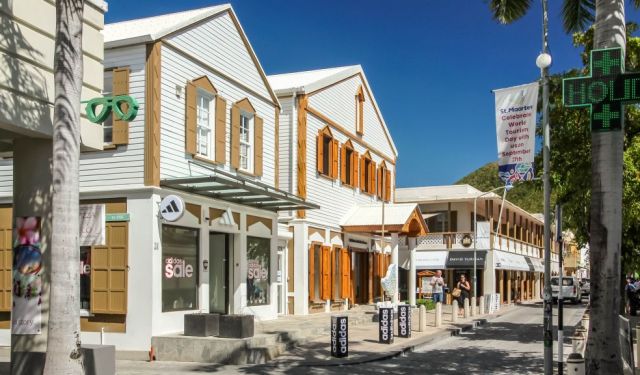
Philipsburg Introduction Walking Tour
The island of Saint Martin is divided between the French and the Dutch. However, the founder of the Dutch side, Scottish captain John Philips, had other plans. He proposed acquiring the French side to his superiors at the Dutch West India Company.
Philipsburg, the lively capital of Dutch Saint Martin, was founded in 1763 by the same John Philips. He established a settlement on the narrow strip... view more
Tour Duration: 2 Hour(s)
Travel Distance: 3.0 Km or 1.9 Miles
Philipsburg, the lively capital of Dutch Saint Martin, was founded in 1763 by the same John Philips. He established a settlement on the narrow strip... view more
Tour Duration: 2 Hour(s)
Travel Distance: 3.0 Km or 1.9 Miles