

Philipsburg Introduction Walking Tour (Self Guided), Philipsburg
The island of Saint Martin is divided between the French and the Dutch. However, the founder of the Dutch side, Scottish captain John Philips, had other plans. He proposed acquiring the French side to his superiors at the Dutch West India Company.
Philipsburg, the lively capital of Dutch Saint Martin, was founded in 1763 by the same John Philips. He established a settlement on the narrow strip of land between Great Bay and the Great Salt Pond, recognizing the strategic value of its sheltered harbor and the salt industry already present in the area.
The town’s name is thus linked to its founder. Interestingly, Philips was a controversial figure in local history: while he brought economic growth and revived the salt export business, his governance approach antagonized many planters. He once ordered nearby fortress Fort Amsterdam to block ships leaving the island to enforce his control, prompting rebellion among settlers. Later, public leaders confronted him after a church service, expelling him from the island - though he later returned after being reinstated.
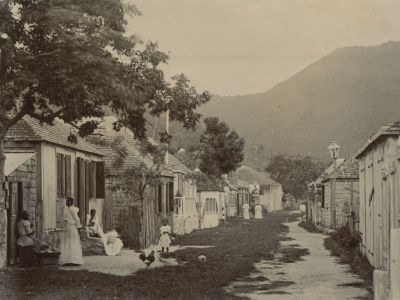
Over the years, Philipsburg grew into the commercial and administrative heart of the Dutch side. It became a bustling hub of trade and shipping, lined with warehouses, salt depots, and colonial offices. The town also endured hurricanes, trade shifts, and waves of rebuilding. More recently, Hurricane Irma in 2017 caused extensive damage, testing the resilience of Philipsburg and its people. Today, tourism, duty-free trade, and cultural heritage stand at its economic core.
Walking through Philipsburg’s downtown, you’ll see Front Street, lined with colorful colonial facades, boutiques, and cafés. You’ll pass the 1793 Courthouse, once a jail, post office, and fire station, now crowned with its iconic pineapple-symbol of hospitality. You’ll glimpse the liveliness of the Boardwalk, ancient canons, historic streets, and the waterfront where cruise ships dock. The Salt Pond lies just behind you, combining seamlessly with the vibrant murals and market halls.
Philips once dreamed of a unified island-and though his ambition was never realized, his name still binds the heart of the island of Saint Martin. As you walk these streets, imagine the irony: the man expelled from his own town remains its eternal resident.
Philipsburg, the lively capital of Dutch Saint Martin, was founded in 1763 by the same John Philips. He established a settlement on the narrow strip of land between Great Bay and the Great Salt Pond, recognizing the strategic value of its sheltered harbor and the salt industry already present in the area.
The town’s name is thus linked to its founder. Interestingly, Philips was a controversial figure in local history: while he brought economic growth and revived the salt export business, his governance approach antagonized many planters. He once ordered nearby fortress Fort Amsterdam to block ships leaving the island to enforce his control, prompting rebellion among settlers. Later, public leaders confronted him after a church service, expelling him from the island - though he later returned after being reinstated.
Over the years, Philipsburg grew into the commercial and administrative heart of the Dutch side. It became a bustling hub of trade and shipping, lined with warehouses, salt depots, and colonial offices. The town also endured hurricanes, trade shifts, and waves of rebuilding. More recently, Hurricane Irma in 2017 caused extensive damage, testing the resilience of Philipsburg and its people. Today, tourism, duty-free trade, and cultural heritage stand at its economic core.
Walking through Philipsburg’s downtown, you’ll see Front Street, lined with colorful colonial facades, boutiques, and cafés. You’ll pass the 1793 Courthouse, once a jail, post office, and fire station, now crowned with its iconic pineapple-symbol of hospitality. You’ll glimpse the liveliness of the Boardwalk, ancient canons, historic streets, and the waterfront where cruise ships dock. The Salt Pond lies just behind you, combining seamlessly with the vibrant murals and market halls.
Philips once dreamed of a unified island-and though his ambition was never realized, his name still binds the heart of the island of Saint Martin. As you walk these streets, imagine the irony: the man expelled from his own town remains its eternal resident.
How it works: Download the app "GPSmyCity: Walks in 1K+ Cities" from Apple App Store or Google Play Store to your mobile phone or tablet. The app turns your mobile device into a personal tour guide and its built-in GPS navigation functions guide you from one tour stop to next. The app works offline, so no data plan is needed when traveling abroad.
Philipsburg Introduction Walking Tour Map
Guide Name: Philipsburg Introduction Walking Tour
Guide Location: St. Maarten » Philipsburg (See other walking tours in Philipsburg)
Guide Type: Self-guided Walking Tour (Sightseeing)
# of Attractions: 14
Tour Duration: 2 Hour(s)
Travel Distance: 3.0 Km or 1.9 Miles
Author: DanaOffice
Sight(s) Featured in This Guide:
Guide Location: St. Maarten » Philipsburg (See other walking tours in Philipsburg)
Guide Type: Self-guided Walking Tour (Sightseeing)
# of Attractions: 14
Tour Duration: 2 Hour(s)
Travel Distance: 3.0 Km or 1.9 Miles
Author: DanaOffice
Sight(s) Featured in This Guide:
- Port Of St. Maarten
- Harbour Point Village
- St. Maarten Museum
- Front Street
- Old Street
- Saint Martin of Tours Church
- Wathey Square
- Courthouse
- Philipsburg Market Place
- Back Street
- Methodist Church
- Great Bay Beach
- Captain Hodge Wharf
- Boardwalk
1) Port Of St. Maarten
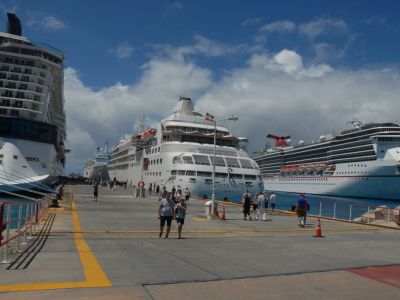
The Port of Sint Maarten is one of the busiest and most modern cruise ship ports in the Caribbean, welcoming millions of visitors each year. Its deep-water harbor can accommodate some of the world’s largest cruise ships, making it a gateway to the island’s Dutch and French sides. Located within walking distance of downtown Philipsburg, the port offers an easy and convenient starting point for exploring the island’s history, culture, and shopping scene.
Beyond its practical role as a transportation hub, the port is designed with visitors in mind. The cruise terminal area features duty-free shops, open-air bars, restaurants, and craft stalls where travelers can pick up souvenirs or sample local flavors before heading further into town. The atmosphere is lively, with music, friendly vendors, and a steady flow of travelers creating a festive introduction to Sint Maarten’s island charm.
From the port, it’s just a short stroll or water taxi ride to Front Street and the iconic Great Bay Beach. Here, visitors can relax on the sand, browse high-end boutiques, or explore Philipsburg’s cultural landmarks, including the Courthouse and Sint Maarten Museum. Excursions are also easily arranged directly from the port, whether it’s a beach day at Orient Bay, snorkeling in Simpson Bay, or crossing over to the French side to experience Marigot’s markets and cafés.
For many travelers, the Port of Sint Maarten is more than just an entry point-it’s the first taste of the island’s unique blend of Caribbean energy and European flair. With its combination of modern facilities and proximity to local attractions, the port ensures a seamless and memorable start to any visit.
Beyond its practical role as a transportation hub, the port is designed with visitors in mind. The cruise terminal area features duty-free shops, open-air bars, restaurants, and craft stalls where travelers can pick up souvenirs or sample local flavors before heading further into town. The atmosphere is lively, with music, friendly vendors, and a steady flow of travelers creating a festive introduction to Sint Maarten’s island charm.
From the port, it’s just a short stroll or water taxi ride to Front Street and the iconic Great Bay Beach. Here, visitors can relax on the sand, browse high-end boutiques, or explore Philipsburg’s cultural landmarks, including the Courthouse and Sint Maarten Museum. Excursions are also easily arranged directly from the port, whether it’s a beach day at Orient Bay, snorkeling in Simpson Bay, or crossing over to the French side to experience Marigot’s markets and cafés.
For many travelers, the Port of Sint Maarten is more than just an entry point-it’s the first taste of the island’s unique blend of Caribbean energy and European flair. With its combination of modern facilities and proximity to local attractions, the port ensures a seamless and memorable start to any visit.
2) Harbour Point Village
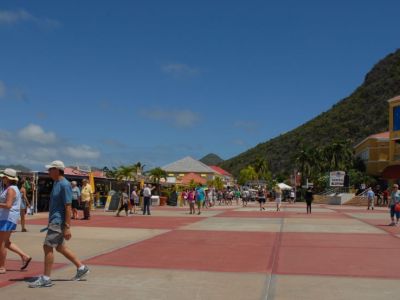
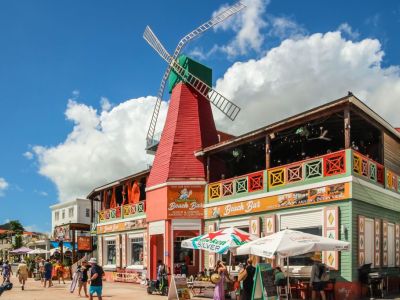
Harbour Point Village is a lively shopping and leisure complex designed to welcome visitors right as they arrive in Sint Maarten. Located near the cruise terminal and within walking distance of the town’s famous boardwalk, the village is a convenient first stop for travelers looking to immerse themselves in the island’s atmosphere. Its colorful Caribbean-style architecture and open-air layout create an inviting setting where the island’s Dutch and French influences come together in a distinctly local way.
The village is renowned for its extensive range of duty-free shops, offering a diverse selection of items, including jewelry, watches, electronics, rum, cigars, and island souvenirs. Fashion boutiques feature both international and Caribbean brands, making it easy to find a unique keepsake or a gift to bring home. Beyond shopping, Harbour Point Village also provides restaurants and cafés where visitors can enjoy local dishes or international favorites, often with views of the bustling harbor and the turquoise waters beyond.
Entertainment and cultural experiences are part of the appeal as well. Musicians and performers frequently bring the square to life, and art and craft vendors showcase handmade goods that reflect Sint Maarten’s diverse heritage. The relaxed, walkable design encourages visitors to linger, whether browsing, dining, or simply taking in the vibrant atmosphere.
For travelers on a limited time, Harbour Point Village offers a compact yet rich introduction to the island. It combines shopping, dining, and cultural flavor in one accessible location, making it a memorable stop before heading deeper into Philipsburg or setting off to explore the island’s beaches and scenic landscapes.
The village is renowned for its extensive range of duty-free shops, offering a diverse selection of items, including jewelry, watches, electronics, rum, cigars, and island souvenirs. Fashion boutiques feature both international and Caribbean brands, making it easy to find a unique keepsake or a gift to bring home. Beyond shopping, Harbour Point Village also provides restaurants and cafés where visitors can enjoy local dishes or international favorites, often with views of the bustling harbor and the turquoise waters beyond.
Entertainment and cultural experiences are part of the appeal as well. Musicians and performers frequently bring the square to life, and art and craft vendors showcase handmade goods that reflect Sint Maarten’s diverse heritage. The relaxed, walkable design encourages visitors to linger, whether browsing, dining, or simply taking in the vibrant atmosphere.
For travelers on a limited time, Harbour Point Village offers a compact yet rich introduction to the island. It combines shopping, dining, and cultural flavor in one accessible location, making it a memorable stop before heading deeper into Philipsburg or setting off to explore the island’s beaches and scenic landscapes.
3) St. Maarten Museum
The Sint Maarten Museum offers visitors a chance to explore the island’s fascinating past and cultural heritage. Managed by the Sint Maarten National Heritage Foundation, the museum is located near Front Street, making it easily accessible to those exploring the capital. While the building itself is small, its collections provide a meaningful glimpse into the history and traditions of Sint Maarten, from its earliest inhabitants to more recent events.
The exhibits trace the island’s story beginning with the Arawak people, the original inhabitants of Sint Maarten. Displays of pottery, tools, and other archaeological finds help illustrate their daily lives and connection to the land. Visitors will also learn about the arrival of European explorers, the colonial era, and the island’s development under Dutch and French rule. The museum highlights the impact of sugar plantations, trade, and migration, showing how these forces shaped Sint Maarten’s diverse identity.
In addition to historical artifacts, the museum houses items related to the island’s cultural traditions. Exhibits on Carnival, local crafts, and oral storytelling preserve and celebrate the vibrant spirit of the community. Visitors will also encounter displays about natural history, including the island’s unique flora and fauna, as well as the effects of hurricanes on local life.
Though small in scale, the Sint Maarten Museum provides a thoughtful introduction to the island’s layered history and cultural heritage. It is an ideal stop for those who want to better understand Sint Maarten beyond its beaches, offering a deeper appreciation of the island’s resilience and diversity.
The exhibits trace the island’s story beginning with the Arawak people, the original inhabitants of Sint Maarten. Displays of pottery, tools, and other archaeological finds help illustrate their daily lives and connection to the land. Visitors will also learn about the arrival of European explorers, the colonial era, and the island’s development under Dutch and French rule. The museum highlights the impact of sugar plantations, trade, and migration, showing how these forces shaped Sint Maarten’s diverse identity.
In addition to historical artifacts, the museum houses items related to the island’s cultural traditions. Exhibits on Carnival, local crafts, and oral storytelling preserve and celebrate the vibrant spirit of the community. Visitors will also encounter displays about natural history, including the island’s unique flora and fauna, as well as the effects of hurricanes on local life.
Though small in scale, the Sint Maarten Museum provides a thoughtful introduction to the island’s layered history and cultural heritage. It is an ideal stop for those who want to better understand Sint Maarten beyond its beaches, offering a deeper appreciation of the island’s resilience and diversity.
4) Front Street (must see)
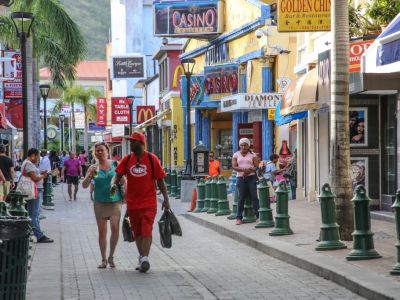
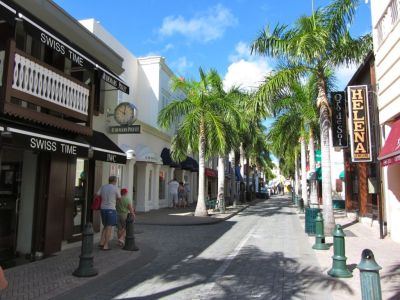
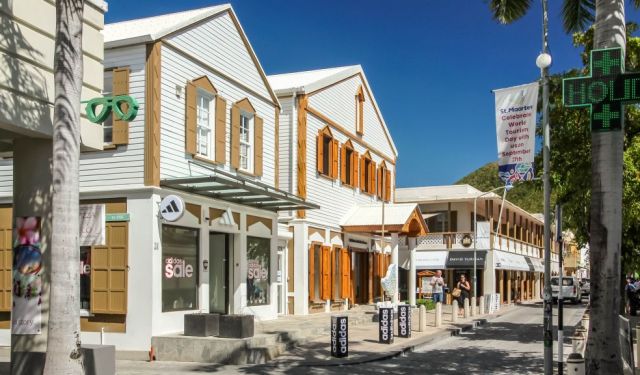
Front Street is the bustling heart of Sint Maarten’s capital, a lively stretch where history, commerce, and Caribbean charm meet. Dating back to the 18th century, when Philipsburg was a Dutch colonial outpost, Front Street developed as the town’s main thoroughfare. Many of the pastel-colored buildings you see today reflect that heritage, with traditional wooden shutters and balconies that recall centuries of trade and seafaring. The street still feels like the center of town, where locals and visitors alike gather to shop, stroll, and soak up the island’s energy.
For travelers, Front Street is best known as a premier shopping destination in the Caribbean. Duty-free stores line both sides, offering everything from fine jewelry, luxury watches, and designer fashion to electronics, cigars, and perfumes at competitive prices. In between international boutiques, you’ll also find local shops selling handmade crafts, island spices, and souvenirs that carry a more personal touch. This mix of global brands and local flair makes the street ideal for both casual browsing and serious treasure hunting.
Beyond shopping, Front Street offers plenty of cultural and culinary highlights. Landmarks such as the historic Courthouse, built in 1793, and the nearby Sint Maarten of Tours Catholic Church give the street depth beyond its commercial side. Cafés, bakeries, and Caribbean restaurants are scattered throughout, making it easy to pause for a cool drink or sample island flavors while people-watching. With its combination of history, variety, and vibrant atmosphere, Front Street captures the essence of Philipsburg and is an essential stop for anyone visiting Sint Maarten.
For travelers, Front Street is best known as a premier shopping destination in the Caribbean. Duty-free stores line both sides, offering everything from fine jewelry, luxury watches, and designer fashion to electronics, cigars, and perfumes at competitive prices. In between international boutiques, you’ll also find local shops selling handmade crafts, island spices, and souvenirs that carry a more personal touch. This mix of global brands and local flair makes the street ideal for both casual browsing and serious treasure hunting.
Beyond shopping, Front Street offers plenty of cultural and culinary highlights. Landmarks such as the historic Courthouse, built in 1793, and the nearby Sint Maarten of Tours Catholic Church give the street depth beyond its commercial side. Cafés, bakeries, and Caribbean restaurants are scattered throughout, making it easy to pause for a cool drink or sample island flavors while people-watching. With its combination of history, variety, and vibrant atmosphere, Front Street captures the essence of Philipsburg and is an essential stop for anyone visiting Sint Maarten.
5) Old Street (must see)
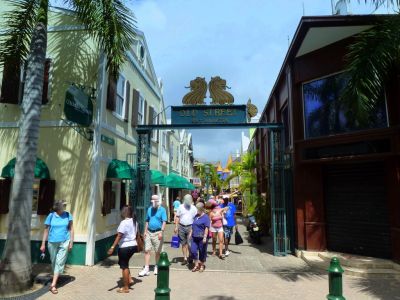
Old Street is one of Philipsburg’s more distinctive pedestrian lanes, offering visitors a compact and curated shopping environment within the town center. Although it evokes a historic atmosphere through cobblestone paving, pastel façades, and decorative details, Old Street is a relatively modern development, created in the late 1980s rather than a preserved colonial street. Its design was intentionally styled to suggest an older Caribbean setting, even though none of the buildings are original or historically significant.
The architecture found along Old Street does not reflect traditional St. Maarten building styles. Instead, it represents a purpose-built commercial aesthetic, designed to create a picturesque backdrop for shopping and leisure. Before the street was constructed, the site was occupied by a large historic house, which was demolished to make way for the current layout. As a result, Old Street is best understood not as a surviving heritage area, but as a modern reinterpretation of what a historic lane might look like.
Today, Old Street is known primarily for its boutique shopping and calmer pace compared to the busier sections of Front Street. Galleries, jewelry stores, and specialty shops line the narrow passage, offering a focused retail experience in a contained setting. The street’s layout encourages browsing, with smaller storefronts and shaded corners that invite visitors to slow down and explore.
Cafés and small eateries add to the atmosphere, providing places to pause between shops. While Old Street is not an authentic historical site, it plays a role in Philipsburg’s contemporary urban life as a designed commercial space. For visitors, it offers an opportunity to enjoy shopping and dining in a quieter, visually cohesive setting-best appreciated as a modern creation rather than a window into the island’s architectural past.
The architecture found along Old Street does not reflect traditional St. Maarten building styles. Instead, it represents a purpose-built commercial aesthetic, designed to create a picturesque backdrop for shopping and leisure. Before the street was constructed, the site was occupied by a large historic house, which was demolished to make way for the current layout. As a result, Old Street is best understood not as a surviving heritage area, but as a modern reinterpretation of what a historic lane might look like.
Today, Old Street is known primarily for its boutique shopping and calmer pace compared to the busier sections of Front Street. Galleries, jewelry stores, and specialty shops line the narrow passage, offering a focused retail experience in a contained setting. The street’s layout encourages browsing, with smaller storefronts and shaded corners that invite visitors to slow down and explore.
Cafés and small eateries add to the atmosphere, providing places to pause between shops. While Old Street is not an authentic historical site, it plays a role in Philipsburg’s contemporary urban life as a designed commercial space. For visitors, it offers an opportunity to enjoy shopping and dining in a quieter, visually cohesive setting-best appreciated as a modern creation rather than a window into the island’s architectural past.
6) Saint Martin of Tours Church
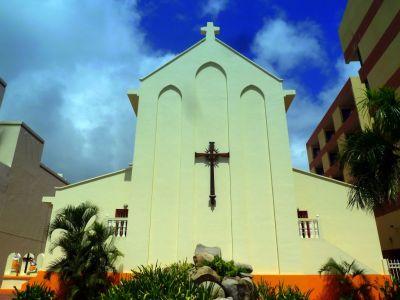
Saint Martin of Tours Church is one of the most important religious landmarks in Philipsburg, closely connected to Sint Maarten’s Catholic heritage and community life. The original church was built in 1844 as a modest wooden structure, dedicated to Saint Martin of Tours, the island’s patron saint. That early building served the growing Catholic population for more than a century, enduring storms and periods of repair before eventually being replaced.
The current church building is not the original structure and differs significantly in scale and design. Completed in 1952, the present church was built larger to accommodate an expanding congregation. Its architecture reflects mid-20th-century ecclesiastical design adapted to the Caribbean climate, with a solid masonry structure and a simple, dignified exterior. While less ornate than some older churches, its size and presence give it a strong visual role within Philipsburg.
Inside, the church offers a calm and functional worship space, with stained-glass windows providing soft natural light and a clear focus on the altar. Saint Martin of Tours Church remains an active parish, hosting regular services in multiple languages that reflect the island’s diverse population. For visitors, the church offers insight into how Catholicism has evolved on Sint Maarten, linking a 19th-century wooden chapel to a larger modern church that continues to serve as a spiritual and cultural center in the heart of the town.
The current church building is not the original structure and differs significantly in scale and design. Completed in 1952, the present church was built larger to accommodate an expanding congregation. Its architecture reflects mid-20th-century ecclesiastical design adapted to the Caribbean climate, with a solid masonry structure and a simple, dignified exterior. While less ornate than some older churches, its size and presence give it a strong visual role within Philipsburg.
Inside, the church offers a calm and functional worship space, with stained-glass windows providing soft natural light and a clear focus on the altar. Saint Martin of Tours Church remains an active parish, hosting regular services in multiple languages that reflect the island’s diverse population. For visitors, the church offers insight into how Catholicism has evolved on Sint Maarten, linking a 19th-century wooden chapel to a larger modern church that continues to serve as a spiritual and cultural center in the heart of the town.
7) Wathey Square
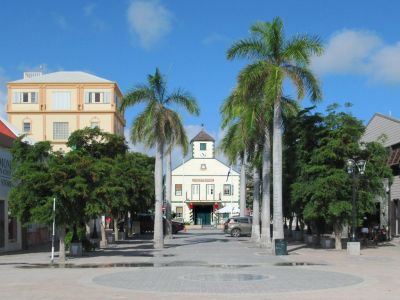
Wathey Square is one of the most important landmarks in Philipsburg and a lively introduction to the capital of Sint Maarten. Named after Cyrus Wathey, a respected island leader and member of one of the town’s most influential families, the square serves as a crossroads where history, commerce, and community life meet. Its central location, just steps from the waterfront and Front Street, makes it a natural gathering place for both locals and visitors arriving from the port.
The square is best known as a bustling hub for shopping and dining. Lined with duty-free boutiques, colorful stores, and inviting cafés, it highlights Philipsburg’s reputation as one of the Caribbean’s premier shopping destinations. Here, visitors can browse for jewelry, fashion, souvenirs, and handcrafted goods, or simply relax at a café and enjoy the vibrant street life. Traditional Caribbean-style houses, small white churches, and modern hotels around the square add to its charm, blending the island’s heritage with its contemporary character.
Beyond commerce, Wathey Square also plays an important role in cultural and community events. Parades, festivals, and public celebrations often pass through, filling the space with the rhythms of steel drums, lively dancing, and a true sense of island pride. The square’s open atmosphere makes it a stage for Sint Maarten’s traditions, offering visitors an authentic taste of the island’s spirit.
With its proximity to the Boardwalk and the scenic views of Great Bay, Wathey Square is both a practical starting point and a symbolic gateway into Philipsburg.
The square is best known as a bustling hub for shopping and dining. Lined with duty-free boutiques, colorful stores, and inviting cafés, it highlights Philipsburg’s reputation as one of the Caribbean’s premier shopping destinations. Here, visitors can browse for jewelry, fashion, souvenirs, and handcrafted goods, or simply relax at a café and enjoy the vibrant street life. Traditional Caribbean-style houses, small white churches, and modern hotels around the square add to its charm, blending the island’s heritage with its contemporary character.
Beyond commerce, Wathey Square also plays an important role in cultural and community events. Parades, festivals, and public celebrations often pass through, filling the space with the rhythms of steel drums, lively dancing, and a true sense of island pride. The square’s open atmosphere makes it a stage for Sint Maarten’s traditions, offering visitors an authentic taste of the island’s spirit.
With its proximity to the Boardwalk and the scenic views of Great Bay, Wathey Square is both a practical starting point and a symbolic gateway into Philipsburg.
8) Courthouse
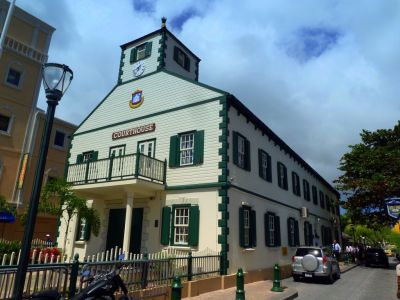
The Courthouse is one of Philipsburg’s most recognizable landmarks and a lasting symbol of Sint Maarten’s colonial-era administration. Located at the head of Front Street in the heart of the town, the building dates to 1793 and stands as a focal point of the historic center. Although often associated with John Philips, after whom the town is named, the Courthouse was constructed after his death, during the period of Governor Willem Hendrick Rink. Over time, it has served various civic roles, including as a post office, fire station, and jail, reflecting its central place in the island’s public life.
Architecturally, the Courthouse combines stone and wood construction, a practical approach suited to the Caribbean climate. While the lower structure retains much of its original form, the upper sections-including the clock tower-have been modified and reconstructed several times over the years. These changes were largely driven by storm damage and the need for repairs, giving the building its present appearance while preserving its historic character. The clock tower remains a defining feature, and its bell continues to ring daily at 12 noon, marking time in a tradition that has endured for generations.
Today, the Courthouse still functions as a working judicial building while also serving as a visual anchor of Philipsburg’s historic district. Surrounded by shops, cafés, and the lively activity of Front Street, it offers visitors a tangible link to more than two centuries of civic life on the island. Standing before the Courthouse, one can trace the layers of Sint Maarten’s history through a structure that has adapted, survived, and remained central to the town’s identity.
Architecturally, the Courthouse combines stone and wood construction, a practical approach suited to the Caribbean climate. While the lower structure retains much of its original form, the upper sections-including the clock tower-have been modified and reconstructed several times over the years. These changes were largely driven by storm damage and the need for repairs, giving the building its present appearance while preserving its historic character. The clock tower remains a defining feature, and its bell continues to ring daily at 12 noon, marking time in a tradition that has endured for generations.
Today, the Courthouse still functions as a working judicial building while also serving as a visual anchor of Philipsburg’s historic district. Surrounded by shops, cafés, and the lively activity of Front Street, it offers visitors a tangible link to more than two centuries of civic life on the island. Standing before the Courthouse, one can trace the layers of Sint Maarten’s history through a structure that has adapted, survived, and remained central to the town’s identity.
9) Philipsburg Market Place
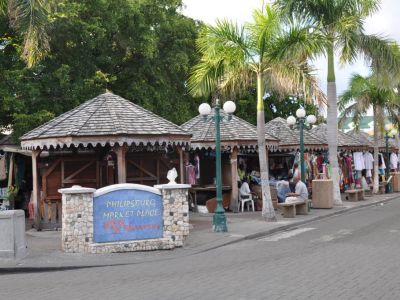
Philipsburg Market Place is one of the liveliest corners of Sint Maarten’s capital, a colorful open-air market that captures the island’s Caribbean spirit. Located just steps from the waterfront, the market is easy to spot with its rows of bright stalls shaded by awnings and umbrellas. For visitors arriving by cruise ship or exploring the town on foot, it provides a welcoming introduction to local culture, blending traditional island charm with a bustling atmosphere. The market has long been a favorite gathering point for both locals and tourists, offering a vibrant snapshot of everyday life in Philipsburg.
The marketplace is best known for its wide range of goods, from handmade crafts and souvenirs to beachwear, jewelry, and tropical fabrics. Vendors proudly showcase locally made items such as carved wooden figures, paintings, and woven baskets, making it a great place to find authentic keepsakes that reflect the island’s heritage. Alongside these stalls are stands selling spices, hot sauces, and rum-flavors that carry the taste of the Caribbean back home. Bargaining is often part of the experience, adding to the lively interaction between visitors and sellers.
Beyond shopping, Philipsburg Market Place is also a cultural encounter. The sound of reggae and calypso often drifts through the air, while the aroma of local dishes such as johnnycakes or fresh seafood tempts passersby. The market’s location near other landmarks, including Front Street and the Boardwalk, makes it a convenient stop during a day of exploring.
The marketplace is best known for its wide range of goods, from handmade crafts and souvenirs to beachwear, jewelry, and tropical fabrics. Vendors proudly showcase locally made items such as carved wooden figures, paintings, and woven baskets, making it a great place to find authentic keepsakes that reflect the island’s heritage. Alongside these stalls are stands selling spices, hot sauces, and rum-flavors that carry the taste of the Caribbean back home. Bargaining is often part of the experience, adding to the lively interaction between visitors and sellers.
Beyond shopping, Philipsburg Market Place is also a cultural encounter. The sound of reggae and calypso often drifts through the air, while the aroma of local dishes such as johnnycakes or fresh seafood tempts passersby. The market’s location near other landmarks, including Front Street and the Boardwalk, makes it a convenient stop during a day of exploring.
10) Back Street
Back Street offers a lively contrast to the nearby, high-end Front Street. Known as the place where locals shop for their daily needs, it is lined with an array of affordable boutiques, fashion stores, and shoe shops. Visitors strolling along Back Street will find everything from colorful island wear to practical handbags, beach essentials, and even that forgotten swimsuit. The street buzzes with the energy of both residents running errands and travelers looking for bargains, making it one of the best places to experience Philipsburg’s everyday character.
Beyond shopping, Back Street is also a canvas for the city’s artistic side. As part of the Color Me SXM project, murals brighten the walls and corners of Philipsburg, adding splashes of color that celebrate the island’s culture and creativity. These artworks bring an additional layer of charm to your stroll, turning a shopping trip into an open-air gallery walk.
Historically, Back Street forms part of the old town, and its character reflects that blend of past and present. Along its length stand some of the city’s oldest monuments, such as the Augusta Illidge, also known as the Brick Building, and several French Caribbean–style houses that recall Philipsburg’s colonial heritage. Together, they lend the street a sense of continuity between history and modern-day life.
Beyond shopping, Back Street is also a canvas for the city’s artistic side. As part of the Color Me SXM project, murals brighten the walls and corners of Philipsburg, adding splashes of color that celebrate the island’s culture and creativity. These artworks bring an additional layer of charm to your stroll, turning a shopping trip into an open-air gallery walk.
Historically, Back Street forms part of the old town, and its character reflects that blend of past and present. Along its length stand some of the city’s oldest monuments, such as the Augusta Illidge, also known as the Brick Building, and several French Caribbean–style houses that recall Philipsburg’s colonial heritage. Together, they lend the street a sense of continuity between history and modern-day life.
11) Methodist Church
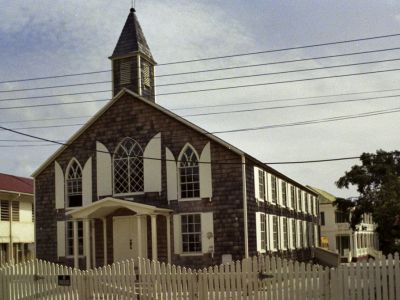
The Methodist Church is one of Philipsburg’s most recognizable landmarks, valued for both its religious role and its architectural presence within the town. The original church was built in 1851 on the site of a former Anglican church. Over time, the wooden structure suffered damage from hurricanes and deterioration caused by termites. In 1979, the church was rebuilt, not as an exact copy but as a modified reconstruction of the 19th-century design. Unlike the original wooden building, the current structure was constructed in concrete, ensuring greater durability while still referencing the earlier appearance. In 2005, the church was granted monument status, recognizing its historical importance and continued presence in Philipsburg.
Architecturally, the present church reflects traditional island forms interpreted through modern materials. Its two-story structure, white shutters, and shingle-style exterior echo the character of the earlier building, while subtle Gothic influences remain visible in the upper windows. A small bell tower crowns the roofline, and a modest front porch and steps face the street. Although altered in construction, the building retains a familiar silhouette that links it visually to its 19th-century predecessor.
The church grounds include two additional historic buildings. The Manse, or minister’s residence, stands on the site of an earlier rectory that was demolished in 1931. The current Manse was constructed under Lionel Bernard Scott, an influential figure in Sint Maarten and within the wider Dutch Kingdom. Nearby stands the so-called Brick Building, a red-brick structure dating to around 1785. Built of distinctive red bricks, it is one of the oldest surviving masonry buildings in the area.
Today, the Methodist Church continues to serve an active congregation while also functioning as a cultural landmark. Its history of rebuilding, adaptation, and preservation reflects both the challenges of the island environment and the community’s efforts to retain continuity with the past. For visitors, the church and its surrounding buildings offer insight into the layered religious, architectural, and social history of Philipsburg.
Architecturally, the present church reflects traditional island forms interpreted through modern materials. Its two-story structure, white shutters, and shingle-style exterior echo the character of the earlier building, while subtle Gothic influences remain visible in the upper windows. A small bell tower crowns the roofline, and a modest front porch and steps face the street. Although altered in construction, the building retains a familiar silhouette that links it visually to its 19th-century predecessor.
The church grounds include two additional historic buildings. The Manse, or minister’s residence, stands on the site of an earlier rectory that was demolished in 1931. The current Manse was constructed under Lionel Bernard Scott, an influential figure in Sint Maarten and within the wider Dutch Kingdom. Nearby stands the so-called Brick Building, a red-brick structure dating to around 1785. Built of distinctive red bricks, it is one of the oldest surviving masonry buildings in the area.
Today, the Methodist Church continues to serve an active congregation while also functioning as a cultural landmark. Its history of rebuilding, adaptation, and preservation reflects both the challenges of the island environment and the community’s efforts to retain continuity with the past. For visitors, the church and its surrounding buildings offer insight into the layered religious, architectural, and social history of Philipsburg.
12) Great Bay Beach (must see)
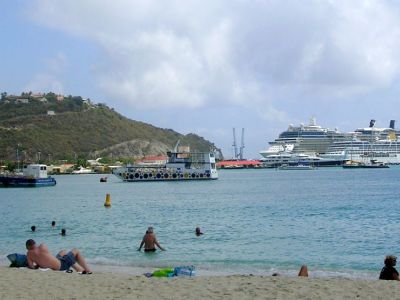
Great Bay Beach stretches along the length of Philipsburg and is one of the most inviting seaside spots on Sint Maarten. Its wide shoreline of soft, white sand and calm turquoise waters creates an ideal setting for both relaxation and recreation. Located directly in front of the capital, the beach combines the ease of city access with the laid-back atmosphere of the Caribbean, making it a natural first stop for visitors arriving by cruise ship or exploring the town on foot.
The beach’s central location allows it to blend seamlessly with Philipsburg’s lively boardwalk, where shops, cafés, and restaurants line the waterfront. This gives visitors the perfect balance between sunbathing and strolling for souvenirs, duty-free goods, or a refreshing drink. The boardwalk is also a prime spot for people-watching, as both tourists and locals gather here throughout the day, especially when the cruise ships are in port.
Great Bay Beach is known not only for its accessibility but also for its gentle waters, which make swimming and wading enjoyable for all ages. Water sports such as jet skiing, paddleboarding, and snorkeling are available for those looking for more adventure, while beach chairs and umbrellas can be rented for those who prefer to simply soak up the sun. Its broad stretch of sand ensures that even on busier days, there’s space to unwind.
As the sun sets, the atmosphere shifts into a more tranquil pace, with the lights from the boardwalk reflecting off the water and music drifting from nearby venues.
The beach’s central location allows it to blend seamlessly with Philipsburg’s lively boardwalk, where shops, cafés, and restaurants line the waterfront. This gives visitors the perfect balance between sunbathing and strolling for souvenirs, duty-free goods, or a refreshing drink. The boardwalk is also a prime spot for people-watching, as both tourists and locals gather here throughout the day, especially when the cruise ships are in port.
Great Bay Beach is known not only for its accessibility but also for its gentle waters, which make swimming and wading enjoyable for all ages. Water sports such as jet skiing, paddleboarding, and snorkeling are available for those looking for more adventure, while beach chairs and umbrellas can be rented for those who prefer to simply soak up the sun. Its broad stretch of sand ensures that even on busier days, there’s space to unwind.
As the sun sets, the atmosphere shifts into a more tranquil pace, with the lights from the boardwalk reflecting off the water and music drifting from nearby venues.
13) Captain Hodge Wharf
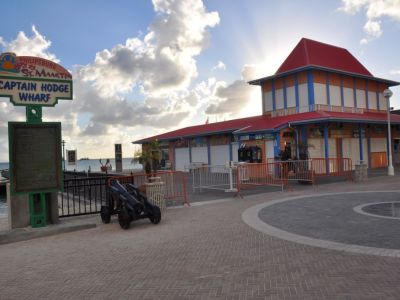
Nestled along the shimmering waters of Great Bay, Captain Hodge Wharf is one of Philipsburg’s most dynamic waterfront destinations. As both a functional pier and a vibrant gathering place, the wharf offers visitors a first taste of the island’s pulse: the gentle sway of yachts, the chatter of passersby, and the fragrance of sea air blending with Caribbean warmth.
The design of the wharf strikes a pleasing balance between modern infrastructure and island charm. Constructed of concrete to support vessels large and small, the pier extends gracefully into the bay and features essential amenities like mooring facilities, shaded seating, and scenic vantage spots. Visitors love lingering here, whether to rest after a stroll or to soak in panoramic views of azure waters and distant hills.
What truly elevates Captain Hodge Wharf is its role as a hub for maritime adventures and local culture. From this point, travelers can board snorkeling excursions, scuba diving trips, or boat journeys to neighboring islets. On land, it connects directly to the famed Front Street, renowned for duty-free shopping, restaurants, and bars serving both local and international fare. Just steps away lie the Sint Maarten Museum-where you can dive into the island’s story-and the Courthouse, a charming white wooden building dating to 1793, topped with a pineapple motif.
Yet Captain Hodge Wharf is more than just a scenic pier-it’s a stage for the island’s cultural spirit. Throughout the year, festivals, seafood celebrations, concerts, and community events bring the space to life, making it a gathering place for both locals and travelers.
The design of the wharf strikes a pleasing balance between modern infrastructure and island charm. Constructed of concrete to support vessels large and small, the pier extends gracefully into the bay and features essential amenities like mooring facilities, shaded seating, and scenic vantage spots. Visitors love lingering here, whether to rest after a stroll or to soak in panoramic views of azure waters and distant hills.
What truly elevates Captain Hodge Wharf is its role as a hub for maritime adventures and local culture. From this point, travelers can board snorkeling excursions, scuba diving trips, or boat journeys to neighboring islets. On land, it connects directly to the famed Front Street, renowned for duty-free shopping, restaurants, and bars serving both local and international fare. Just steps away lie the Sint Maarten Museum-where you can dive into the island’s story-and the Courthouse, a charming white wooden building dating to 1793, topped with a pineapple motif.
Yet Captain Hodge Wharf is more than just a scenic pier-it’s a stage for the island’s cultural spirit. Throughout the year, festivals, seafood celebrations, concerts, and community events bring the space to life, making it a gathering place for both locals and travelers.
14) Boardwalk (must see)
Stretching for about 1.5 miles along the golden sands of Great Bay, the Sint Maarten Boardwalk is a lively waterfront promenade that embodies the island’s spirit. More than just a pathway, it serves as a gathering place where visitors and locals alike come to shop, dine, and simply enjoy the coastal atmosphere. The boardwalk connects seamlessly to the cruise port, making it one of the first stops for many travelers eager to experience the charm of Philipsburg.
Shopping here is an experience in itself. From sparkling high-end jewelry stores on nearby Front Street to stalls brimming with handcrafted souvenirs, there is something for every taste and budget. Duty-free shops offer perfumes, electronics, and luxury goods at enticing prices, while local vendors showcase vibrant artwork and colorful beachwear that capture the essence of the island. Browsing along the boardwalk, it’s easy to stumble upon a unique keepsake to carry home as a reminder of your time in Sint Maarten.
Dining is another major draw, with options ranging from casual beachfront cafés to lively restaurants serving Caribbean specialties and international comfort food. Beach bars line the shore, offering the perfect spot to relax with a cold rum punch in hand while watching the turquoise waves roll in.
It’s no surprise that hours pass quickly here. A day might begin with coffee and a stroll, followed by shopping, lunch by the beach, and ending with a front-row seat to one of Philipsburg’s spectacular sunsets.
Shopping here is an experience in itself. From sparkling high-end jewelry stores on nearby Front Street to stalls brimming with handcrafted souvenirs, there is something for every taste and budget. Duty-free shops offer perfumes, electronics, and luxury goods at enticing prices, while local vendors showcase vibrant artwork and colorful beachwear that capture the essence of the island. Browsing along the boardwalk, it’s easy to stumble upon a unique keepsake to carry home as a reminder of your time in Sint Maarten.
Dining is another major draw, with options ranging from casual beachfront cafés to lively restaurants serving Caribbean specialties and international comfort food. Beach bars line the shore, offering the perfect spot to relax with a cold rum punch in hand while watching the turquoise waves roll in.
It’s no surprise that hours pass quickly here. A day might begin with coffee and a stroll, followed by shopping, lunch by the beach, and ending with a front-row seat to one of Philipsburg’s spectacular sunsets.
The Most Popular Cities
/ view all