

Fort Calgary, Calgary (must see)
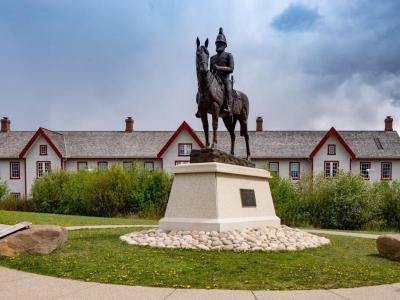
Fort Calgary came into being in 1875, thanks to a federal order with a very specific goal: put an end to the whiskey trade that had taken root at the meeting point of the Bow and Elbow rivers. Law, order, and fewer questionable drinks-that was the plan.
Choosing the exact location fell to the F Troop of the North-West Mounted Police, led by Ephrem A. Brisebois, who arrived from Fort Macleod with determination and limited equipment. To cross the Bow River, they improvised with a tarpaulin stretched over a wagon box. The first man to step onto the riverbank was Corporal George Clift King, a detail that earned him the informal title of Calgary’s first citizen. No plaque at the time, just cold water and good timing...
Construction followed using spruce logs floated down from upstream and locally sourced pine. The fort included the basics: men’s quarters, storage buildings, stables, and a guard room. Early on, it went by practical names like “Bow Fort” or “The Elbow.” An attempt to name it after Brisebois failed-popularity matters, even in the 1870s.
Ultimately, in 1876, the fort officially became Fort Calgary-courtesy of Colonel James Macleod, Commissioner of the North-West Mounted Police, who had spent time in Scotland and proposed this name after a small hamlet on the Isle of Mull.
As the settlement grew, so did the fort. Parts were dismantled to make way for new barracks in 1882, and by 1888, a two-storey building stood here, large enough to house 100 men.
Today, Fort Calgary remains one of the clearest places to trace the city’s beginnings-a stop where Calgary’s story starts to sound less like legend and more like real life, boots, logs, rivers, and all...
Choosing the exact location fell to the F Troop of the North-West Mounted Police, led by Ephrem A. Brisebois, who arrived from Fort Macleod with determination and limited equipment. To cross the Bow River, they improvised with a tarpaulin stretched over a wagon box. The first man to step onto the riverbank was Corporal George Clift King, a detail that earned him the informal title of Calgary’s first citizen. No plaque at the time, just cold water and good timing...
Construction followed using spruce logs floated down from upstream and locally sourced pine. The fort included the basics: men’s quarters, storage buildings, stables, and a guard room. Early on, it went by practical names like “Bow Fort” or “The Elbow.” An attempt to name it after Brisebois failed-popularity matters, even in the 1870s.
Ultimately, in 1876, the fort officially became Fort Calgary-courtesy of Colonel James Macleod, Commissioner of the North-West Mounted Police, who had spent time in Scotland and proposed this name after a small hamlet on the Isle of Mull.
As the settlement grew, so did the fort. Parts were dismantled to make way for new barracks in 1882, and by 1888, a two-storey building stood here, large enough to house 100 men.
Today, Fort Calgary remains one of the clearest places to trace the city’s beginnings-a stop where Calgary’s story starts to sound less like legend and more like real life, boots, logs, rivers, and all...
Want to visit this sight? Check out these Self-Guided Walking Tours in Calgary. Alternatively, you can download the mobile app "GPSmyCity: Walks in 1K+ Cities" from Apple App Store or Google Play Store. The app turns your mobile device to a personal tour guide and it works offline, so no data plan is needed when traveling abroad.
Download The GPSmyCity App



Fort Calgary on Map
Sight Name: Fort Calgary
Sight Location: Calgary, Canada (See walking tours in Calgary)
Sight Type: Attraction/Landmark
Guide(s) Containing This Sight:
Sight Location: Calgary, Canada (See walking tours in Calgary)
Sight Type: Attraction/Landmark
Guide(s) Containing This Sight:
Nearby Sights
Walking Tours in Calgary, Alberta

Create Your Own Walk in Calgary
Creating your own self-guided walk in Calgary is easy and fun. Choose the city attractions that you want to see and a walk route map will be created just for you. You can even set your hotel as the start point of the walk.
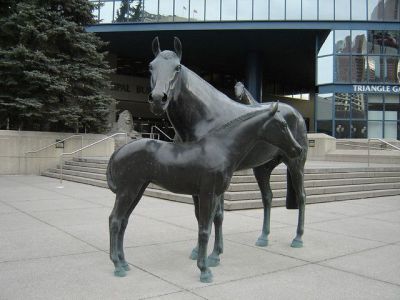
Sculptures in Calgary Walking Tour
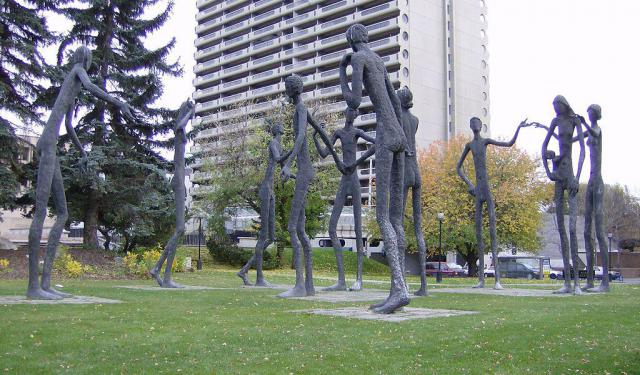
In Calgary, you won't find imposing grey monuments with tonnes of history behind them. Instead, the city boasts a wealth of outdoor sculptures of a different sort. It's all about the sites scattered throughout the city, rarely revealed in tourist handbooks but colorful enough to be captured in photos. Some of them weird, some outstanding, and some merely amusing.
One of the notable... view more
Tour Duration: 2 Hour(s)
Travel Distance: 2.8 Km or 1.7 Miles
One of the notable... view more
Tour Duration: 2 Hour(s)
Travel Distance: 2.8 Km or 1.7 Miles
Calgary Introduction Walking Tour
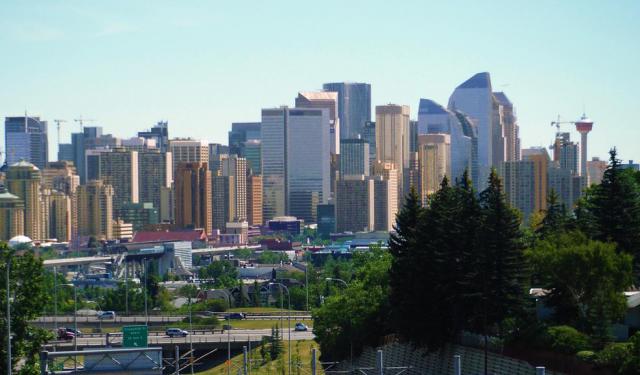
Calgary doesn’t ease into things-it gets straight to the point. As the largest city in Western Canada, it grew where the Bow and Elbow rivers meet, a natural crossroads that has encouraged movement, trade, and gathering for centuries. Long before railways or office towers appeared, this land was used by Indigenous peoples, especially the Blackfoot Confederacy, as a place to meet, travel through,... view more
Tour Duration: 2 Hour(s)
Travel Distance: 3.6 Km or 2.2 Miles
Tour Duration: 2 Hour(s)
Travel Distance: 3.6 Km or 2.2 Miles
Inglewood Walking Tour
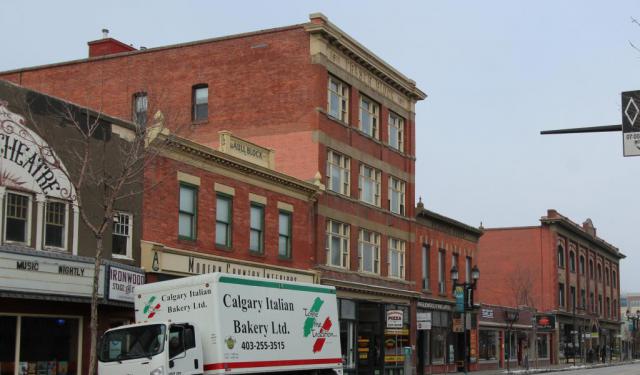
Inglewood, a picturesque neighborhood on the bank of the Elbow River in central Calgary, is brimming with historical significance and natural beauty. One of its notable sites is Fort Calgary, a historic landmark that takes you back in time to the days of the Canadian frontier. Here, you can explore exhibits and learn about the city's early history, making it an ideal spot for history buffs.
... view more
Tour Duration: 2 Hour(s)
Travel Distance: 4.8 Km or 3 Miles
... view more
Tour Duration: 2 Hour(s)
Travel Distance: 4.8 Km or 3 Miles