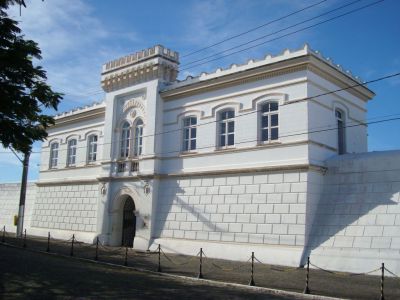


Forte de Santo Antonio Alem do Carmo (Fort of St. Anthony Beyond the Carmo), Salvador
The Fort of Saint Anthony was built in the 18th century with the noble intention of shielding Salvador from Dutch and Spanish invasions. Yet, despite its grand purpose, the fort never saw battle-at the time, it was more of a trench.
Later on, it was expanded and transformed into a prison, particularly during the Military Dictatorship, when it served as a political prison. After falling into disrepair and becoming a hotspot for drug trafficking, cultural groups from Salvador (think artisans, street dancers, and folkloric performers) took matters into their own hands in 1985, occupying the space to rally for its restoration.
Capoeira masters, losing their turf in Pelourinho, also took refuge in the fort and started offering classes. Capoeira ultimately became the sole survivor in the fight for the fort’s revitalization. From 1985 to 1990, the fort doubled as a rehearsal space for the iconic carnival block, Ilê Ayê.
Fast forward to 2006, when a partnership between the Ministry of Culture and the Government of the State of Bahia finally got the ball rolling on a restoration project. Now a national heritage site and managed by the Institute of Cultural Heritage (IPAC), the fort has reclaimed its cultural glory.
Today, it’s a buzzing cultural hub, hosting capoeira activities of all kinds. With seven capoeira masters teaching everything from “Capoeira de Angola“ (as taught by Master Pastinha) to “Capoeira Regional“ (as created by Master Bimba), it’s a place where different styles coexist in harmony, each with its own rules and flair.
The venue is so beautiful that it’s often requested for big events, especially rehearsals for bands and artists; however, any events here must be connected to capoeira.
Access to the fort requires a small voluntary contribution. As for capoeira classes, you’ll need to check in with the masters themselves for pricing-after all, capoeira is an art, and art has its own rhythm!
Later on, it was expanded and transformed into a prison, particularly during the Military Dictatorship, when it served as a political prison. After falling into disrepair and becoming a hotspot for drug trafficking, cultural groups from Salvador (think artisans, street dancers, and folkloric performers) took matters into their own hands in 1985, occupying the space to rally for its restoration.
Capoeira masters, losing their turf in Pelourinho, also took refuge in the fort and started offering classes. Capoeira ultimately became the sole survivor in the fight for the fort’s revitalization. From 1985 to 1990, the fort doubled as a rehearsal space for the iconic carnival block, Ilê Ayê.
Fast forward to 2006, when a partnership between the Ministry of Culture and the Government of the State of Bahia finally got the ball rolling on a restoration project. Now a national heritage site and managed by the Institute of Cultural Heritage (IPAC), the fort has reclaimed its cultural glory.
Today, it’s a buzzing cultural hub, hosting capoeira activities of all kinds. With seven capoeira masters teaching everything from “Capoeira de Angola“ (as taught by Master Pastinha) to “Capoeira Regional“ (as created by Master Bimba), it’s a place where different styles coexist in harmony, each with its own rules and flair.
The venue is so beautiful that it’s often requested for big events, especially rehearsals for bands and artists; however, any events here must be connected to capoeira.
Access to the fort requires a small voluntary contribution. As for capoeira classes, you’ll need to check in with the masters themselves for pricing-after all, capoeira is an art, and art has its own rhythm!
Want to visit this sight? Check out these Self-Guided Walking Tours in Salvador. Alternatively, you can download the mobile app "GPSmyCity: Walks in 1K+ Cities" from Apple App Store or Google Play Store. The app turns your mobile device to a personal tour guide and it works offline, so no data plan is needed when traveling abroad.
Download The GPSmyCity App



Forte de Santo Antonio Alem do Carmo (Fort of St. Anthony Beyond the Carmo) on Map
Sight Name: Forte de Santo Antonio Alem do Carmo (Fort of St. Anthony Beyond the Carmo)
Sight Location: Salvador, Brazil (See walking tours in Salvador)
Sight Type: Attraction/Landmark
Sight Location: Salvador, Brazil (See walking tours in Salvador)
Sight Type: Attraction/Landmark
Nearby Sights
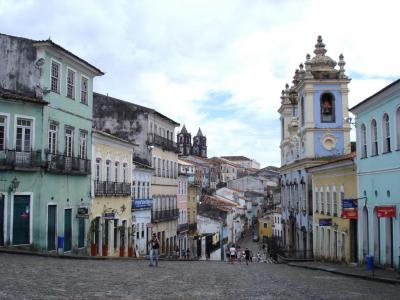
Walking Tours in Salvador, Brazil

Create Your Own Walk in Salvador
Creating your own self-guided walk in Salvador is easy and fun. Choose the city attractions that you want to see and a walk route map will be created just for you. You can even set your hotel as the start point of the walk.
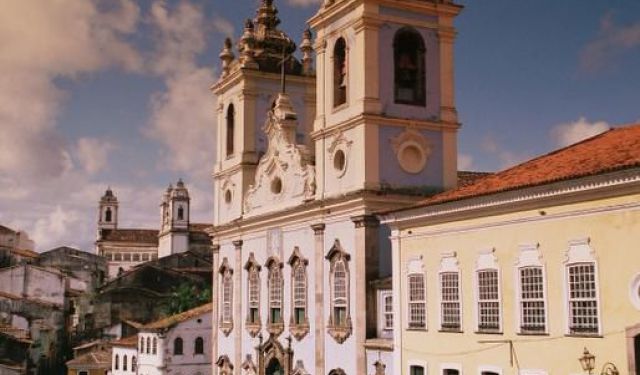
Salvador's Historical Churches Tour
In Salvador, Brazil, there are quite a few churches emblematic of its cultural and religious heritage. The city's historic district contains so many old Catholic temples that some even joke that you can have a different church to visit there every day of the year. However, if you don't have a whole year to spend in Salvador but still want to make the most of your time in terms of... view more
Tour Duration: 1 Hour
Travel Distance: 2.1 Km or 1.3 Miles
Tour Duration: 1 Hour
Travel Distance: 2.1 Km or 1.3 Miles
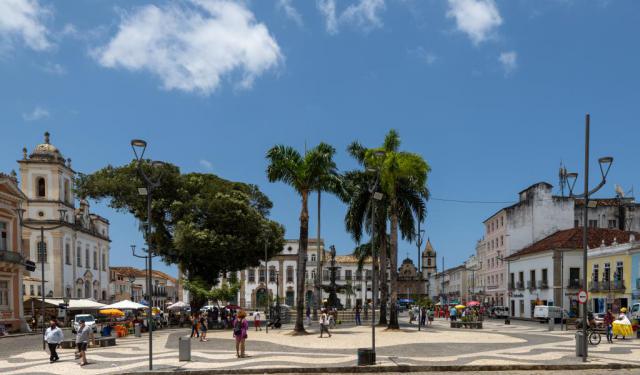
Salvador's Historic Center Walking Tour
Salvador is a coastal city in Brazil. Founded in 1548, it is the country's former capital and serves as the current capital of the state of Bahia. It is one of the oldest planned cities in the Americas.
Due to its location, early Europeans turned Salvador into an important trade route for slavery. Of the nearly 5 million enslaved people who were imported to Brazil, about 1.3 million were... view more
Tour Duration: 1 Hour
Travel Distance: 1.6 Km or 1 Miles
Due to its location, early Europeans turned Salvador into an important trade route for slavery. Of the nearly 5 million enslaved people who were imported to Brazil, about 1.3 million were... view more
Tour Duration: 1 Hour
Travel Distance: 1.6 Km or 1 Miles