

Garden of Dreams, Kathmandu (must see)
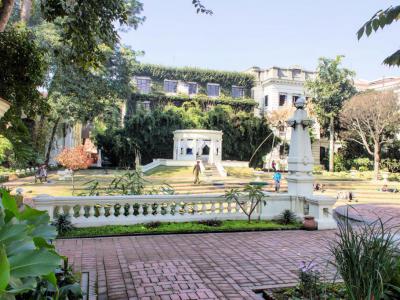
The Garden of Dreams, located in Kaiser Mahal, Kathmandu, is a historic garden and architectural landmark first established in 1920. It was built for Field Marshal Kaiser Sumsher Rana and spans nearly 7,000 square meters. The garden was designed in a Neoclassical style reminiscent of the Edwardian gardens popular in England during the reign of King Edward VII.
Historically known as the Garden of Six Seasons, it originally reflected this name through six pavilions, each dedicated to a different season in Nepal. While only three of these pavilions survive today, they are complemented by an amphitheater and various decorative elements, such as fountains, sunken flower gardens with central ponds, pergolas, and urns.
One of the three pavilions serves as the primary architectural centerpiece of these grounds – the grand Summer Pavilion. Walk along the main elevated gravel pathway to the center of the garden to stand before this imposing, multi-story white neoclassical veranda supported by towering Ionic columns. The opulent structure houses the Kaiser Café and features intricate balustrades, double-height ceilings, and marble flooring meant to emulate the absolute height of early 20th-century European high-society luxury.
The architectural features of the gardens suggest influences from European pattern books, beautifully adapted with local nuances. A good example of European water symmetry integrated into the landscape is the lotus pond. Look down from the steps of the grand white veranda to locate a crisp rectangular reflecting pool cutting across the lower central axis of the lawns. This water feature is adorned with blooming water lilies and flanked by two matching three-tiered fountains.
Despite its initial grandeur and sophistication, which made it one of the most prestigious private gardens of its time, the Garden of Dreams fell into deep neglect after the death of Kaiser Sumsher in 1964. Eventually, the garden was saved from complete demolition in 1998 and it was reopened under its current name.
Historically known as the Garden of Six Seasons, it originally reflected this name through six pavilions, each dedicated to a different season in Nepal. While only three of these pavilions survive today, they are complemented by an amphitheater and various decorative elements, such as fountains, sunken flower gardens with central ponds, pergolas, and urns.
One of the three pavilions serves as the primary architectural centerpiece of these grounds – the grand Summer Pavilion. Walk along the main elevated gravel pathway to the center of the garden to stand before this imposing, multi-story white neoclassical veranda supported by towering Ionic columns. The opulent structure houses the Kaiser Café and features intricate balustrades, double-height ceilings, and marble flooring meant to emulate the absolute height of early 20th-century European high-society luxury.
The architectural features of the gardens suggest influences from European pattern books, beautifully adapted with local nuances. A good example of European water symmetry integrated into the landscape is the lotus pond. Look down from the steps of the grand white veranda to locate a crisp rectangular reflecting pool cutting across the lower central axis of the lawns. This water feature is adorned with blooming water lilies and flanked by two matching three-tiered fountains.
Despite its initial grandeur and sophistication, which made it one of the most prestigious private gardens of its time, the Garden of Dreams fell into deep neglect after the death of Kaiser Sumsher in 1964. Eventually, the garden was saved from complete demolition in 1998 and it was reopened under its current name.
Want to visit this sight? Check out these Self-Guided Walking Tours in Kathmandu. Alternatively, you can download the mobile app "GPSmyCity: Walks in 1K+ Cities" from Apple App Store or Google Play Store. The app turns your mobile device to a personal tour guide and it works offline, so no data plan is needed when traveling abroad.
Download The GPSmyCity App



Garden of Dreams on Map
Sight Name: Garden of Dreams
Sight Location: Kathmandu, Nepal (See walking tours in Kathmandu)
Sight Type: Attraction/Landmark
Guide(s) Containing This Sight:
Sight Location: Kathmandu, Nepal (See walking tours in Kathmandu)
Sight Type: Attraction/Landmark
Guide(s) Containing This Sight:
Nearby Sights

Walking Tours in Kathmandu, Nepal

Create Your Own Walk in Kathmandu
Creating your own self-guided walk in Kathmandu is easy and fun. Choose the city attractions that you want to see and a walk route map will be created just for you. You can even set your hotel as the start point of the walk.
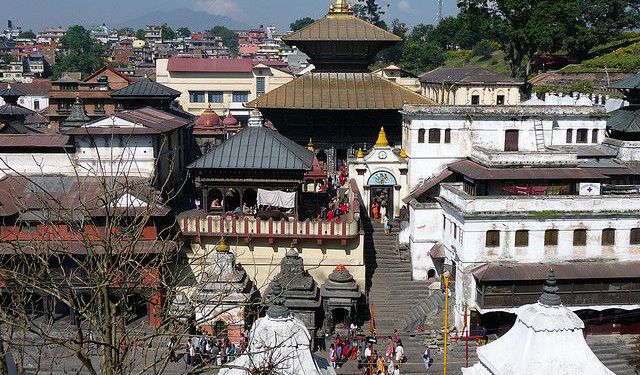
Pashupatinath Temple Complex Tour
Pashupatinath Temple Complex in Kathmandu is a sacred religious site that holds great significance for Hindus worldwide. The area in which it is located, near the Tribhuvan International Airport, is truly picturesque - surrounded by virgin jungle. This complex encompasses several notable locations, each contributing to its spiritual and cultural importance.
At the heart of the complex stands... view more
Tour Duration: 1 Hour(s)
Travel Distance: 1.8 Km or 1.1 Miles
At the heart of the complex stands... view more
Tour Duration: 1 Hour(s)
Travel Distance: 1.8 Km or 1.1 Miles
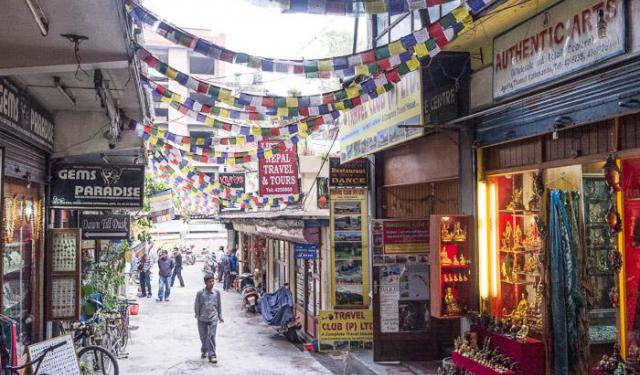
Kathmandu's Street Markets Tour
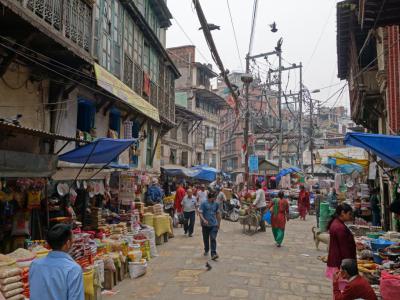
Ardent shoppers – those keen on street markets in particular – will find Kathmandu a true heaven. In this city, street markets are where you can buy some exotic (and often good-quality) products, such as monk's robes, soft silks, woolen garments, artifacts, and more, at very good prices. The list of bargains is truly endless. Sadly, however, in Kathmandu, you are not allowed to buy... view more
Tour Duration: 1 Hour(s)
Travel Distance: 2.2 Km or 1.4 Miles
Tour Duration: 1 Hour(s)
Travel Distance: 2.2 Km or 1.4 Miles
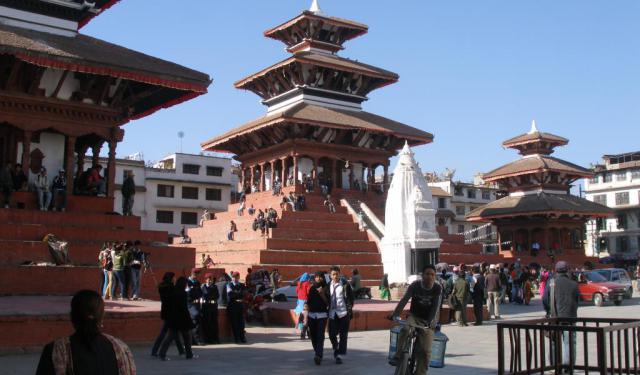
Kathmandu Old Town Walking Tour
Kathmandu, the capital of Nepal, is one of South Asia's oldest continuously inhabited cities. Nestled in the fertile Kathmandu Valley at an elevation of about 1,400 meters (or 4,600 feet), it has served for centuries as the heart of the Himalayan region.
The city's name is derived from Kasthamandap, meaning "Wooden Pavilion" in Sanskrit. This remarkable three-story structure... view more
Tour Duration: 2 Hour(s)
Travel Distance: 2.9 Km or 1.8 Miles
The city's name is derived from Kasthamandap, meaning "Wooden Pavilion" in Sanskrit. This remarkable three-story structure... view more
Tour Duration: 2 Hour(s)
Travel Distance: 2.9 Km or 1.8 Miles