

Garden of Fugitives, Pompei
The Garden of Fugitives is one of Pompeii’s most haunting places, set in what was once a cultivated area near the city’s Nocera Gate. Pompeii is filled with evidence of daily Roman life, but this quiet corner brings visitors face to face with the disaster that ended it. When Mount Vesuvius erupted in 79 AD, it sent a deadly cloud of ash, pumice, and volcanic material high into the sky, burying the city and killing many of those who could not escape.
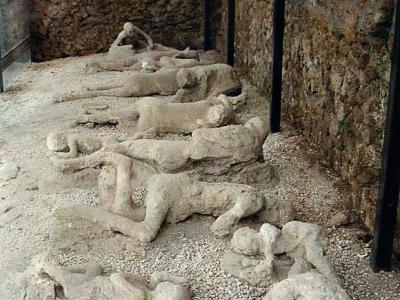
During excavations in 1961, archaeologists discovered that decomposed bodies had left hollow spaces in the hardened ash. By pouring plaster into these voids, they were able to recreate the final positions of people and animals caught in the eruption. In the Garden of Fugitives, thirteen victims were found, including adults and children, apparently fleeing toward the city’s edge when they were overcome.
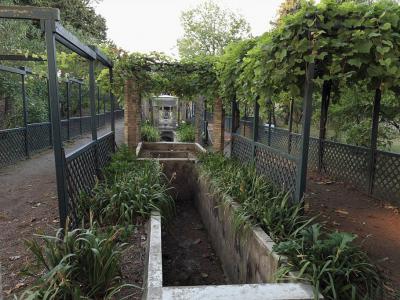
The casts are displayed close to where the bodies were discovered: a woman appears to be holding a child, while others seem to be shielding themselves in vain. The surrounding garden setting also reminds visitors that Pompeii was not only a city of grand villas, temples, and public buildings, but also of vineyards, orchards, and everyday labour.
During excavations in 1961, archaeologists discovered that decomposed bodies had left hollow spaces in the hardened ash. By pouring plaster into these voids, they were able to recreate the final positions of people and animals caught in the eruption. In the Garden of Fugitives, thirteen victims were found, including adults and children, apparently fleeing toward the city’s edge when they were overcome.
The casts are displayed close to where the bodies were discovered: a woman appears to be holding a child, while others seem to be shielding themselves in vain. The surrounding garden setting also reminds visitors that Pompeii was not only a city of grand villas, temples, and public buildings, but also of vineyards, orchards, and everyday labour.
Want to visit this sight? Check out these Self-Guided Walking Tours in Pompei. Alternatively, you can download the mobile app "GPSmyCity: Walks in 1K+ Cities" from Apple App Store or Google Play Store. The app turns your mobile device to a personal tour guide and it works offline, so no data plan is needed when traveling abroad.
Download The GPSmyCity App



Garden of Fugitives on Map
Sight Name: Garden of Fugitives
Sight Location: Pompei, Italy (See walking tours in Pompei)
Sight Type: Attraction/Landmark
Guide(s) Containing This Sight:
Sight Location: Pompei, Italy (See walking tours in Pompei)
Sight Type: Attraction/Landmark
Guide(s) Containing This Sight:
Nearby Sights




Walking Tours in Pompei, Italy

Create Your Own Walk in Pompei
Creating your own self-guided walk in Pompei is easy and fun. Choose the city attractions that you want to see and a walk route map will be created just for you. You can even set your hotel as the start point of the walk.
Pompeii Introduction Walk II
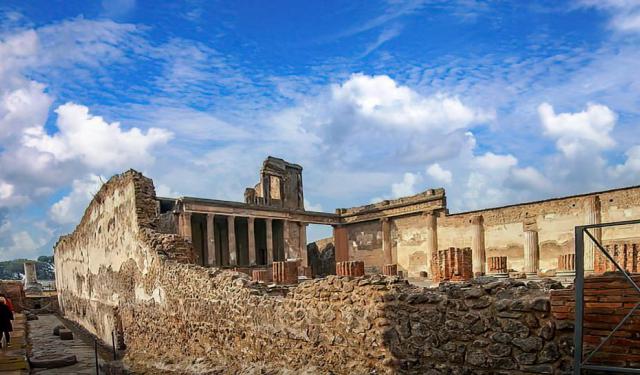
Frozen at the moment it was buried under the thick blanket of ash and pumice, the city of Pompeii (now excavated) remains a unique window into the past, offering a snapshot of everyday life back in the 1st century AD Roman Empire. Aside from causing quick and unexpected death to the city, the huge eruption of Vesuvius in 79 AD did have one positive outcome - it preserved everything (properties,... view more
Tour Duration: 3 Hours
Travel Distance: 2.3 Km or 1.4 Miles
Tour Duration: 3 Hours
Travel Distance: 2.3 Km or 1.4 Miles

Pompeii Introduction Walk I
Modern-day Pompei is best known for its ancient predecessor, the Roman city of Pompeii, that fell victim to the massive eruption of Mount Vesuvius in 79 AD. The ruins of Pompeii, first uncovered in the late 18th century, were declared a World Heritage Site by UNESCO in 1997. Presently, this is one of the most popular tourist attractions in Italy, drawing annually up to 2.5 million visitors.
The... view more
Tour Duration: 2 Hours
Travel Distance: 2 Km or 1.2 Miles
The... view more
Tour Duration: 2 Hours
Travel Distance: 2 Km or 1.2 Miles
City Walks Overview
