

Audio Guide: Pompeii Introduction Walk I (Self Guided), Pompei
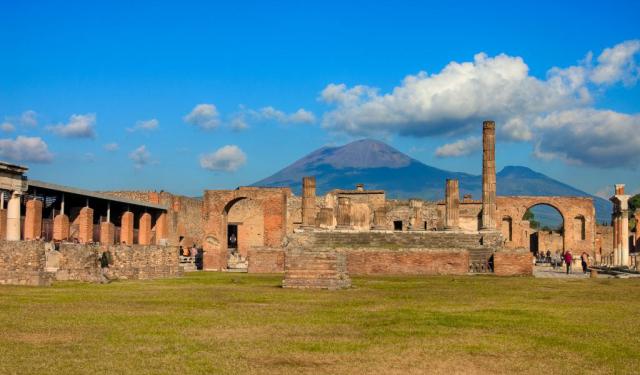
Modern-day Pompei is best known for its ancient predecessor, the Roman city of Pompeii, that fell victim to the massive eruption of Mount Vesuvius in 79 AD. The ruins of Pompeii, first uncovered in the late 18th century, were declared a World Heritage Site by UNESCO in 1997. Presently, this is one of the most popular tourist attractions in Italy, drawing annually up to 2.5 million visitors.
The early history of Pompeii is little known. The first stable settlement on the site, presumably by the Oscans, emerged in the 8th century BC. The name “Pompeii” is a masculine plural Latin noun rooted in the Oscan word for number five, pompe. This, in turn, suggests that either the community consisted of five hamlets, or, perhaps, was settled by a family group.
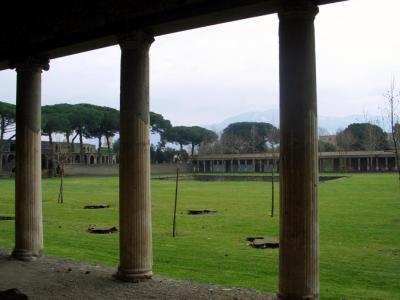
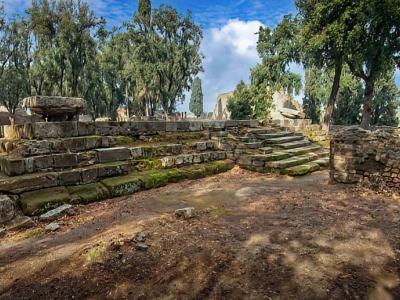
The arrival of the Greeks, circa 740 BC, brought in Hellenic influence. The most important structure of that period is the Doric Temple, built in 525 BC. Later, under the Romans, it became the Triangular Forum, whilst retaining the colonnade, a characteristic feature of Greek architecture.
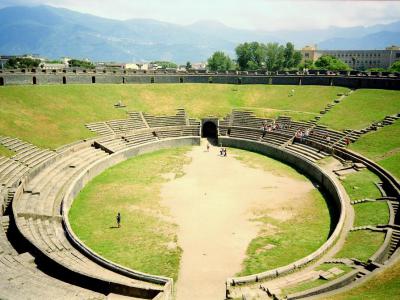
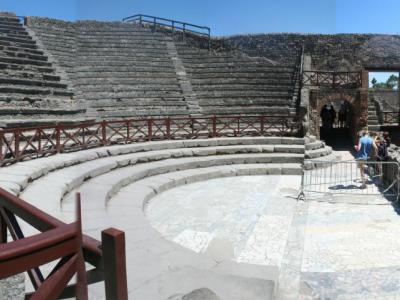
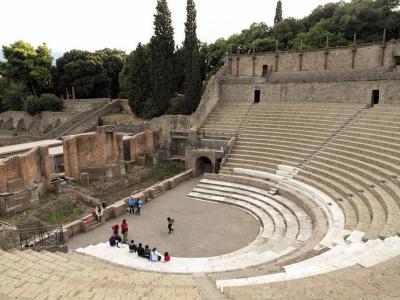
Starting about 30 BC, the process of urban development of Pompeii accelerated, producing remarkable landmarks, such as the Amphitheater with Palaestra, the Odeon Theatre, and others. By 79 AD, when the catastrophe struck, Pompeii was a wealthy town, with a population of 20,000. The eruption lasted for two days, covering both people and buildings in twelve layers of tephra, up to 6 meters (or 19.7 ft) deep.
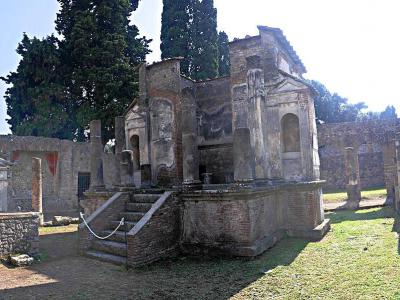
Over the following centuries, the name and location of the city had been forgotten, until in 1763 the remains unearthed during excavations at the site were identified as those of Pompeii. The Temple of Isis, a small Roman shrine dedicated to the Egyptian goddess Isis, preserved almost intact, was one of the first findings, in 1764.
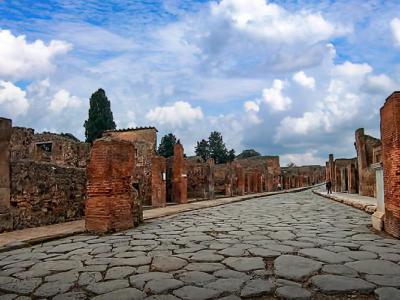
More exploration took place when the French ruled over Italy, from 1806 to 1815. Back then, parts of the Street of Abundance were exposed. The Lupanar building, a brothel, was discovered in 1862. Excavations continued until 1960, rendering most of the city uncovered.
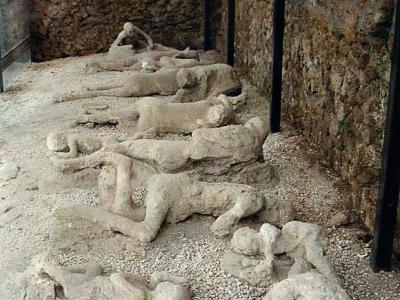
In 2018, more targeted digging in prioritized areas led to new discoveries. In 2020, many sights were carefully restored, including the House of Julia Felix, the Garden of Fugitives (with plaster casts of the victims still in situ), and more. In 2021, several long-closed locations, such as the House of the Ship Europa, were re-opened after restoration.
To see more closely these and other sights of Pompeii that were once buried under the thick layer of ash, take this introductory walking tour part 1.
The early history of Pompeii is little known. The first stable settlement on the site, presumably by the Oscans, emerged in the 8th century BC. The name “Pompeii” is a masculine plural Latin noun rooted in the Oscan word for number five, pompe. This, in turn, suggests that either the community consisted of five hamlets, or, perhaps, was settled by a family group.
The arrival of the Greeks, circa 740 BC, brought in Hellenic influence. The most important structure of that period is the Doric Temple, built in 525 BC. Later, under the Romans, it became the Triangular Forum, whilst retaining the colonnade, a characteristic feature of Greek architecture.
Starting about 30 BC, the process of urban development of Pompeii accelerated, producing remarkable landmarks, such as the Amphitheater with Palaestra, the Odeon Theatre, and others. By 79 AD, when the catastrophe struck, Pompeii was a wealthy town, with a population of 20,000. The eruption lasted for two days, covering both people and buildings in twelve layers of tephra, up to 6 meters (or 19.7 ft) deep.
Over the following centuries, the name and location of the city had been forgotten, until in 1763 the remains unearthed during excavations at the site were identified as those of Pompeii. The Temple of Isis, a small Roman shrine dedicated to the Egyptian goddess Isis, preserved almost intact, was one of the first findings, in 1764.
More exploration took place when the French ruled over Italy, from 1806 to 1815. Back then, parts of the Street of Abundance were exposed. The Lupanar building, a brothel, was discovered in 1862. Excavations continued until 1960, rendering most of the city uncovered.
In 2018, more targeted digging in prioritized areas led to new discoveries. In 2020, many sights were carefully restored, including the House of Julia Felix, the Garden of Fugitives (with plaster casts of the victims still in situ), and more. In 2021, several long-closed locations, such as the House of the Ship Europa, were re-opened after restoration.
To see more closely these and other sights of Pompeii that were once buried under the thick layer of ash, take this introductory walking tour part 1.
How it works: Download the app "GPSmyCity: Walks in 1K+ Cities" from Apple App Store or Google Play Store to your mobile phone or tablet. The app turns your mobile device into a personal tour guide and its built-in GPS navigation functions guide you from one tour stop to next. The app works offline, so no data plan is needed when traveling abroad.
Download The GPSmyCity App



Pompeii Introduction Walk I Map
Guide Name: Pompeii Introduction Walk I
Guide Location: Italy » Pompei (See other walking tours in Pompei)
Guide Type: Self-guided Walking Tour (Sightseeing)
Tour Duration: 2 Hours
Travel Distance: 2 Km or 1.2 Miles
Tour Best Suited For: First-time visit
Guide Location: Italy » Pompei (See other walking tours in Pompei)
Guide Type: Self-guided Walking Tour (Sightseeing)
Tour Duration: 2 Hours
Travel Distance: 2 Km or 1.2 Miles
Tour Best Suited For: First-time visit
Sights Featured in This Walk
16
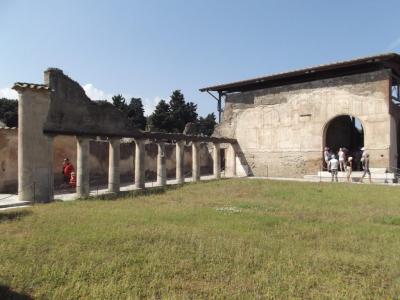
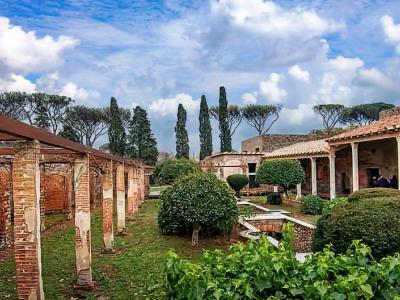
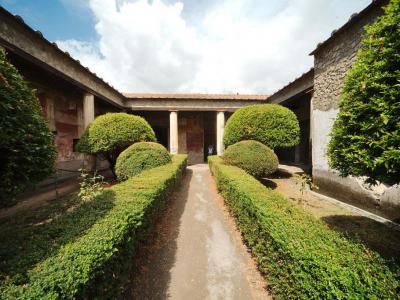
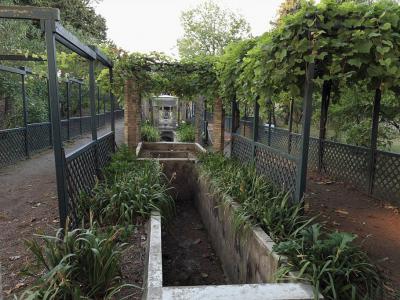
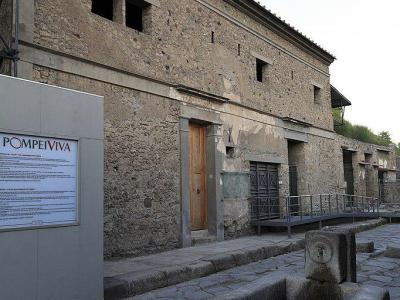
16) Stabian Baths (must see)
17
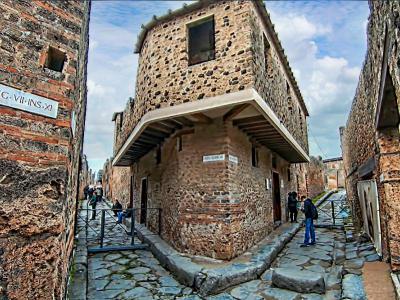
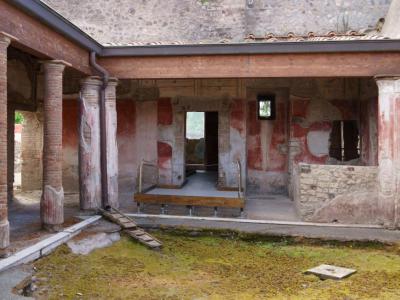
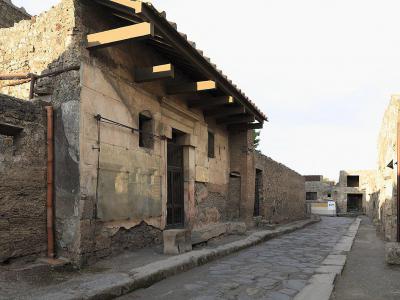
17) Lupanar (Brothel) (must see)
Walking Tours in Pompei, Italy

Create Your Own Walk in Pompei
Creating your own self-guided walk in Pompei is easy and fun. Choose the city attractions that you want to see and a walk route map will be created just for you. You can even set your hotel as the start point of the walk.
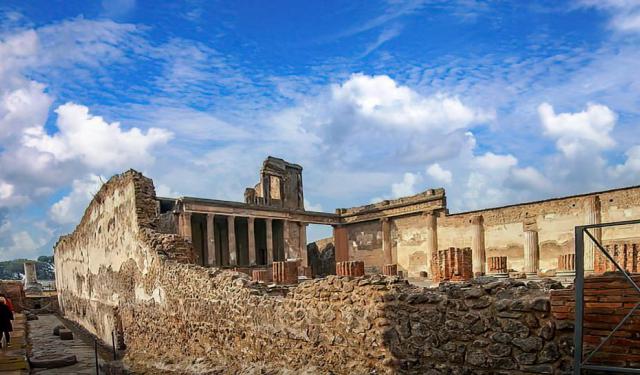
Pompeii Introduction Walk II
Frozen at the moment it was buried under the thick blanket of ash and pumice, the city of Pompeii (now excavated) remains a unique window into the past, offering a snapshot of everyday life back in the 1st century AD Roman Empire. Aside from causing quick and unexpected death to the city, the huge eruption of Vesuvius in 79 AD did have one positive outcome - it preserved everything (properties,... view more
Tour Duration: 3 Hours
Travel Distance: 2.3 Km or 1.4 Miles
Tour Duration: 3 Hours
Travel Distance: 2.3 Km or 1.4 Miles
City Walks Overview
