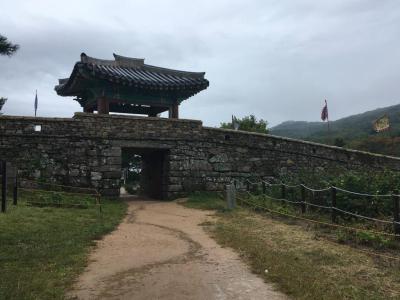


Geumjeongsanseong (Geumjeong Mountain Fortress), Busan
Geumjeong Mountain Fortress stands proudly as the largest mountain fortress in the Republic of Korea. This fortress, with its historical significance and strategic location, has played a crucial role in safeguarding the region against external threats, particularly those originating from the sea.
The fortress's establishment traces back to a period marked by external invasions, including the Japanese invasion of 1592 and the Manchu invasions of 1627 and 1637. In the aftermath of these events, heightened awareness of the necessity for national defense prompted the construction of Geumjeong Mountain Fortress. King Sukjong, in the 29th year of his reign (1703), authorized the construction of this monumental fortress to fortify the coastal region against potential sea-borne attacks.
Geumjeong Mountain Fortress boasts a formidable architectural design, utilizing natural stones for the construction of both inner and outer walls. While the primary material is natural stone, weak sections of the fortress were reinforced with meticulously crafted square stone blocks. The walls, stretching approximately 17 kilometers in length, vary in height from 1.5 to 3 meters, creating a substantial barrier against potential invaders. The enclosed area, protected by these formidable walls, spans approximately 8.2 square kilometers.
Perched on Geumjeongsan, the fortress benefits from an elevated position, providing a strategic advantage for defense purposes. The elevated terrain enhances visibility and control, allowing the fortress to effectively monitor and respond to any potential threats from the sea.
Beyond its practical function as a defensive stronghold, Geumjeongsanseong holds immense cultural and historical significance. Visitors can explore the intricate details of the fortress, gaining insights into the challenges faced by its builders and the historical context that shaped its existence.
The fortress's establishment traces back to a period marked by external invasions, including the Japanese invasion of 1592 and the Manchu invasions of 1627 and 1637. In the aftermath of these events, heightened awareness of the necessity for national defense prompted the construction of Geumjeong Mountain Fortress. King Sukjong, in the 29th year of his reign (1703), authorized the construction of this monumental fortress to fortify the coastal region against potential sea-borne attacks.
Geumjeong Mountain Fortress boasts a formidable architectural design, utilizing natural stones for the construction of both inner and outer walls. While the primary material is natural stone, weak sections of the fortress were reinforced with meticulously crafted square stone blocks. The walls, stretching approximately 17 kilometers in length, vary in height from 1.5 to 3 meters, creating a substantial barrier against potential invaders. The enclosed area, protected by these formidable walls, spans approximately 8.2 square kilometers.
Perched on Geumjeongsan, the fortress benefits from an elevated position, providing a strategic advantage for defense purposes. The elevated terrain enhances visibility and control, allowing the fortress to effectively monitor and respond to any potential threats from the sea.
Beyond its practical function as a defensive stronghold, Geumjeongsanseong holds immense cultural and historical significance. Visitors can explore the intricate details of the fortress, gaining insights into the challenges faced by its builders and the historical context that shaped its existence.
Want to visit this sight? Check out these Self-Guided Walking Tours in Busan. Alternatively, you can download the mobile app "GPSmyCity: Walks in 1K+ Cities" from Apple App Store or Google Play Store. The app turns your mobile device to a personal tour guide and it works offline, so no data plan is needed when traveling abroad.
Download The GPSmyCity App



Geumjeongsanseong (Geumjeong Mountain Fortress) on Map
Sight Name: Geumjeongsanseong (Geumjeong Mountain Fortress)
Sight Location: Busan, South Korea (See walking tours in Busan)
Sight Type: Attraction/Landmark
Sight Location: Busan, South Korea (See walking tours in Busan)
Sight Type: Attraction/Landmark
Nearby Sights

Walking Tours in Busan, South Korea

Create Your Own Walk in Busan
Creating your own self-guided walk in Busan is easy and fun. Choose the city attractions that you want to see and a walk route map will be created just for you. You can even set your hotel as the start point of the walk.
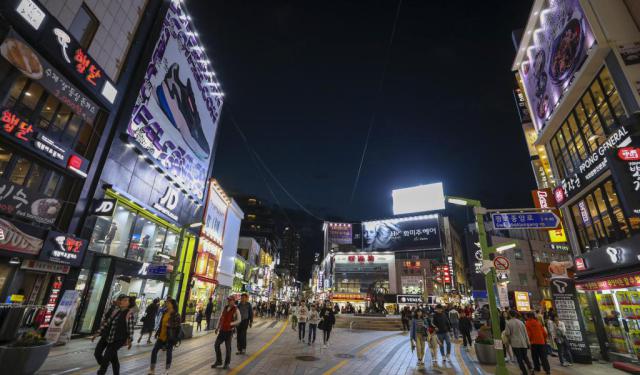
Busan Introduction Walking Tour
Nestled along the southeastern coast of South Korea, the vibrant metropolis of Busan is teeming with tradition, culture, and modernity. During the summer months, the city becomes a magnet for tourists seeking its pristine beaches, where they can bask in the sun and enjoy aquatic activities. However, Busan offers more than just coastal delights. As a coastal hub, it presents an array of attractions... view more
Tour Duration: 1 Hour
Travel Distance: 2.4 Km or 1.5 Miles
Tour Duration: 1 Hour
Travel Distance: 2.4 Km or 1.5 Miles
City Walks Overview
