

Großes Militärwaisenhaus (Large Military Orphanage), Potsdam
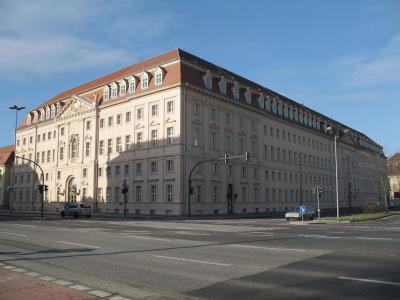
The Great Military Orphanage (Großes Militärwaisenhaus) in Potsdam is a significant historical and architectural monument. Established by Prussian King Friedrich Wilhelm I on November 1, 1724, the orphanage was conceived as an educational and training center for the children of soldiers and military orphans. The institution aimed to provide children aged 6 to 16 with Christian teachings, as well as instruction in reading, writing, and arithmetic, before guiding them toward a profession.
The orphanage is renowned as Potsdam’s largest closed Baroque ensemble, encompassing several key buildings. The original structure, built between 1722 and 1724, was a half-timbered building, which expanded over time to accommodate the increasing number of children. A notable feature of the orphanage was an organ built by Joachim Wagner in 1737, though this was sold in 1789 when a new church interior was not included in later renovations.
Under the direction of King Frederick II, the orphanage underwent significant reconstruction from 1771 to 1778, led by architect Carl von Gontard. This period saw the addition of a four-story building in the Prussian late Baroque style, with the centerpiece being a 26-meter-high Monopteros, crowned by a dome and a gilded figure of Caritas, symbolizing charity. The figure, holding an olive branch and a burning heart, became a prominent landmark visible from afar.
World War II brought severe destruction to the orphanage. On April 14, 1945, parts of the complex were heavily damaged during an air raid, and the Monopteros dome was destroyed by Soviet artillery fire on April 26, 1945, leading to the loss of the Caritas figure. Post-war restoration efforts began in 1950, with significant portions of the building being restored in a simplified form. However, it was not until 2004 that the dome and the Caritas figure were fully restored, following a detailed and challenging reconstruction process.
Today, the Great Military Orphanage continues to be a symbol of Potsdam’s architectural heritage and its long history of social support and education, with the foundation still active in supporting youth work projects.
The orphanage is renowned as Potsdam’s largest closed Baroque ensemble, encompassing several key buildings. The original structure, built between 1722 and 1724, was a half-timbered building, which expanded over time to accommodate the increasing number of children. A notable feature of the orphanage was an organ built by Joachim Wagner in 1737, though this was sold in 1789 when a new church interior was not included in later renovations.
Under the direction of King Frederick II, the orphanage underwent significant reconstruction from 1771 to 1778, led by architect Carl von Gontard. This period saw the addition of a four-story building in the Prussian late Baroque style, with the centerpiece being a 26-meter-high Monopteros, crowned by a dome and a gilded figure of Caritas, symbolizing charity. The figure, holding an olive branch and a burning heart, became a prominent landmark visible from afar.
World War II brought severe destruction to the orphanage. On April 14, 1945, parts of the complex were heavily damaged during an air raid, and the Monopteros dome was destroyed by Soviet artillery fire on April 26, 1945, leading to the loss of the Caritas figure. Post-war restoration efforts began in 1950, with significant portions of the building being restored in a simplified form. However, it was not until 2004 that the dome and the Caritas figure were fully restored, following a detailed and challenging reconstruction process.
Today, the Great Military Orphanage continues to be a symbol of Potsdam’s architectural heritage and its long history of social support and education, with the foundation still active in supporting youth work projects.
Want to visit this sight? Check out these Self-Guided Walking Tours in Potsdam. Alternatively, you can download the mobile app "GPSmyCity: Walks in 1K+ Cities" from Apple App Store or Google Play Store. The app turns your mobile device to a personal tour guide and it works offline, so no data plan is needed when traveling abroad.
Download The GPSmyCity App



Großes Militärwaisenhaus (Large Military Orphanage) on Map
Sight Name: Großes Militärwaisenhaus (Large Military Orphanage)
Sight Location: Potsdam, Germany (See walking tours in Potsdam)
Sight Type: Attraction/Landmark
Sight Location: Potsdam, Germany (See walking tours in Potsdam)
Sight Type: Attraction/Landmark
Nearby Sights




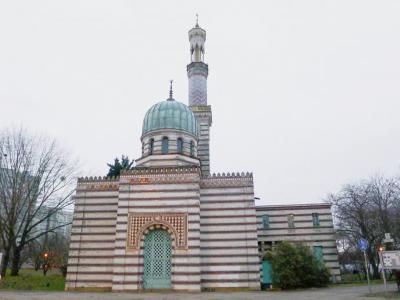
Walking Tours in Potsdam, Germany

Create Your Own Walk in Potsdam
Creating your own self-guided walk in Potsdam is easy and fun. Choose the city attractions that you want to see and a walk route map will be created just for you. You can even set your hotel as the start point of the walk.
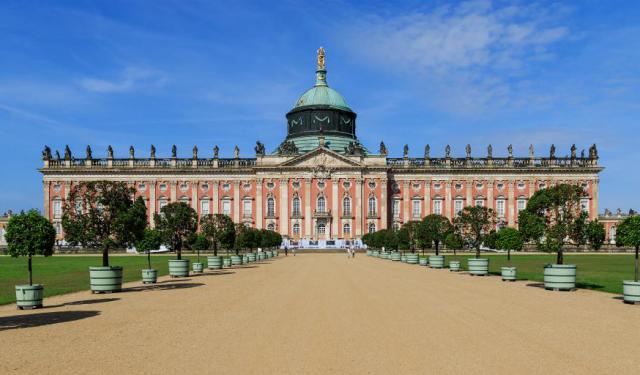
Sanssouci Park Walking Tour
Sanssouci Park is a unique Potsdam landmark that occupies 290 hectares in the heart of the city. The Park is named after the Sanssouci Palace that it surrounds, which in turn takes its name from the French phrase "sans souci", which means carefree, and implies that the palace was designated as a place of fun, rather than a seat of power.
Indeed, the Sanssouci Palace was built in 1747... view more
Tour Duration: 2 Hour(s)
Travel Distance: 3.9 Km or 2.4 Miles
Indeed, the Sanssouci Palace was built in 1747... view more
Tour Duration: 2 Hour(s)
Travel Distance: 3.9 Km or 2.4 Miles
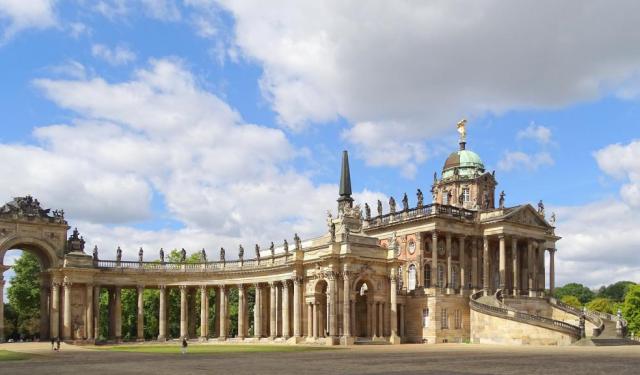
Potsdam City Center and Sanssouci Palace Walking Tour
Potsdam was likely founded during the seventh century by the Hevelli tribe. The town was mentioned by the name of Poztupimi in a document from Emperor Otto III. The name likely came from an old Western Slavonic term roughly meaning "beneath the oaks."
By the early 1300s, a small town had formed with a town charter. By 1573 the town had around 2,000 people living there. Potsdam rose to... view more
Tour Duration: 2 Hour(s)
Travel Distance: 3.8 Km or 2.4 Miles
By the early 1300s, a small town had formed with a town charter. By 1573 the town had around 2,000 people living there. Potsdam rose to... view more
Tour Duration: 2 Hour(s)
Travel Distance: 3.8 Km or 2.4 Miles
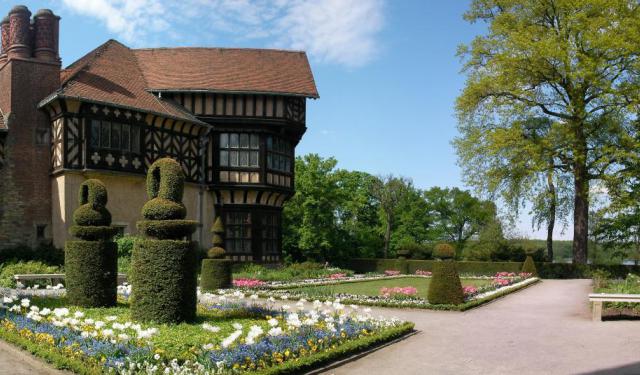
Neuer Garten Walking Tour
Laid out at the behest of Friedrich William II in 1787, Potsdam's Neuer Garten (New Garden) was indeed "new" compared to the already in place Sanssouci Park.
Between 1816 and 1828, the area was modified further as an English-style, open landscape garden, with an aim to reproduce nature – trees and plants were left to grow naturally, unshaped and untrimmed. Rural life was also... view more
Tour Duration: 2 Hour(s)
Travel Distance: 2.8 Km or 1.7 Miles
Between 1816 and 1828, the area was modified further as an English-style, open landscape garden, with an aim to reproduce nature – trees and plants were left to grow naturally, unshaped and untrimmed. Rural life was also... view more
Tour Duration: 2 Hour(s)
Travel Distance: 2.8 Km or 1.7 Miles