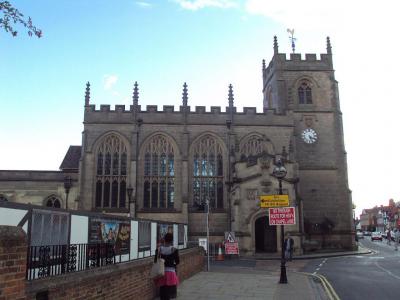


Guild Chapel, Stratford-upon-Avon
Defacing images in the chapel... That was one of the jobs carried out by John Shakespeare, William’s father, in the early 1560s. As Stratford’s chamberlain, he helped oversee the whitewashing of religious paintings on the walls of the Guild Chapel. The work followed the religious reforms of Elizabeth I, which called for images associated with Catholic worship to be removed or covered. John Shakespeare received only two shillings — a small payment, rather — for helping to erase some of Stratford’s finest medieval art.
The Guild Chapel of the Holy Cross has its origins in the 13th century and stands on Church Street, directly opposite New Place, the site of Shakespeare’s later home. Much of the chapel you see today dates from the late 15th century, when the wealthy Stratford merchant Hugh Clopton, who also owned New Place, financed major rebuilding and decoration. Among the paintings added to the interior was a dramatic Doom, showing Christ judging the souls of the dead.
There is a certain irony here: decades after Clopton paid to decorate the chapel, Shakespeare’s father was involved in covering those same religious images.
After the Reformation, the Guild was dissolved, and the chapel passed into civic use. It has long been associated with the nearby King Edward VI School, where Shakespeare is traditionally believed to have studied.
Step inside and look toward the chancel arch. Traces of the medieval wall paintings survive here, including the remarkable Doom. Other paintings once included saints and a Dance of Death, reminding medieval worshippers that death came for everyone, regardless of their wealth or status.
From the outside, the chapel is relatively restrained, with pale stone walls and a tall western tower. Inside, however, its surviving paintings reveal a much more colourful medieval past. Although a listed property, the building remains an active chapel, including for services connected with King Edward VI School.
The Guild Chapel of the Holy Cross has its origins in the 13th century and stands on Church Street, directly opposite New Place, the site of Shakespeare’s later home. Much of the chapel you see today dates from the late 15th century, when the wealthy Stratford merchant Hugh Clopton, who also owned New Place, financed major rebuilding and decoration. Among the paintings added to the interior was a dramatic Doom, showing Christ judging the souls of the dead.
There is a certain irony here: decades after Clopton paid to decorate the chapel, Shakespeare’s father was involved in covering those same religious images.
After the Reformation, the Guild was dissolved, and the chapel passed into civic use. It has long been associated with the nearby King Edward VI School, where Shakespeare is traditionally believed to have studied.
Step inside and look toward the chancel arch. Traces of the medieval wall paintings survive here, including the remarkable Doom. Other paintings once included saints and a Dance of Death, reminding medieval worshippers that death came for everyone, regardless of their wealth or status.
From the outside, the chapel is relatively restrained, with pale stone walls and a tall western tower. Inside, however, its surviving paintings reveal a much more colourful medieval past. Although a listed property, the building remains an active chapel, including for services connected with King Edward VI School.
Want to visit this sight? Check out these Self-Guided Walking Tours in Stratford-upon-Avon. Alternatively, you can download the mobile app "GPSmyCity: Walks in 1K+ Cities" from Apple App Store or Google Play Store. The app turns your mobile device to a personal tour guide and it works offline, so no data plan is needed when traveling abroad.
Download The GPSmyCity App



Guild Chapel on Map
Sight Name: Guild Chapel
Sight Location: Stratford-upon-Avon, England (See walking tours in Stratford-upon-Avon)
Sight Type: Religious
Guide(s) Containing This Sight:
Sight Location: Stratford-upon-Avon, England (See walking tours in Stratford-upon-Avon)
Sight Type: Religious
Guide(s) Containing This Sight:
Nearby Sights
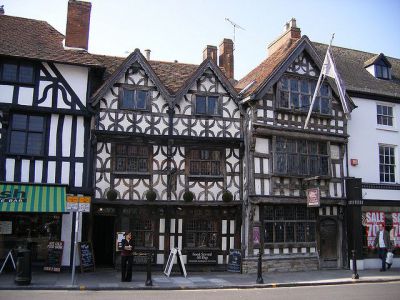
Walking Tours in Stratford-upon-Avon, England

Create Your Own Walk in Stratford-upon-Avon
Creating your own self-guided walk in Stratford-upon-Avon is easy and fun. Choose the city attractions that you want to see and a walk route map will be created just for you. You can even set your hotel as the start point of the walk.
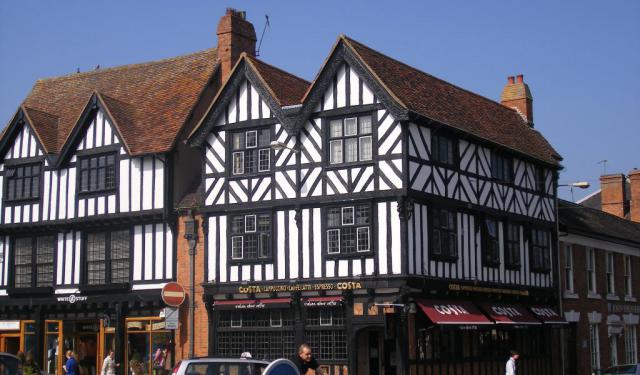
Historical Tudor Houses Walking Tour
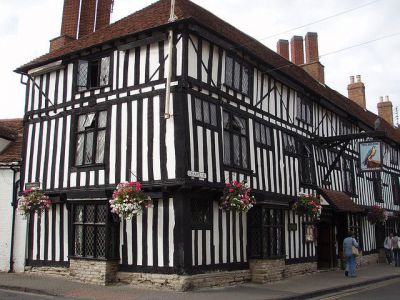
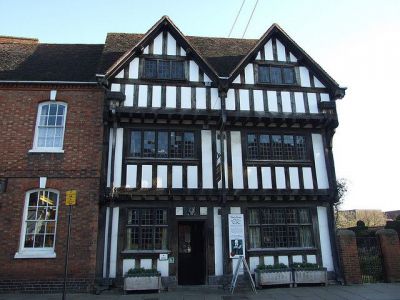
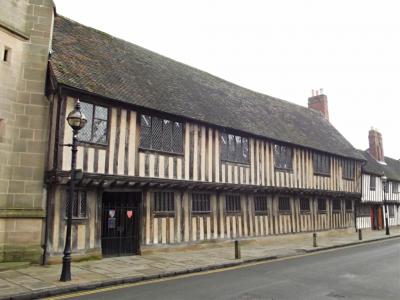
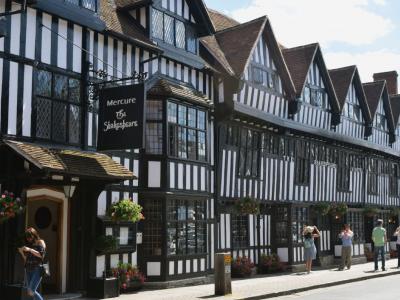
One of the first things you notice while walking through the historic centre of Stratford-upon-Avon is the abundance of timber-framed Tudor buildings. Their most recognizable feature is the exposed wooden framework, often combined with an upper story that projects slightly over the street. The spaces between the timbers were traditionally filled with materials such as brick, plaster, or wattle and... view more
Tour Duration: 1 Hour(s)
Travel Distance: 1.1 Km or 0.7 Miles
Tour Duration: 1 Hour(s)
Travel Distance: 1.1 Km or 0.7 Miles
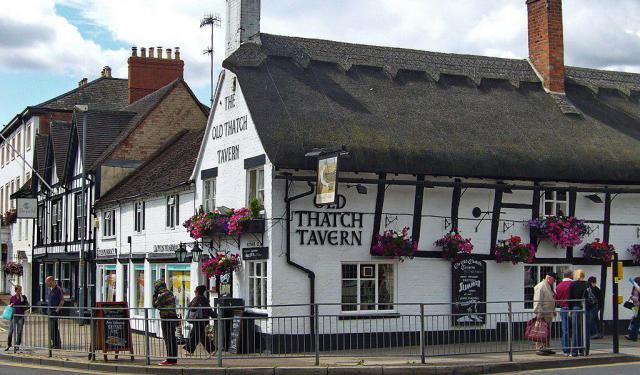
Stratford-upon-Avon Historic City Center Walking Tour
The name Stratford-upon-Avon tells you quite a lot about the town. “Strat” comes from an Old English word for a street or road, itself derived from the Latin “strata.” A “ford” is a shallow place where a river can be crossed, while “Avon” comes from an ancient Celtic word meaning simply “river.” String them all together, rather like sausages, and you get Stratford-upon-Avon.... view more
Tour Duration: 1 Hour(s)
Travel Distance: 1.9 Km or 1.2 Miles
Tour Duration: 1 Hour(s)
Travel Distance: 1.9 Km or 1.2 Miles
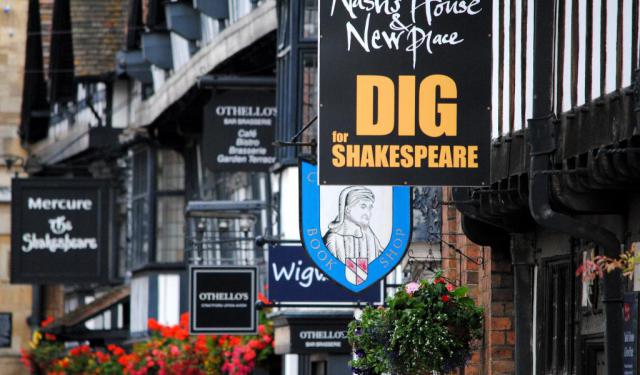
William Shakespeare Walking Tour
The picturesque town of Stratford-upon-Avon is steeped in the history of William Shakespeare. This is where the Bard was born in 1564, on April 23rd, and where he died exactly 52 years later, on April 23rd, 1616.
Many historic places connected with Shakespeare and his family have been preserved and are visited by millions of people who come to Stratford each year to celebrate his life and work.... view more
Tour Duration: 1 Hour(s)
Travel Distance: 1.4 Km or 0.9 Miles
Many historic places connected with Shakespeare and his family have been preserved and are visited by millions of people who come to Stratford each year to celebrate his life and work.... view more
Tour Duration: 1 Hour(s)
Travel Distance: 1.4 Km or 0.9 Miles