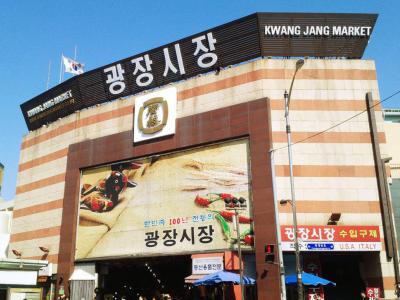


Gwangjang Market, Seoul
Gwangjang Market is not just one of the city’s oldest markets-it’s its most iconic foodie destination. Established in 1905 as Korea’s first permanent indoor market, it has evolved into a bustling hub that blends tradition and innovation under one roof. Spanning about 42,000 m² with more than 5,000 vendors, the market employs around 20,000 people and welcomes up to 65,000 visitors each day.
The main attraction for most visitors is the food: this is the place to taste some of Seoul’s most beloved traditional dishes. Highlights include crispy mung bean pancakes, chewy blood sausage, named sundae, "mayak" gimbap rolls, and noodle soups. Vendors enthusiastically call out “Sit! SIT!” in a good-natured competition to draw you toward their communal tables.
Beyond the culinary delights, Gwangjang Market is also famous for its textile and clothing shops. On upper levels and in side alleys, you’ll find hanbok vendors, silk bedding suppliers, second-hand clothes, and accessories-many of which have been operated by the same families for generations.
For tourists planning their visit, weekdays between late morning and early evening are ideal: the market is bustling, but lines for the top food stalls are manageable, and vendors are fully open. While weekends are livelier, they also bring larger crowds. Many vendors close by late afternoon or early evening, so an early visit ensures you’ll catch everything before closing time.
The main attraction for most visitors is the food: this is the place to taste some of Seoul’s most beloved traditional dishes. Highlights include crispy mung bean pancakes, chewy blood sausage, named sundae, "mayak" gimbap rolls, and noodle soups. Vendors enthusiastically call out “Sit! SIT!” in a good-natured competition to draw you toward their communal tables.
Beyond the culinary delights, Gwangjang Market is also famous for its textile and clothing shops. On upper levels and in side alleys, you’ll find hanbok vendors, silk bedding suppliers, second-hand clothes, and accessories-many of which have been operated by the same families for generations.
For tourists planning their visit, weekdays between late morning and early evening are ideal: the market is bustling, but lines for the top food stalls are manageable, and vendors are fully open. While weekends are livelier, they also bring larger crowds. Many vendors close by late afternoon or early evening, so an early visit ensures you’ll catch everything before closing time.
Want to visit this sight? Check out these Self-Guided Walking Tours in Seoul. Alternatively, you can download the mobile app "GPSmyCity: Walks in 1K+ Cities" from Apple App Store or Google Play Store. The app turns your mobile device to a personal tour guide and it works offline, so no data plan is needed when traveling abroad.
Download The GPSmyCity App



Gwangjang Market on Map
Sight Name: Gwangjang Market
Sight Location: Seoul, South Korea (See walking tours in Seoul)
Sight Type: Shopping
Sight Location: Seoul, South Korea (See walking tours in Seoul)
Sight Type: Shopping
Nearby Sights
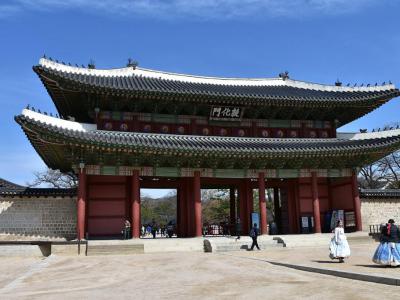
Walking Tours in Seoul, South Korea

Create Your Own Walk in Seoul
Creating your own self-guided walk in Seoul is easy and fun. Choose the city attractions that you want to see and a walk route map will be created just for you. You can even set your hotel as the start point of the walk.
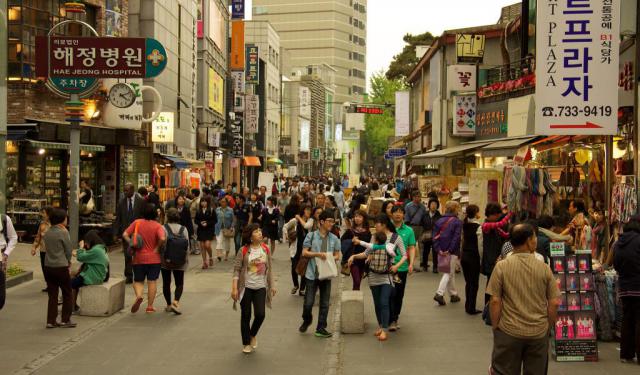
Insa-dong Walking Tour
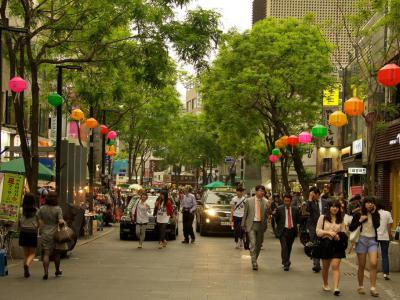
Originating 500 years ago as a residential quarter for government officials, today's Insa-dong is a buzzing shopping and dining district in Seoul where the past meets the present. During the Japanese occupation of the country in the first half of the 20th century, wealthy Koreans were forced to move out and sell their belongings, at which point the district became a center of antique trading.... view more
Tour Duration: 1 Hour
Travel Distance: 0.8 Km or 0.5 Miles
Tour Duration: 1 Hour
Travel Distance: 0.8 Km or 0.5 Miles
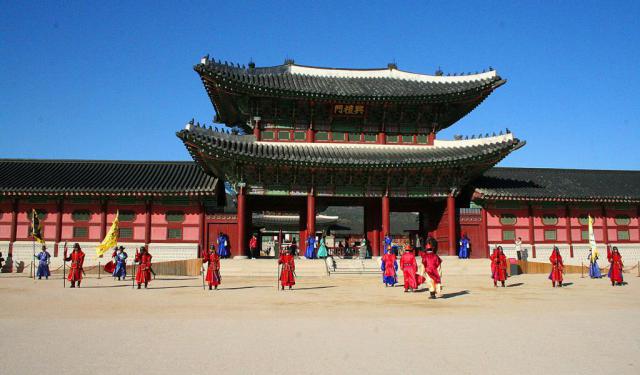
Seoul Introduction Walking Tour
The bustling capital of South Korea, Seoul, seamlessly blends modern innovation with a more than 2,000-year history. Remarkably, until 1972, the city was claimed by North Korea as its de jure capital and even specified as such in its constitution.
Seoul was founded in 18 BC by the people of Baekje. The three ancient kingdoms of Korea - Baekje, Goguryeo, and Silla - fought over its possession... view more
Tour Duration: 2 Hours
Travel Distance: 3.5 Km or 2.2 Miles
Seoul was founded in 18 BC by the people of Baekje. The three ancient kingdoms of Korea - Baekje, Goguryeo, and Silla - fought over its possession... view more
Tour Duration: 2 Hours
Travel Distance: 3.5 Km or 2.2 Miles
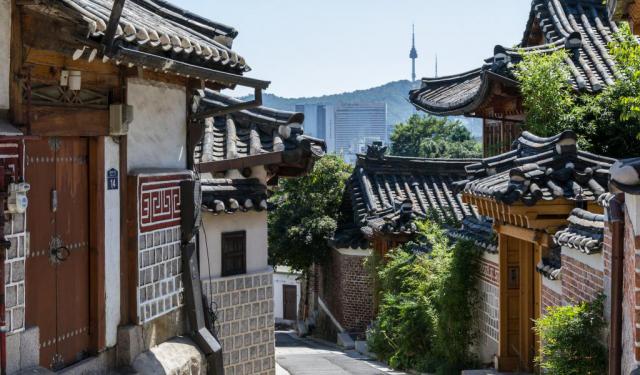
Bukchon Hanok Village Walk
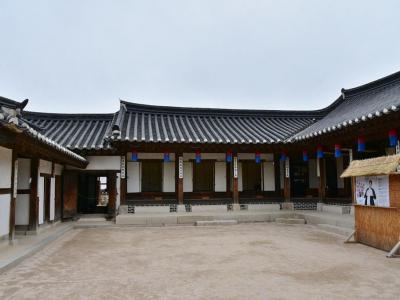
Bukchon Hanok, the traditional Korean village in downtown Seoul, is famous for its well-preserved 600-year-old setting. Once home to the nation’s nobility, the village sits on a hill near the Changdeokgung Palace.
One notable attraction here is Baek In-je's House Museum, which provides insight into the life of a prominent Korean politician from the early 20th century. Meanwhile, the... view more
Tour Duration: 1 Hour
Travel Distance: 1.7 Km or 1.1 Miles
One notable attraction here is Baek In-je's House Museum, which provides insight into the life of a prominent Korean politician from the early 20th century. Meanwhile, the... view more
Tour Duration: 1 Hour
Travel Distance: 1.7 Km or 1.1 Miles
Useful Travel Guides for Planning Your Trip
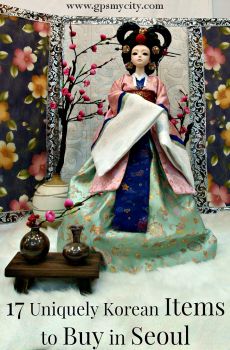
17 Uniquely Korean Souvenirs to Buy in Seoul
Back in the mid 20th century, a certain gentleman once spoke of Korea saying, it won't be possible to grow a rose in a waste bin. Certainly, one would hardly subscribe to his point of view today in every respect, given the image of contemporary South Korea and its capital city of Seoul in...
City Walks Overview
