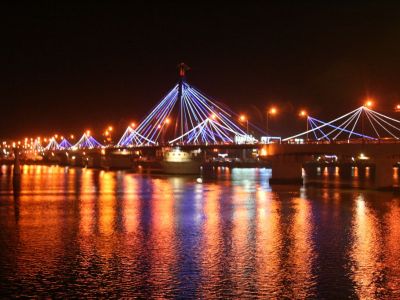


Han River Bridge, Danang
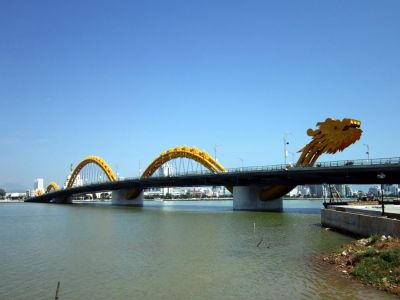
Han River Bridge is one of the city’s most important and recognizable crossings, spanning the Han River and linking the central district with the rapidly developing eastern side of Da Nang. Completed in 2000, it was the first swing bridge in Vietnam and a symbol of the city’s modernization at the turn of the 21st century. By day, it serves as a busy traffic route, while by night, its illuminated structure reflects across the water, adding to the character of the riverfront.
The bridge’s most distinctive feature is its ability to rotate. On weekend nights, the central span pivots to stand parallel to the river, allowing larger vessels to pass. This scheduled operation has become a popular attraction. If you would like to watch it, plan to arrive along the riverbanks around 10:30 PM, as the rotation typically begins at about 11:00 PM. Good viewing spots include the promenades on either side of the Han River near the bridge, where you can clearly see the entire roadway slowly turning into position.
Architecturally, the Han River Bridge is defined by its simple yet functional steel structure, with clean lines and a central tower rising above the roadway. It may not be as decorative as some of Da Nang’s newer bridges, but its design reflects the practical needs of the city during a period of rapid growth. Its location also makes it a convenient vantage point for views along the Han River, especially at sunset and in the evening when the city lights begin to appear.
The bridge’s most distinctive feature is its ability to rotate. On weekend nights, the central span pivots to stand parallel to the river, allowing larger vessels to pass. This scheduled operation has become a popular attraction. If you would like to watch it, plan to arrive along the riverbanks around 10:30 PM, as the rotation typically begins at about 11:00 PM. Good viewing spots include the promenades on either side of the Han River near the bridge, where you can clearly see the entire roadway slowly turning into position.
Architecturally, the Han River Bridge is defined by its simple yet functional steel structure, with clean lines and a central tower rising above the roadway. It may not be as decorative as some of Da Nang’s newer bridges, but its design reflects the practical needs of the city during a period of rapid growth. Its location also makes it a convenient vantage point for views along the Han River, especially at sunset and in the evening when the city lights begin to appear.
Want to visit this sight? Check out these Self-Guided Walking Tours in Danang. Alternatively, you can download the mobile app "GPSmyCity: Walks in 1K+ Cities" from Apple App Store or Google Play Store. The app turns your mobile device to a personal tour guide and it works offline, so no data plan is needed when traveling abroad.
Download The GPSmyCity App



Han River Bridge on Map
Sight Name: Han River Bridge
Sight Location: Danang, Vietnam (See walking tours in Danang)
Sight Type: Attraction/Landmark
Guide(s) Containing This Sight:
Sight Location: Danang, Vietnam (See walking tours in Danang)
Sight Type: Attraction/Landmark
Guide(s) Containing This Sight:
Nearby Sights


Walking Tours in Danang, Vietnam

Create Your Own Walk in Danang
Creating your own self-guided walk in Danang is easy and fun. Choose the city attractions that you want to see and a walk route map will be created just for you. You can even set your hotel as the start point of the walk.
Danang Introduction Walking Tour
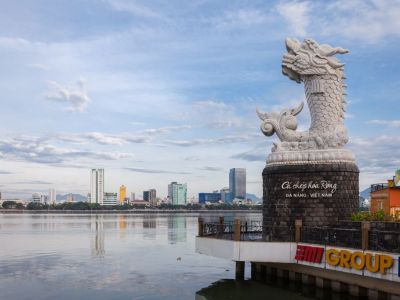
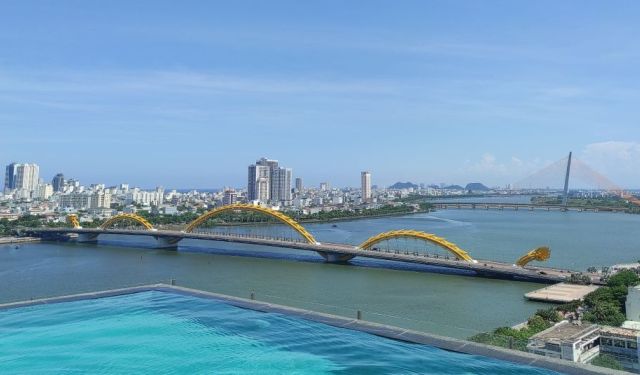
In Vietnamese tradition, dragons rise from water to bring strength and prosperity-an image that feels fitting in a city shaped by both sea and history.
Da Nang is a coastal city in central Vietnam whose history reflects centuries of trade, cultural exchange, and political change. Its name is widely believed to derive from the Cham language, spoken by the ancient Champa civilization that once... view more
Tour Duration: 2 Hours
Travel Distance: 3.5 Km or 2.2 Miles
Da Nang is a coastal city in central Vietnam whose history reflects centuries of trade, cultural exchange, and political change. Its name is widely believed to derive from the Cham language, spoken by the ancient Champa civilization that once... view more
Tour Duration: 2 Hours
Travel Distance: 3.5 Km or 2.2 Miles
City Walks Overview
