

Audio Guide: Danang Introduction Walking Tour (Self Guided), Danang
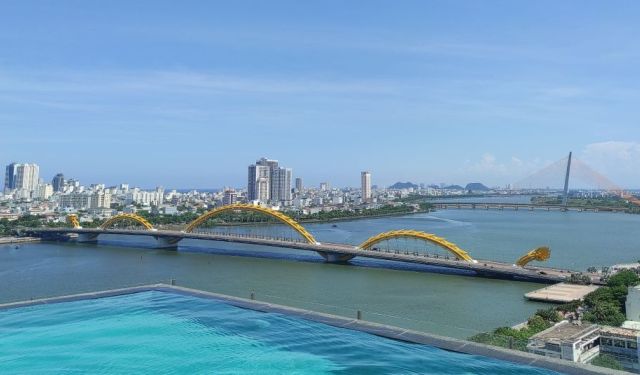
In Vietnamese tradition, dragons rise from water to bring strength and prosperity—an image that feels fitting in a city shaped by both sea and history.
Da Nang is a coastal city in central Vietnam whose history reflects centuries of trade, cultural exchange, and political change. Its name is widely believed to derive from the Cham language, spoken by the ancient Champa civilization that once controlled much of central Vietnam. The term “Da Nang” is often interpreted as meaning “large river mouth” or “opening of a great river,” referring to the point where the Han River meets the sea. This strategic location shaped its role as a port and gateway to the region.
Long before it became a modern city, the area formed part of the Champa Kingdom, which flourished between the 2nd and 15th centuries. Traces of this past remain visible today, particularly at the nearby My Son Sanctuary and in the city’s Museum of Cham Sculpture. From the 15th century onward, as Vietnamese influence expanded southward, the region came under the control of the Dai Viet kingdom, becoming part of the broader Vietnamese cultural landscape.
In the 19th century, Da Nang—known to Europeans as Tourane—developed into an important trading port. Its deep natural harbor attracted French forces, and in 1858 a joint French and Spanish fleet attacked the port, marking the start of the colonial campaign in Vietnam. In the 20th century, the city again gained strategic importance during the Vietnam War as a major military base. After 1975, Da Nang entered a period of reconstruction and steady growth, emerging as one of Vietnam’s most dynamic urban centers.
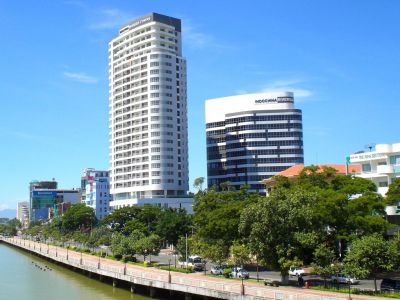
Walking through the city center today, visitors encounter a mix of modern buildings, riverside promenades, and everyday local life. Along the Han River, bridges such as Dragon Bridge and Han River Bridge define the skyline, especially after dark. Streets are lined with cafés, shops, and markets like Han Market, while landmarks such as Da Nang Cathedral reflect the city’s layered past. The atmosphere is active and open, shaped by constant movement and the presence of the water.
As you begin this walk, keep that image in mind—a dragon rising from the water. In Da Nang, it is not just a symbol, but a way to understand the city itself: shaped by the river, opened to the sea, and steadily rising into its next chapter.
Da Nang is a coastal city in central Vietnam whose history reflects centuries of trade, cultural exchange, and political change. Its name is widely believed to derive from the Cham language, spoken by the ancient Champa civilization that once controlled much of central Vietnam. The term “Da Nang” is often interpreted as meaning “large river mouth” or “opening of a great river,” referring to the point where the Han River meets the sea. This strategic location shaped its role as a port and gateway to the region.
Long before it became a modern city, the area formed part of the Champa Kingdom, which flourished between the 2nd and 15th centuries. Traces of this past remain visible today, particularly at the nearby My Son Sanctuary and in the city’s Museum of Cham Sculpture. From the 15th century onward, as Vietnamese influence expanded southward, the region came under the control of the Dai Viet kingdom, becoming part of the broader Vietnamese cultural landscape.
In the 19th century, Da Nang—known to Europeans as Tourane—developed into an important trading port. Its deep natural harbor attracted French forces, and in 1858 a joint French and Spanish fleet attacked the port, marking the start of the colonial campaign in Vietnam. In the 20th century, the city again gained strategic importance during the Vietnam War as a major military base. After 1975, Da Nang entered a period of reconstruction and steady growth, emerging as one of Vietnam’s most dynamic urban centers.
Walking through the city center today, visitors encounter a mix of modern buildings, riverside promenades, and everyday local life. Along the Han River, bridges such as Dragon Bridge and Han River Bridge define the skyline, especially after dark. Streets are lined with cafés, shops, and markets like Han Market, while landmarks such as Da Nang Cathedral reflect the city’s layered past. The atmosphere is active and open, shaped by constant movement and the presence of the water.
As you begin this walk, keep that image in mind—a dragon rising from the water. In Da Nang, it is not just a symbol, but a way to understand the city itself: shaped by the river, opened to the sea, and steadily rising into its next chapter.
How it works: Download the app "GPSmyCity: Walks in 1K+ Cities" from Apple App Store or Google Play Store to your mobile phone or tablet. The app turns your mobile device into a personal tour guide and its built-in GPS navigation functions guide you from one tour stop to next. The app works offline, so no data plan is needed when traveling abroad.
Danang Introduction Walking Tour Map
Guide Name: Danang Introduction Walking Tour
Guide Location: Vietnam » Danang (See other walking tours in Danang)
Guide Type: Self-guided Walking Tour (Sightseeing)
# of Attractions: 9
Tour Duration: 2 Hour(s)
Travel Distance: 3.5 Km or 2.2 Miles
Author: DanaOffice
Sight(s) Featured in This Guide:
Guide Location: Vietnam » Danang (See other walking tours in Danang)
Guide Type: Self-guided Walking Tour (Sightseeing)
# of Attractions: 9
Tour Duration: 2 Hour(s)
Travel Distance: 3.5 Km or 2.2 Miles
Author: DanaOffice
Sight(s) Featured in This Guide:
- Han River Bridge
- Han Market
- Da Nang Cathedral
- Museum of Cham Sculpture
- Han River Promenade
- Dragon Bridge
- Dragon Carp Statue
- Love Lock Bridge
- Son Tra Night Market
1) Han River Bridge
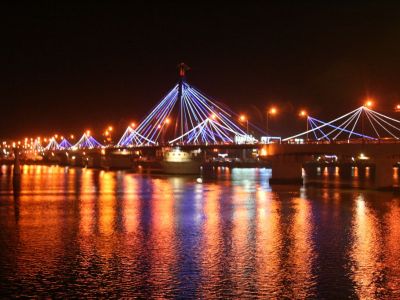
Han River Bridge is one of the city’s most important and recognizable crossings, spanning the Han River and linking the central district with the rapidly developing eastern side of Da Nang. Completed in 2000, it was the first swing bridge in Vietnam and a symbol of the city’s modernization at the turn of the 21st century. By day, it serves as a busy traffic route, while by night, its illuminated structure reflects across the water, adding to the character of the riverfront.
The bridge’s most distinctive feature is its ability to rotate. On weekend nights, the central span pivots to stand parallel to the river, allowing larger vessels to pass. This scheduled operation has become a popular attraction. If you would like to watch it, plan to arrive along the riverbanks around 10:30 PM, as the rotation typically begins at about 11:00 PM. Good viewing spots include the promenades on either side of the Han River near the bridge, where you can clearly see the entire roadway slowly turning into position.
Architecturally, the Han River Bridge is defined by its simple yet functional steel structure, with clean lines and a central tower rising above the roadway. It may not be as decorative as some of Da Nang’s newer bridges, but its design reflects the practical needs of the city during a period of rapid growth. Its location also makes it a convenient vantage point for views along the Han River, especially at sunset and in the evening when the city lights begin to appear.
The bridge’s most distinctive feature is its ability to rotate. On weekend nights, the central span pivots to stand parallel to the river, allowing larger vessels to pass. This scheduled operation has become a popular attraction. If you would like to watch it, plan to arrive along the riverbanks around 10:30 PM, as the rotation typically begins at about 11:00 PM. Good viewing spots include the promenades on either side of the Han River near the bridge, where you can clearly see the entire roadway slowly turning into position.
Architecturally, the Han River Bridge is defined by its simple yet functional steel structure, with clean lines and a central tower rising above the roadway. It may not be as decorative as some of Da Nang’s newer bridges, but its design reflects the practical needs of the city during a period of rapid growth. Its location also makes it a convenient vantage point for views along the Han River, especially at sunset and in the evening when the city lights begin to appear.
2) Han Market
Han Market is one of the most central and accessible markets in Da Nang, located near the Han River in the heart of the city. Established in the early 20th century and later renovated, the market has long served as a key commercial hub for both locals and visitors. Its convenient location makes it an easy stop for travelers exploring the city center, especially those interested in experiencing everyday shopping alongside local culture.
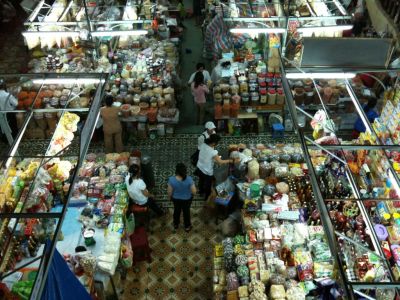
Inside, the market is arranged across two floors, with different sections dedicated to food, clothing, household goods, and souvenirs. The ground floor is typically focused on fresh produce, seafood, dried goods, and local specialties, while the upper level features textiles, clothing, shoes, and handicrafts. The aisles are narrow and often busy, with vendors displaying colorful goods and engaging directly with customers, creating a lively and interactive atmosphere.
One of the main reasons visitors come to Han Market is to shop for local products and gifts. Popular items include Vietnamese coffee, dried fruits, spices, traditional sweets, and handmade souvenirs. The market is also a good place to find silk scarves, tailor-made clothing, and other textiles. Bargaining is common here, particularly in the non-food sections, and is part of the shopping experience.
For tourists, Han Market offers a convenient introduction to Da Nang’s daily life and commercial culture. It is generally more organized and easier to navigate than some of the city’s larger traditional markets, making it especially approachable for first-time visitors.
Inside, the market is arranged across two floors, with different sections dedicated to food, clothing, household goods, and souvenirs. The ground floor is typically focused on fresh produce, seafood, dried goods, and local specialties, while the upper level features textiles, clothing, shoes, and handicrafts. The aisles are narrow and often busy, with vendors displaying colorful goods and engaging directly with customers, creating a lively and interactive atmosphere.
One of the main reasons visitors come to Han Market is to shop for local products and gifts. Popular items include Vietnamese coffee, dried fruits, spices, traditional sweets, and handmade souvenirs. The market is also a good place to find silk scarves, tailor-made clothing, and other textiles. Bargaining is common here, particularly in the non-food sections, and is part of the shopping experience.
For tourists, Han Market offers a convenient introduction to Da Nang’s daily life and commercial culture. It is generally more organized and easier to navigate than some of the city’s larger traditional markets, making it especially approachable for first-time visitors.
3) Da Nang Cathedral
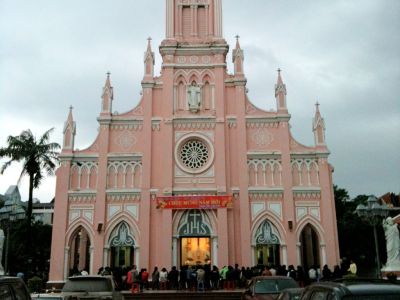
Da Nang Cathedral is one of the city’s most distinctive religious landmarks, known for its soft pink façade and prominent location in the city center near the Han River. Built in 1923 during the French colonial period, the cathedral reflects Gothic architectural influences adapted to the local climate. Its pointed arches, tall windows, and slender bell tower give it a recognizable silhouette, while its pastel color makes it stand out among the surrounding buildings.
The cathedral is often referred to locally as the “Rooster Church,” a nickname that comes from the weathercock perched at the top of its tower. This small but noticeable detail has become one of its defining features. The structure itself remains an active place of worship for Da Nang’s Catholic community, and regular services are still held inside, particularly on weekends and religious holidays.
Upon entering the cathedral grounds through the front gate, visitors will find a small courtyard leading up to the main entrance. Inside, the space is simple and calm, with rows of wooden pews aligned along a central aisle that leads toward the altar. Stained glass windows filter soft light into the interior, creating a quiet and reflective atmosphere that contrasts with the busy streets outside.
For visitors exploring Da Nang, the cathedral offers a glimpse into the city’s colonial past and its diverse cultural influences. It is best visited during quieter hours outside of service times, when you can observe the architecture and interior in a peaceful setting.
The cathedral is often referred to locally as the “Rooster Church,” a nickname that comes from the weathercock perched at the top of its tower. This small but noticeable detail has become one of its defining features. The structure itself remains an active place of worship for Da Nang’s Catholic community, and regular services are still held inside, particularly on weekends and religious holidays.
Upon entering the cathedral grounds through the front gate, visitors will find a small courtyard leading up to the main entrance. Inside, the space is simple and calm, with rows of wooden pews aligned along a central aisle that leads toward the altar. Stained glass windows filter soft light into the interior, creating a quiet and reflective atmosphere that contrasts with the busy streets outside.
For visitors exploring Da Nang, the cathedral offers a glimpse into the city’s colonial past and its diverse cultural influences. It is best visited during quieter hours outside of service times, when you can observe the architecture and interior in a peaceful setting.
4) Museum of Cham Sculpture (must see)
Museum of Cham Sculpture is one of the most important cultural institutions in central Vietnam, dedicated to the art and heritage of the ancient Champa civilization. Located near the Han River in the city center, the museum was established in 1915 during the French colonial period and remains the largest collection of Cham artifacts in the world. Its distinctive building, influenced by Cham architectural elements, sets the tone for what visitors will find inside.
After entering through the main entrance, step into the central hall and begin by exploring the galleries arranged by region. Moving through the rooms, you will encounter hundreds of sandstone sculptures dating from the 7th to the 15th centuries, originally taken from temple sites across central Vietnam. Look for carvings of deities such as Shiva, Vishnu, and various bodhisattvas, along with decorative elements from ancient sanctuaries.
One of the museum’s most important highlights—the Bronze Tara—is displayed in a dedicated gallery; follow the interior signage toward the Dong Duong section to find this rare 9th-century Buddhist statue, which stands out from the surrounding sandstone works.
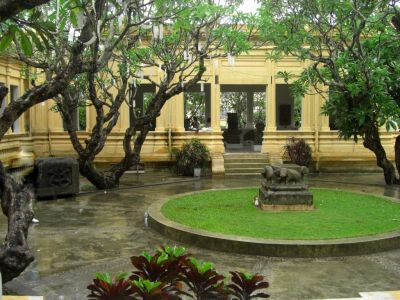
Continue your visit by stepping into the open-air courtyards connected to the indoor halls. Here, larger sculptures are displayed in natural light, allowing you to better observe the texture and detail of the stone. From the courtyards, you can re-enter adjacent galleries to follow the chronological and regional progression of Cham art. The layout is straightforward, making it easy to move between spaces while building a clearer understanding of the cultural and religious influences that shaped the Champa Kingdom.
After entering through the main entrance, step into the central hall and begin by exploring the galleries arranged by region. Moving through the rooms, you will encounter hundreds of sandstone sculptures dating from the 7th to the 15th centuries, originally taken from temple sites across central Vietnam. Look for carvings of deities such as Shiva, Vishnu, and various bodhisattvas, along with decorative elements from ancient sanctuaries.
One of the museum’s most important highlights—the Bronze Tara—is displayed in a dedicated gallery; follow the interior signage toward the Dong Duong section to find this rare 9th-century Buddhist statue, which stands out from the surrounding sandstone works.
Continue your visit by stepping into the open-air courtyards connected to the indoor halls. Here, larger sculptures are displayed in natural light, allowing you to better observe the texture and detail of the stone. From the courtyards, you can re-enter adjacent galleries to follow the chronological and regional progression of Cham art. The layout is straightforward, making it easy to move between spaces while building a clearer understanding of the cultural and religious influences that shaped the Champa Kingdom.
5) Han River Promenade
The Han River Promenade in Da Nang is the wide, paved pedestrian walkway that runs along the western bank of the Han River, between the water’s edge and Bach Dang Street. While Bach Dang is the name of the road itself, the promenade is the space where most visitors spend their time walking, relaxing, and enjoying the river views. In everyday travel language, when people refer to “Bach Dang,” they are often talking about this waterfront experience rather than the street.
The promenade is designed as an open and accessible public space, with broad paths, benches, trees, and small landscaped areas. It offers uninterrupted views across the river toward the city’s skyline and its distinctive bridges. Throughout the day, locals use the promenade for walking, jogging, and socializing, while visitors often pause here to take in the scenery or move between nearby attractions.
Along the promenade, you will also find a number of cafés and restaurants lining the Bach Dang side of the street. These spots are especially popular with visitors, offering outdoor seating where you can enjoy coffee or a meal while looking out over the river. The combination of waterfront views and casual dining makes this area one of the most relaxed places to spend time in the city center.
In the evening, the Han River Promenade becomes particularly lively as the temperature cools and the city lights begin to reflect on the water. Walking here at night offers a clear sense of Da Nang’s atmosphere—modern, open, and closely connected to its river.
The promenade is designed as an open and accessible public space, with broad paths, benches, trees, and small landscaped areas. It offers uninterrupted views across the river toward the city’s skyline and its distinctive bridges. Throughout the day, locals use the promenade for walking, jogging, and socializing, while visitors often pause here to take in the scenery or move between nearby attractions.
Along the promenade, you will also find a number of cafés and restaurants lining the Bach Dang side of the street. These spots are especially popular with visitors, offering outdoor seating where you can enjoy coffee or a meal while looking out over the river. The combination of waterfront views and casual dining makes this area one of the most relaxed places to spend time in the city center.
In the evening, the Han River Promenade becomes particularly lively as the temperature cools and the city lights begin to reflect on the water. Walking here at night offers a clear sense of Da Nang’s atmosphere—modern, open, and closely connected to its river.
6) Dragon Bridge (must see)
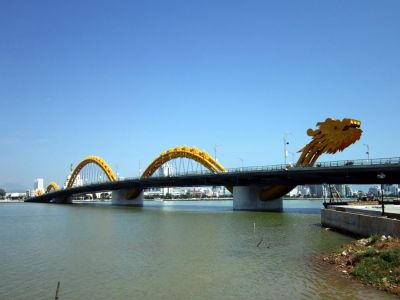
Dragon Bridge is one of the most recognizable landmarks in Da Nang, stretching across the Han River and connecting the city center with the coastal districts to the east. Completed in 2013, the bridge was designed in the shape of a golden dragon, a powerful symbol in Vietnamese culture associated with strength, prosperity, and good fortune. Its sweeping form and illuminated scales make it especially striking at night, when the structure becomes a focal point of the city skyline.
The dragon’s head, positioned on the eastern end of the bridge, faces toward the sea—an intentional orientation believed to bring positive energy and success to the city. The structure is both functional and symbolic, serving as a major traffic route while also acting as a modern icon of Da Nang’s rapid development. By day, the bridge offers clear views of the Han River and the surrounding cityscape; by night, it transforms into a vibrant display of color through its dynamic lighting system.
One of the most popular attractions associated with Dragon Bridge is its weekend performance. On Saturday and Sunday evenings, the dragon’s head breathes fire—typically in nine bursts across three sequences—followed by a powerful spray of water. The short but memorable show draws both locals and visitors, with crowds gathering along the riverbanks and nearby streets to watch. Visitors should be aware that standing too close to the head during the water phase can result in getting soaked.
For visitors exploring the city, Dragon Bridge is both a landmark and a gathering place. It stands as a symbol of Da Nang’s identity—rooted in cultural tradition while reflecting the city’s modern growth and ambition.
The dragon’s head, positioned on the eastern end of the bridge, faces toward the sea—an intentional orientation believed to bring positive energy and success to the city. The structure is both functional and symbolic, serving as a major traffic route while also acting as a modern icon of Da Nang’s rapid development. By day, the bridge offers clear views of the Han River and the surrounding cityscape; by night, it transforms into a vibrant display of color through its dynamic lighting system.
One of the most popular attractions associated with Dragon Bridge is its weekend performance. On Saturday and Sunday evenings, the dragon’s head breathes fire—typically in nine bursts across three sequences—followed by a powerful spray of water. The short but memorable show draws both locals and visitors, with crowds gathering along the riverbanks and nearby streets to watch. Visitors should be aware that standing too close to the head during the water phase can result in getting soaked.
For visitors exploring the city, Dragon Bridge is both a landmark and a gathering place. It stands as a symbol of Da Nang’s identity—rooted in cultural tradition while reflecting the city’s modern growth and ambition.
7) Dragon Carp Statue
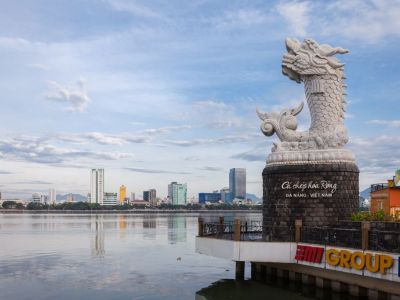
Dragon Carp Statue stands along the eastern bank of the Han River near the Love Lock Bridge, forming one of the most photographed landmarks on Da Nang’s waterfront. Rising about seven meters high, the sculpture is carved from white marble by artisans from the nearby Non Nuoc Stone Carving Village, giving it a strong connection to local craftsmanship and tradition.
The statue represents a traditional Vietnamese legend in which a carp transforms into a dragon after overcoming a powerful current, symbolizing perseverance, success, and transformation. This moment is captured in the sculpture’s form, with the body of a carp and the head of a dragon. Facing directly toward the Han River, the statue is positioned as if it is “sprinkling water” outward—an intentional gesture believed to bring prosperity and good fortune to the city.
Water flows continuously from the dragon’s mouth, creating a fountain effect that adds movement and sound to the setting. After dark, the statue becomes even more striking thanks to an internal LED lighting system that shifts through colors such as pink, green, blue, and gold. These changing lights, combined with reflections on the river, make the site especially popular for evening visits and long-exposure photography.
The statue represents a traditional Vietnamese legend in which a carp transforms into a dragon after overcoming a powerful current, symbolizing perseverance, success, and transformation. This moment is captured in the sculpture’s form, with the body of a carp and the head of a dragon. Facing directly toward the Han River, the statue is positioned as if it is “sprinkling water” outward—an intentional gesture believed to bring prosperity and good fortune to the city.
Water flows continuously from the dragon’s mouth, creating a fountain effect that adds movement and sound to the setting. After dark, the statue becomes even more striking thanks to an internal LED lighting system that shifts through colors such as pink, green, blue, and gold. These changing lights, combined with reflections on the river, make the site especially popular for evening visits and long-exposure photography.
8) Love Lock Bridge
Love Lock Bridge is a small pedestrian bridge along the Han River and one of Da Nang’s most popular spots for couples and evening walks. Located on the eastern bank near Dragon Bridge, it extends gently over the water, offering open views back toward the city skyline and the illuminated bridges that define the waterfront.
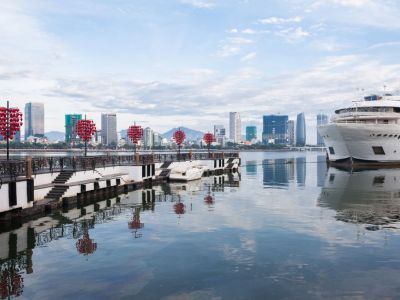
The walkway is lined with metal railings where visitors attach small padlocks as symbols of love and commitment. While the tradition is relatively new here, it has quickly become part of the bridge’s character. As you walk along, notice the red heart-shaped lanterns spaced along the path. After sunset, they glow softly, adding warmth and color to the riverside setting.
From the bridge, you have a clear view of Dragon Bridge. On weekend evenings, many visitors gather here to watch the dragon breathe fire and water, making this both a scenic and practical viewing spot. Just below, at the river’s edge, the Carp-Dragon statue draws attention with its flowing form and is a favorite place for photos. The bridge is also part of the DHC Marina complex, where a large “cruise ship” restaurant is docked nearby.
This is a place to slow down. The sounds of the river, the soft lighting, and the steady movement of people create a relaxed atmosphere that feels especially inviting in the evening.
The walkway is lined with metal railings where visitors attach small padlocks as symbols of love and commitment. While the tradition is relatively new here, it has quickly become part of the bridge’s character. As you walk along, notice the red heart-shaped lanterns spaced along the path. After sunset, they glow softly, adding warmth and color to the riverside setting.
From the bridge, you have a clear view of Dragon Bridge. On weekend evenings, many visitors gather here to watch the dragon breathe fire and water, making this both a scenic and practical viewing spot. Just below, at the river’s edge, the Carp-Dragon statue draws attention with its flowing form and is a favorite place for photos. The bridge is also part of the DHC Marina complex, where a large “cruise ship” restaurant is docked nearby.
This is a place to slow down. The sounds of the river, the soft lighting, and the steady movement of people create a relaxed atmosphere that feels especially inviting in the evening.
9) Son Tra Night Market
Son Tra Night Market is one of the liveliest evening destinations in the city, located on the eastern side of the Han River near the Dragon Bridge. As the sun sets, this compact market comes to life with rows of brightly lit stalls, drawing both locals and visitors with its mix of street food, shopping, and casual entertainment. Its central location makes it an easy stop after a walk along the riverfront or a visit to nearby landmarks.
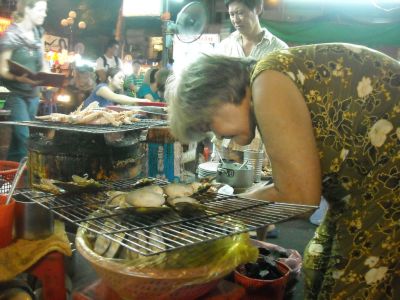
The market is especially known for its food. Grills line the walkways, filling the air with the scent of fresh seafood, skewered meats, and local specialties. Visitors can sample dishes such as grilled scallops, shrimp, bánh tráng nướng, and a variety of Vietnamese snacks prepared on the spot. Small plastic tables and stools are set up throughout the area, creating an informal and social atmosphere where people gather to eat and relax.
Beyond food, Son Tra Night Market offers a wide selection of goods, including clothing, accessories, souvenirs, and handmade items. The stalls are arranged in narrow lanes, making it easy to browse while moving through the market at a comfortable pace. Bargaining is common in some sections, though many vendors also display fixed prices.
For tourists, the market provides a simple way to experience Da Nang’s evening culture. It is busiest after sunset, when lights, music, and the steady flow of visitors create a lively but approachable setting. Combined with its proximity to the Dragon Bridge and the Han River promenade, Son Tra Night Market is a convenient and engaging stop for anyone exploring the city at night.
The market is especially known for its food. Grills line the walkways, filling the air with the scent of fresh seafood, skewered meats, and local specialties. Visitors can sample dishes such as grilled scallops, shrimp, bánh tráng nướng, and a variety of Vietnamese snacks prepared on the spot. Small plastic tables and stools are set up throughout the area, creating an informal and social atmosphere where people gather to eat and relax.
Beyond food, Son Tra Night Market offers a wide selection of goods, including clothing, accessories, souvenirs, and handmade items. The stalls are arranged in narrow lanes, making it easy to browse while moving through the market at a comfortable pace. Bargaining is common in some sections, though many vendors also display fixed prices.
For tourists, the market provides a simple way to experience Da Nang’s evening culture. It is busiest after sunset, when lights, music, and the steady flow of visitors create a lively but approachable setting. Combined with its proximity to the Dragon Bridge and the Han River promenade, Son Tra Night Market is a convenient and engaging stop for anyone exploring the city at night.
The Most Popular Cities
/ view all