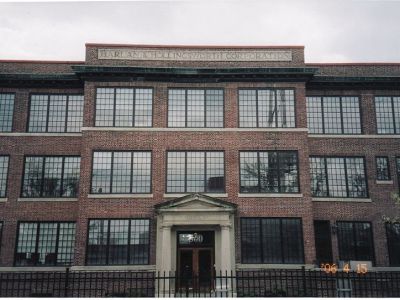


Harlan and Hollingsworth Office Building, Wilmington
The Harlan and Hollingsworth Office Building stands as a reminder of Wilmington’s industrial heyday and the enduring legacy of one of its most prominent firms. Completed in 1912, the three-story Colonial Revival structure served as the administrative heart of Harlan and Hollingsworth, a company renowned for producing iron ships and railroad cars. Situated near the Wilmington Rail Viaduct at West Street, the building was commissioned after earlier offices proved insufficient for the company’s growing operations. It was designed by architect Dallett, a pupil of Frank Furness, and built with brick, stone, and distinctive copper detailing.
The building’s most recognizable features include twin copper-faced bay windows that extend from the second story at its front corner, along with original many-paned metal windows that have been preserved through the decades. Despite the closure of the Harlan Plant in 1944, the office building was spared demolition. It later served as a laboratory facility for Gates Engineering Company before being purchased and restored by 100 South West Street Associates in 1991. Its architectural integrity and industrial significance earned it a place on the National Register of Historic Places in 1979.
The company’s broader legacy is impressive. Founded in the 1840s, Harlan and Hollingsworth built over 230 vessels-including Civil War monitors and the luxury yacht Alva for William K. Vanderbilt. During its peak in the early 20th century, the firm ranked among the nation’s leading shipbuilders and expanded production during World War I with a fleet of 24 ships. While shipbuilding ceased in 1926, railcar manufacturing persisted for some time. Today, the office building remains a rare architectural survivor of that era and a symbol of Wilmington’s industrial past.
The building’s most recognizable features include twin copper-faced bay windows that extend from the second story at its front corner, along with original many-paned metal windows that have been preserved through the decades. Despite the closure of the Harlan Plant in 1944, the office building was spared demolition. It later served as a laboratory facility for Gates Engineering Company before being purchased and restored by 100 South West Street Associates in 1991. Its architectural integrity and industrial significance earned it a place on the National Register of Historic Places in 1979.
The company’s broader legacy is impressive. Founded in the 1840s, Harlan and Hollingsworth built over 230 vessels-including Civil War monitors and the luxury yacht Alva for William K. Vanderbilt. During its peak in the early 20th century, the firm ranked among the nation’s leading shipbuilders and expanded production during World War I with a fleet of 24 ships. While shipbuilding ceased in 1926, railcar manufacturing persisted for some time. Today, the office building remains a rare architectural survivor of that era and a symbol of Wilmington’s industrial past.
Want to visit this sight? Check out these Self-Guided Walking Tours in Wilmington. Alternatively, you can download the mobile app "GPSmyCity: Walks in 1K+ Cities" from Apple App Store or Google Play Store. The app turns your mobile device to a personal tour guide and it works offline, so no data plan is needed when traveling abroad.
Download The GPSmyCity App



Harlan and Hollingsworth Office Building on Map
Sight Name: Harlan and Hollingsworth Office Building
Sight Location: Wilmington, USA (See walking tours in Wilmington)
Sight Type: Attraction/Landmark
Sight Location: Wilmington, USA (See walking tours in Wilmington)
Sight Type: Attraction/Landmark
Nearby Sights
Walking Tours in Wilmington, Delaware

Create Your Own Walk in Wilmington
Creating your own self-guided walk in Wilmington is easy and fun. Choose the city attractions that you want to see and a walk route map will be created just for you. You can even set your hotel as the start point of the walk.
Wilmington Downtown Walking Tour
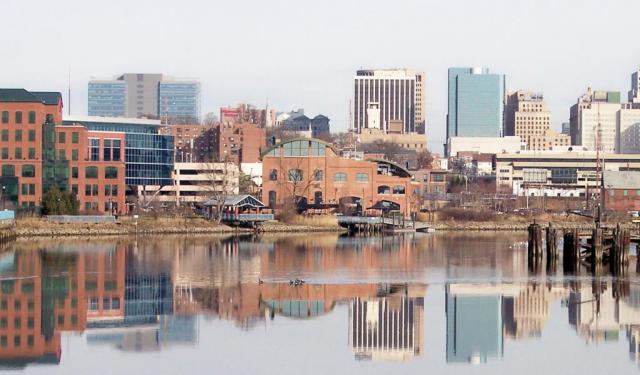
Wilmington is the largest city in Delaware. It lies at the confluence of the Brandywine and Christina Rivers. Wilmington was originally home to the Lenape people. However, the land was purchased from Chief Mattahorn by the Swedish South Company in 1638. They built Fort Christina at the mouth of what would later be called the Christina River.
The Swedish lost control of the Fort Christina... view more
Tour Duration: 2 Hour(s)
Travel Distance: 2.8 Km or 1.7 Miles
The Swedish lost control of the Fort Christina... view more
Tour Duration: 2 Hour(s)
Travel Distance: 2.8 Km or 1.7 Miles
Discover Wilmington's Quaker Hill and Downtown Historical Buildings
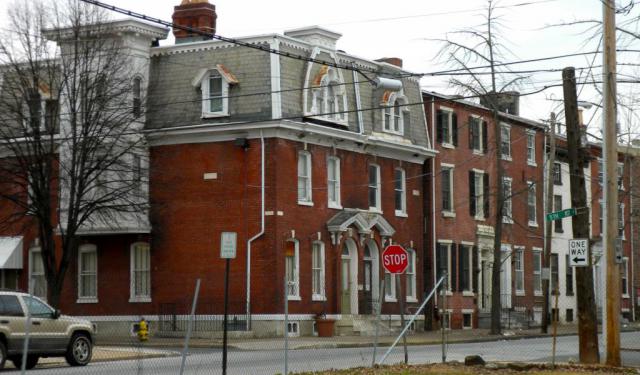
For many visitors to Delaware's Wilmington, the downtown district is the main area of interest.
Indeed, the majority of Wilmington's most distinguished attractions are found here. Steeped in history, this part of the city still carries legacy of its first Swedish settlers much as that of the du Pont family who left a great deal of mark on the town's history. Some of the key local... view more
Tour Duration: 2 Hour(s)
Travel Distance: 2.8 Km or 1.7 Miles
Indeed, the majority of Wilmington's most distinguished attractions are found here. Steeped in history, this part of the city still carries legacy of its first Swedish settlers much as that of the du Pont family who left a great deal of mark on the town's history. Some of the key local... view more
Tour Duration: 2 Hour(s)
Travel Distance: 2.8 Km or 1.7 Miles