

Hastings Gardens, Valletta
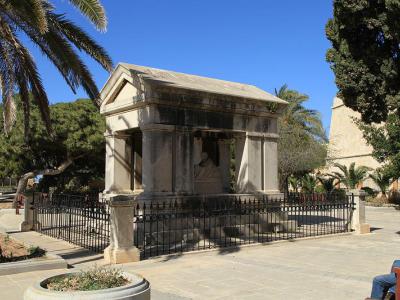
On top of St. John’s and St. Michael’s Bastions lies Hastings Garden, a quiet public space named after Francis Rawdon-Hastings, Marquess of Hastings and Governor of Malta. He died in 1826, and his tomb still stands within the garden, giving the site its historical importance. You’ll find the monument a short walk from the main entrance, set back among the pathways and stone terraces.
Along the way, take note of the Seventh of June memorial, moved here in 2010. It commemorates the events of 7 June 1919, when British troops opened fire on Maltese demonstrators, killing four and accelerating the island’s movement toward political self-determination.
As you explore, you’ll also come across another monument - the Armenian khachkar, installed in 2009. Carved in Armenia and presented by the local Armenian community, it expresses gratitude for Malta’s refuge to Armenians in both 1375 and 1915. The stone stands along the northern side of the garden near Windmill Street.
Hastings Garden is also known for its panoramic views. From the elevated platform of St. John’s Bastion at the northern side, you can look out across Marsamxett Harbour, Manoel Island, and the bayside towns stretching north of Valletta. It’s an ideal place to enjoy the sea breeze, take photographs, or simply pause for a quiet break above the busier streets below.
Along the way, take note of the Seventh of June memorial, moved here in 2010. It commemorates the events of 7 June 1919, when British troops opened fire on Maltese demonstrators, killing four and accelerating the island’s movement toward political self-determination.
As you explore, you’ll also come across another monument - the Armenian khachkar, installed in 2009. Carved in Armenia and presented by the local Armenian community, it expresses gratitude for Malta’s refuge to Armenians in both 1375 and 1915. The stone stands along the northern side of the garden near Windmill Street.
Hastings Garden is also known for its panoramic views. From the elevated platform of St. John’s Bastion at the northern side, you can look out across Marsamxett Harbour, Manoel Island, and the bayside towns stretching north of Valletta. It’s an ideal place to enjoy the sea breeze, take photographs, or simply pause for a quiet break above the busier streets below.
Want to visit this sight? Check out these Self-Guided Walking Tours in Valletta. Alternatively, you can download the mobile app "GPSmyCity: Walks in 1K+ Cities" from Apple App Store or Google Play Store. The app turns your mobile device to a personal tour guide and it works offline, so no data plan is needed when traveling abroad.
Download The GPSmyCity App



Hastings Gardens on Map
Sight Name: Hastings Gardens
Sight Location: Valletta, Malta (See walking tours in Valletta)
Sight Type: Attraction/Landmark
Guide(s) Containing This Sight:
Sight Location: Valletta, Malta (See walking tours in Valletta)
Sight Type: Attraction/Landmark
Guide(s) Containing This Sight:
Nearby Sights


Walking Tours in Valletta, Malta

Create Your Own Walk in Valletta
Creating your own self-guided walk in Valletta is easy and fun. Choose the city attractions that you want to see and a walk route map will be created just for you. You can even set your hotel as the start point of the walk.
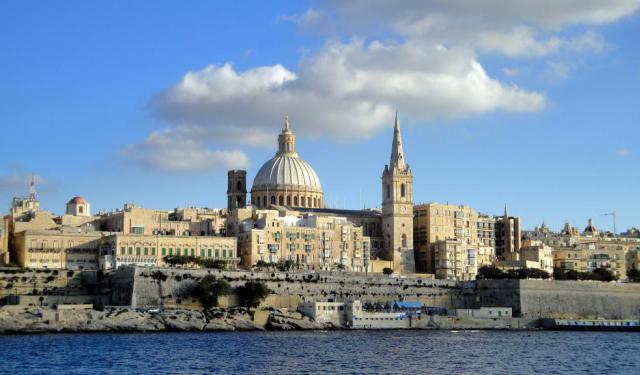
Valletta Old Town Walking Tour
‘A fortress from end to end,’ Sir Walter Scott remarked, and, as you begin to wander through Valletta, the capital city of Malta, you will understand why.
Malta’s central location made it a prized possession for successive Mediterranean powers. The Phoenicians colonized the islands around 800 BC. They were followed by the Carthaginians and then the Romans. Under Roman rule, Christianity... view more
Tour Duration: 2 Hour(s)
Travel Distance: 2.8 Km or 1.7 Miles
Malta’s central location made it a prized possession for successive Mediterranean powers. The Phoenicians colonized the islands around 800 BC. They were followed by the Carthaginians and then the Romans. Under Roman rule, Christianity... view more
Tour Duration: 2 Hour(s)
Travel Distance: 2.8 Km or 1.7 Miles
Valletta Architectural Landmarks Tour
Following the Great Siege of Malta in 1565, the knights of the Order of St John set about creating a city ‘built by gentlemen, for gentlemen’. The end result saw the island's capital become home to an array of elaborate Baroque buildings, some reflecting Mannerist features borrowed from neighboring Italy.
Many of these architectural monuments have proudly withstood the test of time... view more
Tour Duration: 2 Hour(s)
Travel Distance: 2.0 Km or 1.2 Miles
Many of these architectural monuments have proudly withstood the test of time... view more
Tour Duration: 2 Hour(s)
Travel Distance: 2.0 Km or 1.2 Miles