

Healey Building and Fairlie–Poplar Historic District, Atlanta
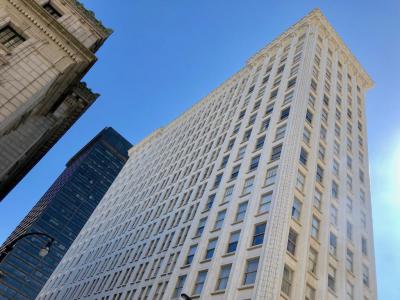
Often dubbed “The Queen of Atlanta”, the Healey Building was completed in 1914 and it was the last major high-rise erected in the city before World War I, marking the peak of Atlanta’s early skyscraper era. Its architectural and historical significance was formally recognized when it was added to the National Register of Historic Places in 1977, followed by local landmark status in 1987.
Designed in the Chicago School tradition, the Healey Building reflects the ambition and confidence of early-20th-century Atlanta, when steel-frame construction was reshaping the city’s skyline. In 2001, its upper floors were converted into residential condominiums, while the lower levels continued to house galleries, shops, and restaurants, allowing the building to remain an active part of downtown life while preserving its historic character.
The Healey Building also serves as a visual anchor for the Fairlie–Poplar Historic District, a compact and architecturally rich area within Atlanta’s central business district. Named after Fairlie Street, which runs northeast, and Poplar Street, which runs southeast, the district is distinguished by its small blocks and streets laid out at roughly a 40-degree diagonal, setting it apart from the surrounding grid.
Buildings throughout Fairlie–Poplar date mainly from the late 19th and early 20th centuries and showcase a wide range of architectural styles, including Chicago, Renaissance Revival, Neoclassical, Commercial, Art Deco, Georgian Revival, and Victorian. Together, they illustrate the shift from load-bearing masonry construction to steel and concrete framing, making the district-and the Healey Building at its center-a rewarding area to explore for anyone interested in Atlanta’s architectural evolution.
Designed in the Chicago School tradition, the Healey Building reflects the ambition and confidence of early-20th-century Atlanta, when steel-frame construction was reshaping the city’s skyline. In 2001, its upper floors were converted into residential condominiums, while the lower levels continued to house galleries, shops, and restaurants, allowing the building to remain an active part of downtown life while preserving its historic character.
The Healey Building also serves as a visual anchor for the Fairlie–Poplar Historic District, a compact and architecturally rich area within Atlanta’s central business district. Named after Fairlie Street, which runs northeast, and Poplar Street, which runs southeast, the district is distinguished by its small blocks and streets laid out at roughly a 40-degree diagonal, setting it apart from the surrounding grid.
Buildings throughout Fairlie–Poplar date mainly from the late 19th and early 20th centuries and showcase a wide range of architectural styles, including Chicago, Renaissance Revival, Neoclassical, Commercial, Art Deco, Georgian Revival, and Victorian. Together, they illustrate the shift from load-bearing masonry construction to steel and concrete framing, making the district-and the Healey Building at its center-a rewarding area to explore for anyone interested in Atlanta’s architectural evolution.
Want to visit this sight? Check out these Self-Guided Walking Tours in Atlanta. Alternatively, you can download the mobile app "GPSmyCity: Walks in 1K+ Cities" from Apple App Store or Google Play Store. The app turns your mobile device to a personal tour guide and it works offline, so no data plan is needed when traveling abroad.
Download The GPSmyCity App



Healey Building and Fairlie–Poplar Historic District on Map
Sight Name: Healey Building and Fairlie–Poplar Historic District
Sight Location: Atlanta, USA (See walking tours in Atlanta)
Sight Type: Attraction/Landmark
Guide(s) Containing This Sight:
Sight Location: Atlanta, USA (See walking tours in Atlanta)
Sight Type: Attraction/Landmark
Guide(s) Containing This Sight:
Nearby Sights

Walking Tours in Atlanta, Georgia

Create Your Own Walk in Atlanta
Creating your own self-guided walk in Atlanta is easy and fun. Choose the city attractions that you want to see and a walk route map will be created just for you. You can even set your hotel as the start point of the walk.
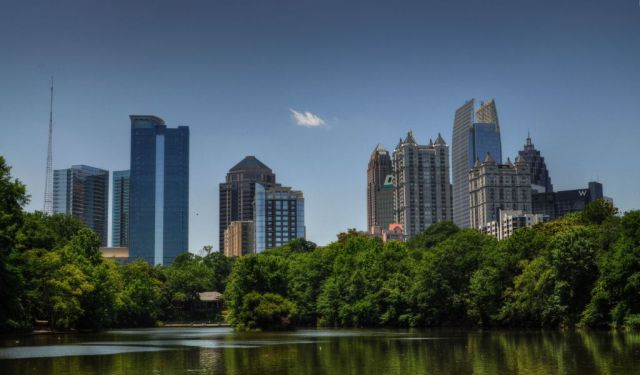
Atlanta Midtown Walking Tour
Atlanta began not as a grand colonial settlement but as a practical railroad town. Its origins lie in the 1830s, when Georgia planned a rail line to connect the interior of the state with the Midwest. The settlement that formed at the rail terminus was first known simply as Terminus, then Marthasville, before being renamed Atlanta in 1847. The name is generally understood to derive from the... view more
Tour Duration: 2 Hour(s)
Travel Distance: 3.4 Km or 2.1 Miles
Tour Duration: 2 Hour(s)
Travel Distance: 3.4 Km or 2.1 Miles

"Gone with the Wind" Walking Tour
Atlanta does “give a damn” about Gone With The Wind. There is a number of museums and sites in the city that commemorate one of America's all-time classic stories. Although released as far back as the 1930s, both Margaret Mitchell's award-winning novel and the film that followed shortly still inspire curiosity about and are equally celebrated in Atlanta.
The first port of call for... view more
Tour Duration: 2 Hour(s)
Travel Distance: 5.0 Km or 3.1 Miles
The first port of call for... view more
Tour Duration: 2 Hour(s)
Travel Distance: 5.0 Km or 3.1 Miles
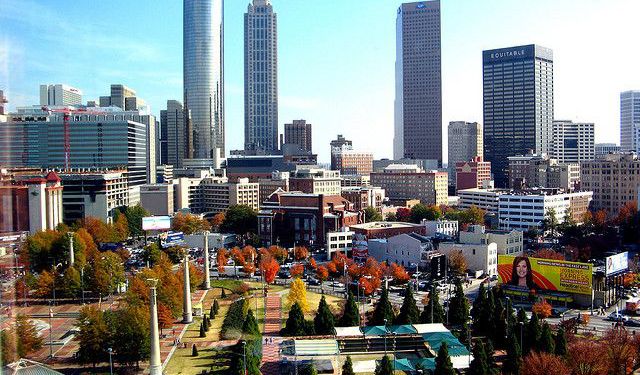
Atlanta Downtown Walk
Atlanta began as a practical idea rather than a grand vision. In the 1830s, Georgia planners selected a forested ridge as the southern endpoint of a new railroad linking the state to the Midwest. The settlement that emerged was first called Terminus. The name Atlanta appeared in the 1840s, likely derived from Atlantica-Pacifica, a poetic nod to the railroad’s ambition to connect the Atlantic... view more
Tour Duration: 2 Hour(s)
Travel Distance: 3.3 Km or 2.1 Miles
Tour Duration: 2 Hour(s)
Travel Distance: 3.3 Km or 2.1 Miles
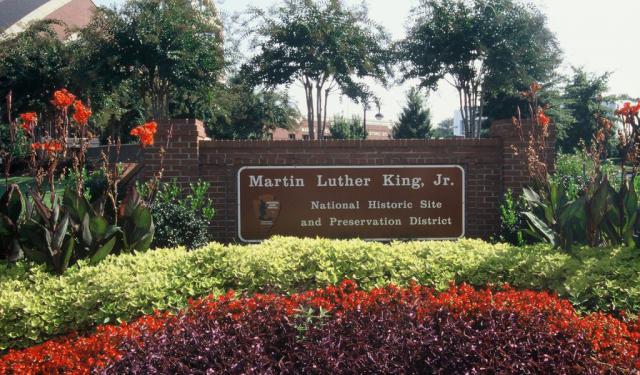
Martin Luther King Walking Tour
Martin Luther King Jr. once said “I was born here. I grew up here. And this city helped shape the man I became.”
Martin Luther King Jr. was born in Atlanta in 1929 into a family deeply rooted in the city’s Black Baptist tradition. Raised on Auburn Avenue, then one of African American corridors in the United States, King grew up surrounded by faith, education, and civic responsibility.... view more
Tour Duration: 1 Hour(s)
Travel Distance: 1.0 Km or 0.6 Miles
Martin Luther King Jr. was born in Atlanta in 1929 into a family deeply rooted in the city’s Black Baptist tradition. Raised on Auburn Avenue, then one of African American corridors in the United States, King grew up surrounded by faith, education, and civic responsibility.... view more
Tour Duration: 1 Hour(s)
Travel Distance: 1.0 Km or 0.6 Miles

Centennial Olympic Park
The Centennial Olympic Park in Atlanta is a sprawling urban oasis, covering approximately 21 acres. It was created as a central gathering place for the Centennial Summer Olympic Games held in Georgia in 1996. In the years following the Games, the area witnessed commercial development resulting in a variety of attractions and amenities suitable for visitors of all ages.
One of the notable sites... view more
Tour Duration: 2 Hour(s)
Travel Distance: 1.6 Km or 1 Miles
One of the notable sites... view more
Tour Duration: 2 Hour(s)
Travel Distance: 1.6 Km or 1 Miles