

Audio Guide: Atlanta Midtown Walking Tour (Self Guided), Atlanta
Atlanta began not as a grand colonial settlement but as a practical railroad town. Its origins lie in the 1830s, when Georgia planned a rail line to connect the interior of the state with the Midwest. The settlement that formed at the rail terminus was first known simply as Terminus, then Marthasville, before being renamed Atlanta in 1847. The name is generally understood to derive from the Western & Atlantic Railroad, reflecting the city’s identity as a transportation hub rather than a geographic or indigenous reference.
The city was largely destroyed during the Civil War, most famously during General Sherman’s campaign in 1864. Its rapid rebuilding afterward shaped Atlanta’s enduring self-image as a place that rises through disruption. By the late 19th and early 20th centuries, Atlanta had emerged as a commercial and cultural center of the New South, though growth often came with sharp social and racial divisions that continue to shape the city’s history and urban form.
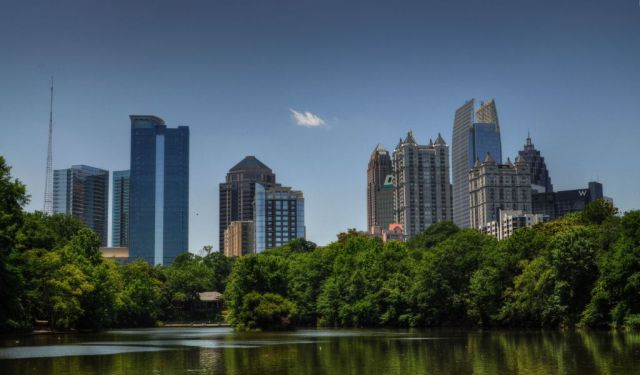
While downtown holds Atlanta’s earliest layers, Midtown Atlanta reflects the city’s 20th-century ambitions. Originally a residential area on the city’s northern edge, Midtown began to take shape in the early 1900s with streetcar lines, large homes, and institutions clustered near what is now Piedmont Park. The park itself, which hosted the 1895 Cotton States and International Exposition, anchored the area as a place of culture and leisure rather than industry.
Midtown’s identity shifted significantly after World War II. As suburban expansion drew residents outward, the area experienced decline, followed by waves of reinvention beginning in the 1960s and accelerating in the late 20th century. Cultural institutions played a decisive role in this transformation. The establishment of the Woodruff Arts Center, the expansion of the High Museum of Art, and later the arrival of major corporate offices reshaped Midtown into Atlanta’s primary arts and high-density district.
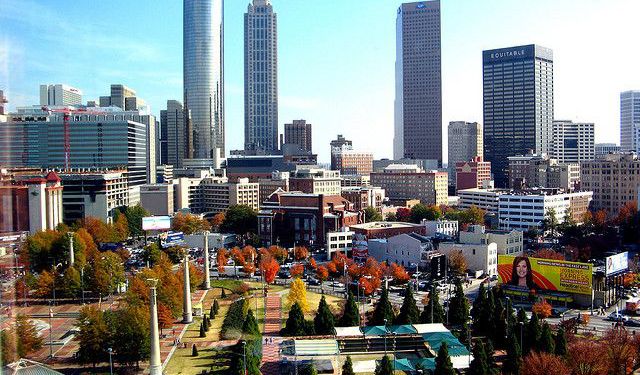
Today, Midtown is defined by its concentration of cultural venues, modern architecture, and walkable streets. Glass towers, historic churches, performance halls, museums, and residential buildings coexist within a compact grid. More than any other part of the city, Midtown reflects Atlanta’s modern character: forward-looking, institution-driven, and shaped less by colonial legacy than by continual adaptation.
Walking through Midtown Atlanta, a tourist encounters a compact mix of culture and history. The ornate Fox Theater anchors the area, while nearby Mary Mac’s Tea Room preserves classic Southern cooking. Historic homes like the William Perrin Nicolson House and Saint Mark United Methodist Church contrast with Midtown’s cultural core: the Alliance Theater and the design-focused Museum of Design Atlanta.
Midtown weaves Atlanta’s past and present into a single, walkable story—where culture, creativity, and everyday life quietly meet along the way.
The city was largely destroyed during the Civil War, most famously during General Sherman’s campaign in 1864. Its rapid rebuilding afterward shaped Atlanta’s enduring self-image as a place that rises through disruption. By the late 19th and early 20th centuries, Atlanta had emerged as a commercial and cultural center of the New South, though growth often came with sharp social and racial divisions that continue to shape the city’s history and urban form.
While downtown holds Atlanta’s earliest layers, Midtown Atlanta reflects the city’s 20th-century ambitions. Originally a residential area on the city’s northern edge, Midtown began to take shape in the early 1900s with streetcar lines, large homes, and institutions clustered near what is now Piedmont Park. The park itself, which hosted the 1895 Cotton States and International Exposition, anchored the area as a place of culture and leisure rather than industry.
Midtown’s identity shifted significantly after World War II. As suburban expansion drew residents outward, the area experienced decline, followed by waves of reinvention beginning in the 1960s and accelerating in the late 20th century. Cultural institutions played a decisive role in this transformation. The establishment of the Woodruff Arts Center, the expansion of the High Museum of Art, and later the arrival of major corporate offices reshaped Midtown into Atlanta’s primary arts and high-density district.
Today, Midtown is defined by its concentration of cultural venues, modern architecture, and walkable streets. Glass towers, historic churches, performance halls, museums, and residential buildings coexist within a compact grid. More than any other part of the city, Midtown reflects Atlanta’s modern character: forward-looking, institution-driven, and shaped less by colonial legacy than by continual adaptation.
Walking through Midtown Atlanta, a tourist encounters a compact mix of culture and history. The ornate Fox Theater anchors the area, while nearby Mary Mac’s Tea Room preserves classic Southern cooking. Historic homes like the William Perrin Nicolson House and Saint Mark United Methodist Church contrast with Midtown’s cultural core: the Alliance Theater and the design-focused Museum of Design Atlanta.
Midtown weaves Atlanta’s past and present into a single, walkable story—where culture, creativity, and everyday life quietly meet along the way.
How it works: Download the app "GPSmyCity: Walks in 1K+ Cities" from Apple App Store or Google Play Store to your mobile phone or tablet. The app turns your mobile device into a personal tour guide and its built-in GPS navigation functions guide you from one tour stop to next. The app works offline, so no data plan is needed when traveling abroad.
Atlanta Midtown Walking Tour Map
Guide Name: Atlanta Midtown Walking Tour
Guide Location: USA » Atlanta (See other walking tours in Atlanta)
Guide Type: Self-guided Walking Tour (Sightseeing)
# of Attractions: 9
Tour Duration: 2 Hour(s)
Travel Distance: 3.4 Km or 2.1 Miles
Author: doris
Sight(s) Featured in This Guide:
Guide Location: USA » Atlanta (See other walking tours in Atlanta)
Guide Type: Self-guided Walking Tour (Sightseeing)
# of Attractions: 9
Tour Duration: 2 Hour(s)
Travel Distance: 3.4 Km or 2.1 Miles
Author: doris
Sight(s) Featured in This Guide:
- Fox Theatre
- Mary Mac's Tea Room
- William Perrin Nicolson House / Historic Midtown
- Saint Mark United Methodist Church
- Margaret Mitchell House and Museum
- First Church of Christ, Scientist
- Woodruff Arts Center / Alliance Theatre
- High Museum of Art
- Museum of Design Atlanta (MODA)
1) Fox Theatre (must see)
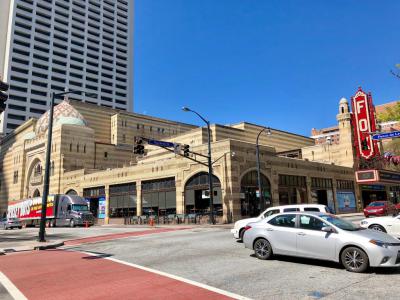
Inspired by Eastern and Moorish design, the Fox Theater announces its fantasy character before you even step inside. From Peachtree Street, look up to see the building’s onion-shaped domes and slender minarets rising above the facade, framing the arched main entrance. Passing through the doors, you arrive in the grand lobby, where the building’s theatrical identity becomes fully apparent.
Directly ahead, the brass-trimmed marble ticket kiosk marks the transition from street to spectacle. From here, corridors branch outward toward the main auditorium and auxiliary spaces. If you move toward the auditorium entrances, you’ll pass decorative arches and richly detailed walls that echo Moorish and Egyptian motifs. Before entering the seating area, note the presence of the Mighty Mo organ, one of the world’s largest theater organs, housed within the building and still used for performances and special events.
Stepping into the 4,665-seat auditorium, you find yourself in what feels like an open-air Arabian courtyard. Look upward: the ceiling is painted and lit to resemble a night sky filled with stars. Around you, crenelated walls and ornate balconies reinforce the illusion of being outdoors. During performances, lighting effects—first installed when the theater opened in 1929 and refined over time—gradually shift the sky from deep starlight to the hues of sunset or sunrise, subtly changing the atmosphere without drawing attention away from the stage.
Before or after a performance, make your way back toward the lobby level and follow interior signage to the Egyptian Ballroom. This space is designed to evoke an ancient temple, with hieroglyphic motifs, carved columns, and richly patterned interiors inspired by the era of Ramesses II. Today, it serves as a venue for events, receptions, and performances, preserving its original decorative character.
As you explore, it’s worth remembering that the Fox nearly disappeared in the 1970s, when demolition plans threatened the building. A successful grassroots “Save the Fox” campaign preserved the structure, which is now listed on the National Register of Historic Places. Today, the theater hosts everything from Broadway touring productions and the Atlanta Ballet to concerts and film screenings, all within a layout that allows visitors to move easily between spaces while remaining immersed in its distinctive, carefully staged world.
Directly ahead, the brass-trimmed marble ticket kiosk marks the transition from street to spectacle. From here, corridors branch outward toward the main auditorium and auxiliary spaces. If you move toward the auditorium entrances, you’ll pass decorative arches and richly detailed walls that echo Moorish and Egyptian motifs. Before entering the seating area, note the presence of the Mighty Mo organ, one of the world’s largest theater organs, housed within the building and still used for performances and special events.
Stepping into the 4,665-seat auditorium, you find yourself in what feels like an open-air Arabian courtyard. Look upward: the ceiling is painted and lit to resemble a night sky filled with stars. Around you, crenelated walls and ornate balconies reinforce the illusion of being outdoors. During performances, lighting effects—first installed when the theater opened in 1929 and refined over time—gradually shift the sky from deep starlight to the hues of sunset or sunrise, subtly changing the atmosphere without drawing attention away from the stage.
Before or after a performance, make your way back toward the lobby level and follow interior signage to the Egyptian Ballroom. This space is designed to evoke an ancient temple, with hieroglyphic motifs, carved columns, and richly patterned interiors inspired by the era of Ramesses II. Today, it serves as a venue for events, receptions, and performances, preserving its original decorative character.
As you explore, it’s worth remembering that the Fox nearly disappeared in the 1970s, when demolition plans threatened the building. A successful grassroots “Save the Fox” campaign preserved the structure, which is now listed on the National Register of Historic Places. Today, the theater hosts everything from Broadway touring productions and the Atlanta Ballet to concerts and film screenings, all within a layout that allows visitors to move easily between spaces while remaining immersed in its distinctive, carefully staged world.
2) Mary Mac's Tea Room
For classic soul food in Atlanta, Mary Mac’s Tea Room is hard to beat. Established in 1945, just after World War II, by Mary MacKenzie, the restaurant has long been a fixture of traditional Southern cooking. Fried chicken—prepared in several styles—quickly became a signature. Like many enterprising women of the era, often widowed by the war, MacKenzie opened a small restaurant to make a living and chose the term “tea room” as a polite way to elevate the business. Known for its top-notch service and down-to-earth atmosphere, Mary Mac’s continues decades-old cooking traditions: corn is shucked each morning, greens are washed by hand, green beans are snapped fresh, and breads and desserts are baked onsite.
The menu is filled with Southern staples. Standout entrées include buttermilk-dredged fried chicken, fried green tomatoes, and pan-fried cube steak. Equally popular are the non-fried sides, such as black-eyed peas, collard greens, cheese grits, and steamed cabbage and carrots. Dessert is not optional here—the peach cobbler has earned near-legendary status. Portions are generous, and no one leaves hungry. You can even grab a batch of cinnamon rolls on your way out, entirely judgment-free.
The drinks menu features two Atlanta favorites: the Georgia Peach Martini and the Augusta Lemonade. Or opt for the house sweet tea, often called “the table wine of the South”.
Tip:
Arrive early or be prepared to wait on weekends, when lines are common. For a shorter wait, weekday lunches are usually the best time to visit.
The menu is filled with Southern staples. Standout entrées include buttermilk-dredged fried chicken, fried green tomatoes, and pan-fried cube steak. Equally popular are the non-fried sides, such as black-eyed peas, collard greens, cheese grits, and steamed cabbage and carrots. Dessert is not optional here—the peach cobbler has earned near-legendary status. Portions are generous, and no one leaves hungry. You can even grab a batch of cinnamon rolls on your way out, entirely judgment-free.
The drinks menu features two Atlanta favorites: the Georgia Peach Martini and the Augusta Lemonade. Or opt for the house sweet tea, often called “the table wine of the South”.
Tip:
Arrive early or be prepared to wait on weekends, when lines are common. For a shorter wait, weekday lunches are usually the best time to visit.
3) William Perrin Nicolson House / Historic Midtown
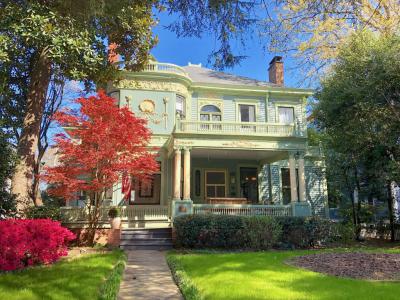
In 1891, a personal story of marriage and ambition led to the creation of one of Atlanta’s notable late-19th-century residences. William Perrin Nicolson, a man of considerable means, commissioned architect Walter T. Downing to design a home for his bride, Carolyn Crane. Downing, who played an important role in shaping Atlanta’s residential architecture during this period, approached the project with characteristic confidence, producing a refined example of Colonial Revival design marked by balanced proportions, classical detailing, and a sense of permanence suited to its social standing.
Over the decades, the William Perrin Nicolson House has remained a visible link to Atlanta’s Gilded Age, surviving fires, storms, and waves of redevelopment that erased many comparable homes. Its continued presence is unusual in a city known for rapid change, and this endurance has contributed to its recognition as both a City of Atlanta Landmark Building and Site and its inclusion on the National Register of Historic Places.
The house’s architectural value is closely tied to its designer. Today, it is one of only five known residential buildings by W. T. Downing still standing in Atlanta, and the sole surviving example that clearly reflects the distinctive stylistic direction he developed during the 1890s. As such, the Nicolson House offers rare insight into Downing’s mature approach to domestic architecture, as well as into the aspirations of Atlanta’s upper class at the close of the 19th century.
Over the decades, the William Perrin Nicolson House has remained a visible link to Atlanta’s Gilded Age, surviving fires, storms, and waves of redevelopment that erased many comparable homes. Its continued presence is unusual in a city known for rapid change, and this endurance has contributed to its recognition as both a City of Atlanta Landmark Building and Site and its inclusion on the National Register of Historic Places.
The house’s architectural value is closely tied to its designer. Today, it is one of only five known residential buildings by W. T. Downing still standing in Atlanta, and the sole surviving example that clearly reflects the distinctive stylistic direction he developed during the 1890s. As such, the Nicolson House offers rare insight into Downing’s mature approach to domestic architecture, as well as into the aspirations of Atlanta’s upper class at the close of the 19th century.
4) Saint Mark United Methodist Church
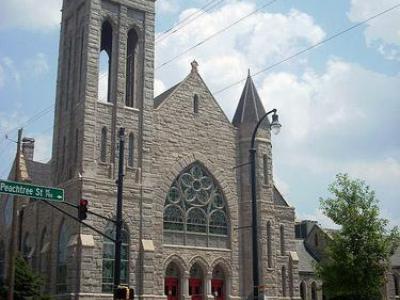
As one of the few granite churches built in the Gothic Revival style, Saint Mark was constructed between 1902 and 1903 and features finely crafted details, including the use of Stone Mountain granite, a triple entrance portal, and pot-metal stained-glass windows. The architect, Willis F. Denny, was also responsible for two other granite Methodist churches in Atlanta that still stand today.
The building’s significance lies not only in its architecture but also in its history. Saint Mark is listed on the National Register of Historic Places and is designated as a historic building by the City of Atlanta. The congregation selected this site to gain more space and to move away from the so-called “Tight Squeeze” area beyond the city limits, which was considered unsafe at the time. Over the decades, the church has undergone several changes, including the gradual installation of twelve pictorial stained-glass windows depicting scenes from the life of Jesus, added between 1909 and 1959.
In the early 1990s, Saint Mark United Methodist Church was close to closure, but sustained efforts by its congregation reversed its decline. In 2008, a fifteen-year restoration campaign of the main sanctuary was completed, carefully renewing its historic fabric and returning the space to its intended architectural character. As of late 2024 and 2025, the church has been undergoing a new phase of preservation which includes further sanctuary updates and building restorations.
The building’s significance lies not only in its architecture but also in its history. Saint Mark is listed on the National Register of Historic Places and is designated as a historic building by the City of Atlanta. The congregation selected this site to gain more space and to move away from the so-called “Tight Squeeze” area beyond the city limits, which was considered unsafe at the time. Over the decades, the church has undergone several changes, including the gradual installation of twelve pictorial stained-glass windows depicting scenes from the life of Jesus, added between 1909 and 1959.
In the early 1990s, Saint Mark United Methodist Church was close to closure, but sustained efforts by its congregation reversed its decline. In 2008, a fifteen-year restoration campaign of the main sanctuary was completed, carefully renewing its historic fabric and returning the space to its intended architectural character. As of late 2024 and 2025, the church has been undergoing a new phase of preservation which includes further sanctuary updates and building restorations.
5) Margaret Mitchell House and Museum
The Margaret Mitchell House and Museum offers a focused look into the life of the author of “Gone with the Wind” and the Atlanta that shaped her work. The site places visitors in the social and cultural landscape of the early 20th century, tracing Margaret Mitchell’s background, career, and the publication of a novel that became one of the most influential books in American literature.
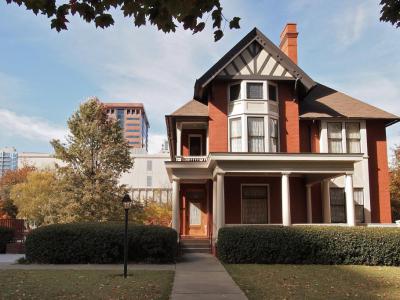
The historic “house” itself is actually the first-floor apartment where Mitchell lived with her husband in the early 1930s. The interior has been recreated with period-appropriate furnishings to reflect the modest setting in which she wrote much of Gone with the Wind. Although the objects on display were not owned by Mitchell, the apartment conveys the everyday domestic environment she once jokingly referred to as “The Dump”, as the apartment was small, plain, and far from fashionable, especially by the standards of Atlanta society at the time.
Following its reopening in 2024, the museum’s interpretation now centers on the exhibition “Telling Stories: Gone with the Wind and American Memory”. As you enter the Margaret Mitchell House and Museum, you begin in the interpretive gallery spaces that introduce Margaret Mitchell’s life and the Atlanta of the early 20th century. Exhibits here provide background on her career as a journalist, the social environment she moved in, and the circumstances that led to the writing of Gone with the Wind. From here, you move into the recreated first-floor apartment. To your left, is the living room, furnished with period-appropriate decor.
After exploring the apartment, the visit continues in the museum’s exhibition area, which examines the novel’s cultural impact and directly addresses how it shaped popular narratives about slavery, the Civil War, and Reconstruction. Finally, proceed to a separate building behind the apartment. Here, you’ll find documentary footage on the making of the 1939 film adaptation, original casting material, and visual coverage of the Atlanta premiere through photographs, newsreels, and newspaper articles. The visit is primarily self-guided, supported by a free audio tour available.
The historic “house” itself is actually the first-floor apartment where Mitchell lived with her husband in the early 1930s. The interior has been recreated with period-appropriate furnishings to reflect the modest setting in which she wrote much of Gone with the Wind. Although the objects on display were not owned by Mitchell, the apartment conveys the everyday domestic environment she once jokingly referred to as “The Dump”, as the apartment was small, plain, and far from fashionable, especially by the standards of Atlanta society at the time.
Following its reopening in 2024, the museum’s interpretation now centers on the exhibition “Telling Stories: Gone with the Wind and American Memory”. As you enter the Margaret Mitchell House and Museum, you begin in the interpretive gallery spaces that introduce Margaret Mitchell’s life and the Atlanta of the early 20th century. Exhibits here provide background on her career as a journalist, the social environment she moved in, and the circumstances that led to the writing of Gone with the Wind. From here, you move into the recreated first-floor apartment. To your left, is the living room, furnished with period-appropriate decor.
After exploring the apartment, the visit continues in the museum’s exhibition area, which examines the novel’s cultural impact and directly addresses how it shaped popular narratives about slavery, the Civil War, and Reconstruction. Finally, proceed to a separate building behind the apartment. Here, you’ll find documentary footage on the making of the 1939 film adaptation, original casting material, and visual coverage of the Atlanta premiere through photographs, newsreels, and newspaper articles. The visit is primarily self-guided, supported by a free audio tour available.
6) First Church of Christ, Scientist
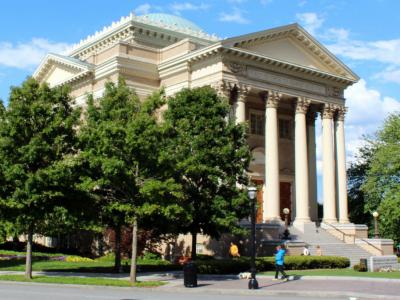
The First Church of Christ, Scientist serves as the main congregation for Atlanta’s Christian Science community, whose worship practices differ notably from those of many other Christian denominations. Opened in 1914, the church occupies a historic Greek Revival building and remains one of the area’s most visually prominent landmarks.
The building’s presence is defined by its monumental, elevated, and symmetrical exterior, which lends it a formal, almost classical gravity. Inside, the space is referred to as an auditorium rather than a sanctuary, reflecting Christian Science tradition, and it is not used for weddings or funerals. Seating is arranged in a broad, open fan shape beneath a high coffered ceiling, with no altar, statues, or stained-glass imagery competing for attention. Instead, the focal point is a simple reading desk and organ platform, reinforcing the emphasis on spoken word and music. Despite architectural elements often associated with Beaux-Arts design, the interior maintains a disciplined simplicity.
Beyond its architectural significance, the church is also notable for its early adoption of climate control. It is often cited as Atlanta’s first air-conditioned building, using an inventive system in which fans circulated air over large blocks of ice placed in passages beneath the auditorium floor. A lesser-known detail is the building’s acoustics: the design allows unamplified voices to carry clearly throughout the space, a practical feature aligned with Christian Science services, which rely entirely on readings rather than sermons.
The building’s presence is defined by its monumental, elevated, and symmetrical exterior, which lends it a formal, almost classical gravity. Inside, the space is referred to as an auditorium rather than a sanctuary, reflecting Christian Science tradition, and it is not used for weddings or funerals. Seating is arranged in a broad, open fan shape beneath a high coffered ceiling, with no altar, statues, or stained-glass imagery competing for attention. Instead, the focal point is a simple reading desk and organ platform, reinforcing the emphasis on spoken word and music. Despite architectural elements often associated with Beaux-Arts design, the interior maintains a disciplined simplicity.
Beyond its architectural significance, the church is also notable for its early adoption of climate control. It is often cited as Atlanta’s first air-conditioned building, using an inventive system in which fans circulated air over large blocks of ice placed in passages beneath the auditorium floor. A lesser-known detail is the building’s acoustics: the design allows unamplified voices to carry clearly throughout the space, a practical feature aligned with Christian Science services, which rely entirely on readings rather than sermons.
7) Woodruff Arts Center / Alliance Theatre
The Woodruff Arts Center brings together world-class performing and visual arts on a single campus. Opened in the late 1960s as a memorial to Atlanta arts patrons lost in the 1962 Orly Airport plane crash, it was later renamed in honor of philanthropist Robert W. Woodruff. Today, the center houses several major institutions, including the High Museum of Art, the Atlanta Symphony Orchestra, and the Alliance Theater, forming one of the most important cultural anchors in the city.
At the heart of the center’s performing arts offerings is the Alliance Theater. Founded in 1968, the Alliance has built a reputation for artistic innovation, premiering works by acclaimed playwrights and staging musicals and plays that have gone on to Broadway and other major stages. Its season typically blends world premieres, contemporary drama, and family-friendly productions.
The theater venues within the Woodruff Arts Center include larger stages such as the Coca-Cola Stage, which seats several hundred patrons, alongside more intimate performance spaces that allow for a wide range of theatrical voices and formats. The Alliance’s educational and outreach initiatives complement its mainstage season with acting classes, camps, and workshops that encourage deeper engagement with performance.
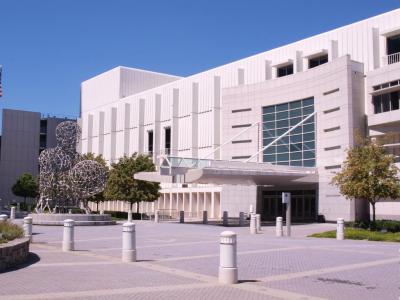
Just outside the Woodruff Arts Center, in the plaza along Peachtree Street, stands World Events, a large-scale kinetic sculpture by American artist George Rickey. Installed in 1979, the tall stainless-steel sculpture moves subtly with the wind and has become a familiar meeting point on the campus. From the plaza, the performance venues are concentrated toward the center and left side of the complex, while the concert halls of the Atlanta Symphony Orchestra are connected nearby by interior walkways.
Turning away from the performance buildings, pedestrian paths lead outward across the plaza toward the High Museum of Art. As you walk, the museum’s bright white and glass-clad buildings come into view, anchoring the eastern edge of the campus. Between visits, the central plaza serves as a natural pause point. Along its edge is Elise, a full-service restaurant offering contemporary American cuisine, making it a convenient option before or after performances, concerts, or gallery visits.
At the heart of the center’s performing arts offerings is the Alliance Theater. Founded in 1968, the Alliance has built a reputation for artistic innovation, premiering works by acclaimed playwrights and staging musicals and plays that have gone on to Broadway and other major stages. Its season typically blends world premieres, contemporary drama, and family-friendly productions.
The theater venues within the Woodruff Arts Center include larger stages such as the Coca-Cola Stage, which seats several hundred patrons, alongside more intimate performance spaces that allow for a wide range of theatrical voices and formats. The Alliance’s educational and outreach initiatives complement its mainstage season with acting classes, camps, and workshops that encourage deeper engagement with performance.
Just outside the Woodruff Arts Center, in the plaza along Peachtree Street, stands World Events, a large-scale kinetic sculpture by American artist George Rickey. Installed in 1979, the tall stainless-steel sculpture moves subtly with the wind and has become a familiar meeting point on the campus. From the plaza, the performance venues are concentrated toward the center and left side of the complex, while the concert halls of the Atlanta Symphony Orchestra are connected nearby by interior walkways.
Turning away from the performance buildings, pedestrian paths lead outward across the plaza toward the High Museum of Art. As you walk, the museum’s bright white and glass-clad buildings come into view, anchoring the eastern edge of the campus. Between visits, the central plaza serves as a natural pause point. Along its edge is Elise, a full-service restaurant offering contemporary American cuisine, making it a convenient option before or after performances, concerts, or gallery visits.
8) High Museum of Art (must see)
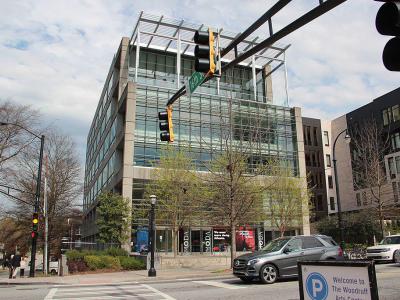
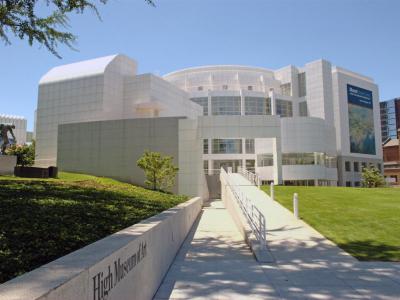
Widely regarded as the leading art museum in the Southeastern United States, the High Museum of Art—often simply called “the High”—is larger and more varied than many visitors expect. Its modern, sculptural, enamel-clad buildings house a diverse range of collections, making it easy to spend half a day exploring. Founded in 1905 as the Atlanta Art Association, the museum has grown into one of the region’s most carefully curated cultural institutions.
The High’s permanent collection includes more than 14,000 works of art, with a significant portion acquired around the turn of the 21st century. Its strengths include 19th- and 20th-century American art; European works by artists such as Tiepolo, Monet, Matisse, Renoir, Degas, Pissarro, and Rodin; decorative arts, particularly from the late 19th and early 20th centuries; as well as modern and contemporary art and photography. Notable highlights include the museum’s design objects and seating displays found throughout the galleries, Deborah Butterfield’s Horse sculpture, and the depth of the contemporary collection overall.
The museum places particular emphasis on Southern self-taught artists, including Howard Finster, whose work is presented through a contextual installation featuring paintings and sculptures connected to his Paradise Garden environment. The High is unusual among major North American museums in maintaining a dedicated curatorial focus on self-taught art, recognizing creativity that developed outside formal academic traditions. The result is a collection that feels inventive, expressive, and often unexpectedly playful.
Tip:
The museum offers a daily docent-led Highlights Tour, typically held in the early afternoon and not requiring advance reservations.
The High’s permanent collection includes more than 14,000 works of art, with a significant portion acquired around the turn of the 21st century. Its strengths include 19th- and 20th-century American art; European works by artists such as Tiepolo, Monet, Matisse, Renoir, Degas, Pissarro, and Rodin; decorative arts, particularly from the late 19th and early 20th centuries; as well as modern and contemporary art and photography. Notable highlights include the museum’s design objects and seating displays found throughout the galleries, Deborah Butterfield’s Horse sculpture, and the depth of the contemporary collection overall.
The museum places particular emphasis on Southern self-taught artists, including Howard Finster, whose work is presented through a contextual installation featuring paintings and sculptures connected to his Paradise Garden environment. The High is unusual among major North American museums in maintaining a dedicated curatorial focus on self-taught art, recognizing creativity that developed outside formal academic traditions. The result is a collection that feels inventive, expressive, and often unexpectedly playful.
Tip:
The museum offers a daily docent-led Highlights Tour, typically held in the early afternoon and not requiring advance reservations.
9) Museum of Design Atlanta (MODA)
First opened in 1989 as the Atlanta International Museum of Art & Design, it is the only museum in the Southeast devoted exclusively to the study, recognition, and celebration of design. In this respect, MODA stands apart from traditional art museums, focusing on how design shapes everyday life through exhibitions, educational outreach, and adult-focused programming.
The museum offers approximately 6,500 square feet of exhibition space spread across two main galleries. Both are defined by clean, industrial lines and durable concrete floors that allow for flexible installations. Exhibitions regularly explore architecture, industrial and product design, interiors and furniture, graphic design, fashion, and related fields. The front desk area doubles as a reception space, while the rear gallery features a vaulted ceiling with two-story windows that bring in natural light. Behind the scenes, the museum is equipped with a built-in audiovisual system, ceiling-mounted digital projectors, responsive track lighting, and integrated security infrastructure—features that support a wide range of exhibition formats.
For visitors who appreciate the objects and systems that shape the built environment, MODA offers a focused and engaging experience. It works particularly well as a complement to a visit to the High Museum of Art, located directly across the street, but it also stands on its own as a compact, thoughtful stop while exploring Midtown Atlanta. Visitors can explore exhibitions independently, join guided programs when available, or browse the museum shop, which offers a curated selection of design-focused merchandise.
The museum offers approximately 6,500 square feet of exhibition space spread across two main galleries. Both are defined by clean, industrial lines and durable concrete floors that allow for flexible installations. Exhibitions regularly explore architecture, industrial and product design, interiors and furniture, graphic design, fashion, and related fields. The front desk area doubles as a reception space, while the rear gallery features a vaulted ceiling with two-story windows that bring in natural light. Behind the scenes, the museum is equipped with a built-in audiovisual system, ceiling-mounted digital projectors, responsive track lighting, and integrated security infrastructure—features that support a wide range of exhibition formats.
For visitors who appreciate the objects and systems that shape the built environment, MODA offers a focused and engaging experience. It works particularly well as a complement to a visit to the High Museum of Art, located directly across the street, but it also stands on its own as a compact, thoughtful stop while exploring Midtown Atlanta. Visitors can explore exhibitions independently, join guided programs when available, or browse the museum shop, which offers a curated selection of design-focused merchandise.
Walking Tours in Atlanta, Georgia
Create Your Own Walk in Atlanta
Creating your own self-guided walk in Atlanta is easy and fun. Choose the city attractions that you want to see and a walk route map will be created just for you. You can even set your hotel as the start point of the walk.

Martin Luther King Walking Tour
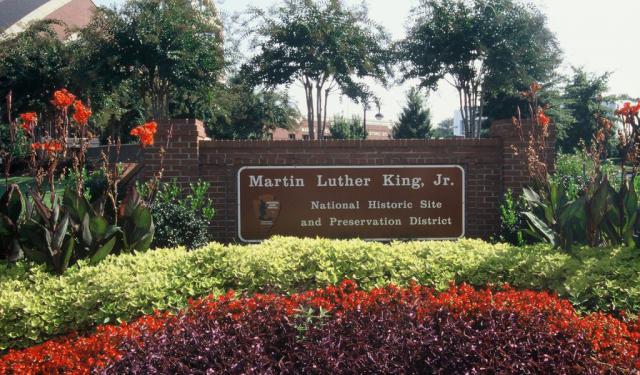
Martin Luther King Jr. once said “I was born here. I grew up here. And this city helped shape the man I became.”
Martin Luther King Jr. was born in Atlanta in 1929 into a family deeply rooted in the city’s Black Baptist tradition. Raised on Auburn Avenue, then one of African American corridors in the United States, King grew up surrounded by faith, education, and civic responsibility.... view more
Tour Duration: 1 Hour(s)
Travel Distance: 1.0 Km or 0.6 Miles
Martin Luther King Jr. was born in Atlanta in 1929 into a family deeply rooted in the city’s Black Baptist tradition. Raised on Auburn Avenue, then one of African American corridors in the United States, King grew up surrounded by faith, education, and civic responsibility.... view more
Tour Duration: 1 Hour(s)
Travel Distance: 1.0 Km or 0.6 Miles
"Gone with the Wind" Walking Tour
Atlanta does “give a damn” about Gone With The Wind. There is a number of museums and sites in the city that commemorate one of America's all-time classic stories. Although released as far back as the 1930s, both Margaret Mitchell's award-winning novel and the film that followed shortly still inspire curiosity about and are equally celebrated in Atlanta.
The first port of call for... view more
Tour Duration: 2 Hour(s)
Travel Distance: 5.0 Km or 3.1 Miles

The first port of call for... view more
Tour Duration: 2 Hour(s)
Travel Distance: 5.0 Km or 3.1 Miles
Atlanta Downtown Walk
Atlanta began as a practical idea rather than a grand vision. In the 1830s, Georgia planners selected a forested ridge as the southern endpoint of a new railroad linking the state to the Midwest. The settlement that emerged was first called Terminus. The name Atlanta appeared in the 1840s, likely derived from Atlantica-Pacifica, a poetic nod to the railroad’s ambition to connect the Atlantic... view more
Tour Duration: 2 Hour(s)
Travel Distance: 3.3 Km or 2.1 Miles
Tour Duration: 2 Hour(s)
Travel Distance: 3.3 Km or 2.1 Miles
Centennial Olympic Park
The Centennial Olympic Park in Atlanta is a sprawling urban oasis, covering approximately 21 acres. It was created as a central gathering place for the Centennial Summer Olympic Games held in Georgia in 1996. In the years following the Games, the area witnessed commercial development resulting in a variety of attractions and amenities suitable for visitors of all ages.
One of the notable sites... view more
Tour Duration: 2 Hour(s)
Travel Distance: 1.6 Km or 1 Miles
One of the notable sites... view more
Tour Duration: 2 Hour(s)
Travel Distance: 1.6 Km or 1 Miles
The Most Popular Cities
/ view all