

Highfields Park, Nottingham
Highfields Park is a Grade II listed public park covering 121 acres in the west of Nottingham, adjacent to the University of Nottingham’s University Park campus. Owing to this proximity, many people consider the park and campus to be one continuous green space, although Highfields is officially maintained by Nottingham City Council.
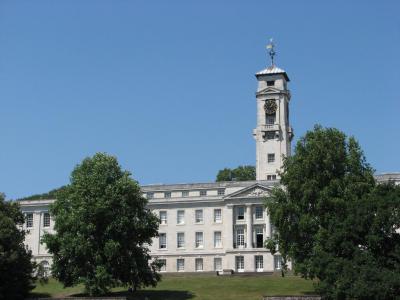
The park was first landscaped in the late 18th century by Joseph and Alfred Lowe. Its current form took shape in 1920 when Sir Jesse Boot bought the estate to support the future University of Nottingham. Architect Percy Richard Morley Horder redesigned the park to complement the Trent Building, built between 1922 and 1928.
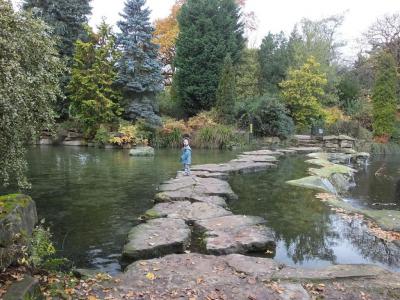
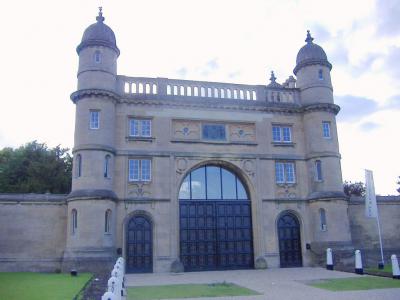
At the heart of the park lies a scenic boating lake, originally a fish pond expanded by engineer W.H. Radford. Visitors can hire boats in the summer, explore an island connected by ornamental bridges, or admire the cascade and Grade II listed stepping stones to the west. The Tottle Brook, which feeds the lake, flows visibly to the south before disappearing underground via culverts. The lake is home to ornamental carp and is bordered by a lakeside terrace, ornamental bridges, and formal gates adorned with eagle sculptures that align visually with the Trent Building.
To the east of the park stands the D.H. Lawrence Pavilion, near children's play areas, caves in the sandstone outcrop, and Chinese stone lion statues gifted by the city of Ningbo. Former features like a paddling pool have disappeared, but the croquet lawns remain active, and a Lottery-funded restoration project aims to revive the once-celebrated azalea walk.
Blending natural beauty with thoughtful design, Highfields Park is both a relaxing retreat and a landscape shaped by academic vision, civic pride, and nearly two centuries of evolving public use.
The park was first landscaped in the late 18th century by Joseph and Alfred Lowe. Its current form took shape in 1920 when Sir Jesse Boot bought the estate to support the future University of Nottingham. Architect Percy Richard Morley Horder redesigned the park to complement the Trent Building, built between 1922 and 1928.
At the heart of the park lies a scenic boating lake, originally a fish pond expanded by engineer W.H. Radford. Visitors can hire boats in the summer, explore an island connected by ornamental bridges, or admire the cascade and Grade II listed stepping stones to the west. The Tottle Brook, which feeds the lake, flows visibly to the south before disappearing underground via culverts. The lake is home to ornamental carp and is bordered by a lakeside terrace, ornamental bridges, and formal gates adorned with eagle sculptures that align visually with the Trent Building.
To the east of the park stands the D.H. Lawrence Pavilion, near children's play areas, caves in the sandstone outcrop, and Chinese stone lion statues gifted by the city of Ningbo. Former features like a paddling pool have disappeared, but the croquet lawns remain active, and a Lottery-funded restoration project aims to revive the once-celebrated azalea walk.
Blending natural beauty with thoughtful design, Highfields Park is both a relaxing retreat and a landscape shaped by academic vision, civic pride, and nearly two centuries of evolving public use.
Want to visit this sight? Check out these Self-Guided Walking Tours in Nottingham. Alternatively, you can download the mobile app "GPSmyCity: Walks in 1K+ Cities" from Apple App Store or Google Play Store. The app turns your mobile device to a personal tour guide and it works offline, so no data plan is needed when traveling abroad.
Download The GPSmyCity App



Highfields Park on Map
Sight Name: Highfields Park
Sight Location: Nottingham, England (See walking tours in Nottingham)
Sight Type: Park/Outdoor
Sight Location: Nottingham, England (See walking tours in Nottingham)
Sight Type: Park/Outdoor
Nearby Sights

Walking Tours in Nottingham, England

Create Your Own Walk in Nottingham
Creating your own self-guided walk in Nottingham is easy and fun. Choose the city attractions that you want to see and a walk route map will be created just for you. You can even set your hotel as the start point of the walk.
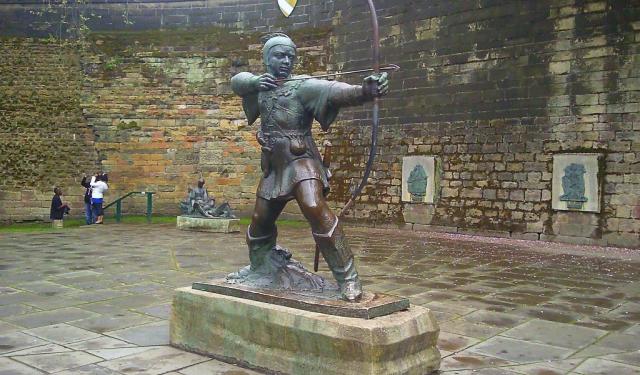
Robin Hood Trail
There's hardly anyone on this planet who hasn't heard of Robin Hood. Apparently, a Saxon nobleman born in 1160 in Loxley, this hero of numerous ballads, some dating back as far as the 14th century, earned fame by robbing from the rich and giving it back to the poor. A skilled archer and sword fighter as he was, Robin Hood famously defended villagers from attacks by corrupt noblemen,... view more
Tour Duration: 1 Hour
Travel Distance: 1.5 Km or 0.9 Miles
Tour Duration: 1 Hour
Travel Distance: 1.5 Km or 0.9 Miles

Nottingham's Historical Buildings Tour
Given the variety of architectural styles and designs in Nottingham, England, it is safe to call it the city of contrasts. The tapestry of historical buildings found here, each weaving a unique story of the city's past, is quite rich and worthy of attention.
Among these architectural treasures is the Bell Inn, a charming establishment steeped in history and character. Its traditional... view more
Tour Duration: 2 Hours
Travel Distance: 3.9 Km or 2.4 Miles
Among these architectural treasures is the Bell Inn, a charming establishment steeped in history and character. Its traditional... view more
Tour Duration: 2 Hours
Travel Distance: 3.9 Km or 2.4 Miles

Nottingham's Historic City Center Walking Tour
Nottingham was known only as "The Place of Caves" in 600 AD. A Saxon chief named Snot ruled "Snotingaham", or, "the home of Snot's people." It was part of Danelaw in the 7th century, administered from a stone Hall on High Pavement, the first street of Nottingham.
In 1068 Norman invaders built a wooden motte-and-bailey fortress on a high sandstone promontory.... view more
Tour Duration: 2 Hours
Travel Distance: 2.5 Km or 1.6 Miles
In 1068 Norman invaders built a wooden motte-and-bailey fortress on a high sandstone promontory.... view more
Tour Duration: 2 Hours
Travel Distance: 2.5 Km or 1.6 Miles
City Walks Overview
