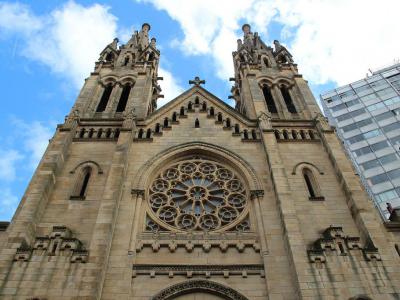


Iglesia de San Francisco de Asis (Church of Saint Francisco de Asis), Bilbao
The Church of Saint Francisco de Asís, commonly referred to as La Quinta Parroquia, meaning The Fifth Parish-a name that signifies its role as the fifth parish founded in the city-adds to the urban landscape with its twin spires, impressive rose window, and a sandstone façade quarried from Mount Oitz.
Construction began on June 30, 1890, under the guidance of Bilbao-born architect Luis de Landecho y Urriés, whose vision drew upon medieval Gothic cathedrals. He designed the church using local Oitz sandstone, an effort that earned him the Gold Medal at the Madrid Fine Arts Exhibition the same year. Although the main structure was completed in 1896, it wasn't officially consecrated until November 9, 1902. The twin towers were added in 1906, followed by the addition of the rose window in 1909, executed by architect Manuel María Smith. The building was honored with the designation Cultural Asset – Monument of the Basque Country in 2000.
The church features three longitudinal naves, with soaring vaults that highlight the traditional Gothic influence. Its structural elements-quadrangular pillars with Corinthian columns and richly detailed vaulting-suggest a medieval past but with modern craftsmanship. Marble from Ereño town adorns the bases of the pillars. Colorful stained-glass windows from Munich flood the nave with vivid imagery of saints, theological scenes, and the life of Saint Francis of Assisi, enhancing the reflective atmosphere.
Art enthusiasts will find much to admire in the church’s religious sculptures, especially the realistic suspended crucifix above the main altar, accompanied by statues of Saint Francis and the Virgin Mary created by Mariano Bellver. Nearby, the Chapel of the Blessed Sacrament features a neo-Gothic altarpiece, while more contemporary works-like Jesus the Captive and Redeemed, sculpted by Federico Coullaut-Valera in 1947-illustrate the continuing evolution of sacred art in Bilbao.
Construction began on June 30, 1890, under the guidance of Bilbao-born architect Luis de Landecho y Urriés, whose vision drew upon medieval Gothic cathedrals. He designed the church using local Oitz sandstone, an effort that earned him the Gold Medal at the Madrid Fine Arts Exhibition the same year. Although the main structure was completed in 1896, it wasn't officially consecrated until November 9, 1902. The twin towers were added in 1906, followed by the addition of the rose window in 1909, executed by architect Manuel María Smith. The building was honored with the designation Cultural Asset – Monument of the Basque Country in 2000.
The church features three longitudinal naves, with soaring vaults that highlight the traditional Gothic influence. Its structural elements-quadrangular pillars with Corinthian columns and richly detailed vaulting-suggest a medieval past but with modern craftsmanship. Marble from Ereño town adorns the bases of the pillars. Colorful stained-glass windows from Munich flood the nave with vivid imagery of saints, theological scenes, and the life of Saint Francis of Assisi, enhancing the reflective atmosphere.
Art enthusiasts will find much to admire in the church’s religious sculptures, especially the realistic suspended crucifix above the main altar, accompanied by statues of Saint Francis and the Virgin Mary created by Mariano Bellver. Nearby, the Chapel of the Blessed Sacrament features a neo-Gothic altarpiece, while more contemporary works-like Jesus the Captive and Redeemed, sculpted by Federico Coullaut-Valera in 1947-illustrate the continuing evolution of sacred art in Bilbao.
Want to visit this sight? Check out these Self-Guided Walking Tours in Bilbao. Alternatively, you can download the mobile app "GPSmyCity: Walks in 1K+ Cities" from Apple App Store or Google Play Store. The app turns your mobile device to a personal tour guide and it works offline, so no data plan is needed when traveling abroad.
Download The GPSmyCity App



Iglesia de San Francisco de Asis (Church of Saint Francisco de Asis) on Map
Sight Name: Iglesia de San Francisco de Asis (Church of Saint Francisco de Asis)
Sight Location: Bilbao, Spain (See walking tours in Bilbao)
Sight Type: Religious
Sight Location: Bilbao, Spain (See walking tours in Bilbao)
Sight Type: Religious
Nearby Sights

Walking Tours in Bilbao, Spain

Create Your Own Walk in Bilbao
Creating your own self-guided walk in Bilbao is easy and fun. Choose the city attractions that you want to see and a walk route map will be created just for you. You can even set your hotel as the start point of the walk.
Bilbao Introduction Walking Tour
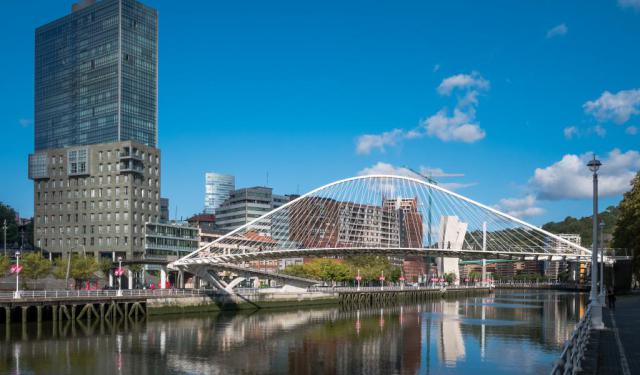
Officially founded in 1300 AD by the Lord of Biscay, Bilbao began as a small port settlement. Its sheltered estuary allowed ships to load wool, iron, and other goods bound for northern Europe, while merchants imported salt, wine, and luxury items. The name "Bilbao" likely comes from the Basque words bil, meaning "settlement," and bao, meaning "estuary"-a fitting... view more
Tour Duration: 2 Hour(s)
Travel Distance: 4.1 Km or 2.5 Miles
Tour Duration: 2 Hour(s)
Travel Distance: 4.1 Km or 2.5 Miles
Bilbao's Old Town Walking Tour
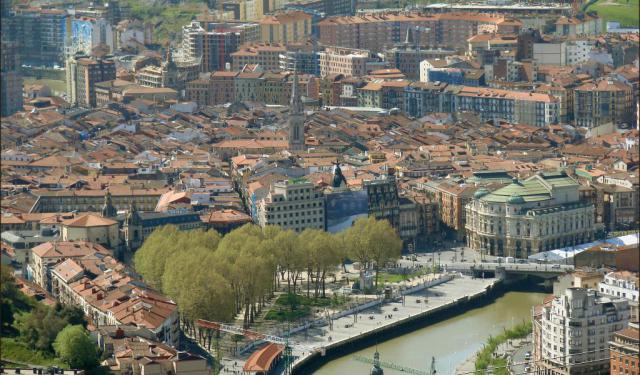
Bilbao's old town, also known as The Seven Streets, is the medieval heart of the city. Indeed, this ancient neighborhood, a place where the city began and which had been fortified by walls until the late 19th century, today consists of seven main streets and many narrow alleys – called cantons (kantoi, cantón) – that connect them.
Often regarded as a jewel of Basque architecture and... view more
Tour Duration: 1 Hour(s)
Travel Distance: 1.6 Km or 1 Miles
Often regarded as a jewel of Basque architecture and... view more
Tour Duration: 1 Hour(s)
Travel Distance: 1.6 Km or 1 Miles