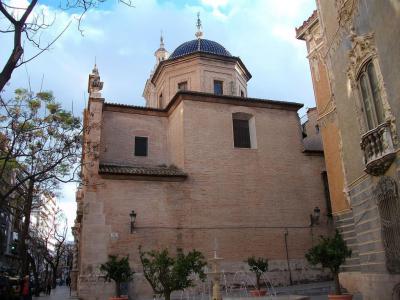


Iglesia de San Juan de la Cruz (Church of St. John of the Cross), Valencia
The Church of Saint John of the Cross sits on a site where Valencia’s religious history has been layering itself for centuries. Before becoming a church, it was home to a mosque, and after the Christian Reconquest, it became one of the first places in Valencia to be consecrated.
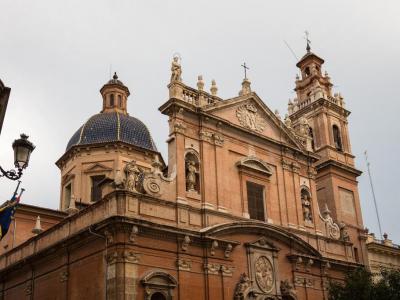
The building we see today began taking shape in the early 1600s, a time of major stylistic change that gradually moved it from Gothic restraint to the visual language of the Baroque drama and, later, to the ornamental richness of the Rococo.
Once inside, do not rush straight to the altar and back out again-tempting though that may be on a busy walking tour. Stand near the entrance first, facing the main altar, and let your eyes adjust to the narrow, richly decorated interior. Late 18th-century Rococo stucco work spills across it in a lively mix of angels, flowing drapery, curling leaves, and decorative flourishes. It draws inspiration from Italian models, but with a distinctly Valencian energy, enough to make the whole place feel proudly local.
The nave runs directly ahead of you, while the side chapels open off the walls like smaller rooms tucked into the church’s main body. One such is the chapel associated with Valencia’s Fishermen’s Guild.
The easiest way to find it is to start outside on Calle Poeta Querol, facing the church’s main entrance. Do not go through the central church doorway just yet. Instead, look immediately to the right of the main façade: the separate doorway beside it leads to the Chapel of Communion, an annex built after the main church and traditionally linked to the Fishermen’s Guild. The chapel entrance is at Calle Poeta Querol, 4, while the main church is at number 6, so think of it as the “next-door” chapel rather than a side chapel you discover deep inside the nave.
In a maritime city like Valencia, this link to the sea gives the chapel extra character. Small chapel, big local flavor...
After sitting closed for over 50 years, the church finally reopened in 2009 after a major restoration project that brought its Rococo decoration back into the light. Today, it serves not only as a place of worship, but also as a carefully revived piece of the city’s artistic memory-proof that, sometimes, all a building needs is half a century, a restoration team, and a very dramatic ceiling...
The building we see today began taking shape in the early 1600s, a time of major stylistic change that gradually moved it from Gothic restraint to the visual language of the Baroque drama and, later, to the ornamental richness of the Rococo.
Once inside, do not rush straight to the altar and back out again-tempting though that may be on a busy walking tour. Stand near the entrance first, facing the main altar, and let your eyes adjust to the narrow, richly decorated interior. Late 18th-century Rococo stucco work spills across it in a lively mix of angels, flowing drapery, curling leaves, and decorative flourishes. It draws inspiration from Italian models, but with a distinctly Valencian energy, enough to make the whole place feel proudly local.
The nave runs directly ahead of you, while the side chapels open off the walls like smaller rooms tucked into the church’s main body. One such is the chapel associated with Valencia’s Fishermen’s Guild.
The easiest way to find it is to start outside on Calle Poeta Querol, facing the church’s main entrance. Do not go through the central church doorway just yet. Instead, look immediately to the right of the main façade: the separate doorway beside it leads to the Chapel of Communion, an annex built after the main church and traditionally linked to the Fishermen’s Guild. The chapel entrance is at Calle Poeta Querol, 4, while the main church is at number 6, so think of it as the “next-door” chapel rather than a side chapel you discover deep inside the nave.
In a maritime city like Valencia, this link to the sea gives the chapel extra character. Small chapel, big local flavor...
After sitting closed for over 50 years, the church finally reopened in 2009 after a major restoration project that brought its Rococo decoration back into the light. Today, it serves not only as a place of worship, but also as a carefully revived piece of the city’s artistic memory-proof that, sometimes, all a building needs is half a century, a restoration team, and a very dramatic ceiling...
Want to visit this sight? Check out these Self-Guided Walking Tours in Valencia. Alternatively, you can download the mobile app "GPSmyCity: Walks in 1K+ Cities" from Apple App Store or Google Play Store. The app turns your mobile device to a personal tour guide and it works offline, so no data plan is needed when traveling abroad.
Download The GPSmyCity App



Iglesia de San Juan de la Cruz (Church of St. John of the Cross) on Map
Sight Name: Iglesia de San Juan de la Cruz (Church of St. John of the Cross)
Sight Location: Valencia, Spain (See walking tours in Valencia)
Sight Type: Religious
Guide(s) Containing This Sight:
Sight Location: Valencia, Spain (See walking tours in Valencia)
Sight Type: Religious
Guide(s) Containing This Sight:
Nearby Sights


Walking Tours in Valencia, Spain

Create Your Own Walk in Valencia
Creating your own self-guided walk in Valencia is easy and fun. Choose the city attractions that you want to see and a walk route map will be created just for you. You can even set your hotel as the start point of the walk.
Contemporary Architecture Walk
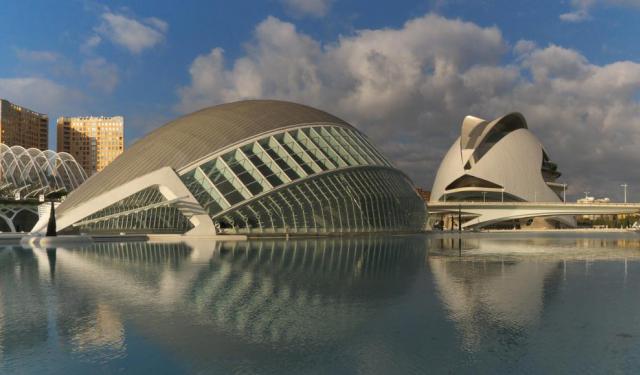
With one foot in the past and the other planted firmly in the future, Valencia manages a balancing act few European cities can pull off. Gothic bell towers, Baroque façades, bustling markets, and centuries-old plazas all share the stage with structures that look as though they were delivered directly from the year 2150. Among the city’s many architectural personalities, contemporary design... view more
Tour Duration: 1 Hour(s)
Travel Distance: 1.4 Km or 0.9 Miles
Tour Duration: 1 Hour(s)
Travel Distance: 1.4 Km or 0.9 Miles
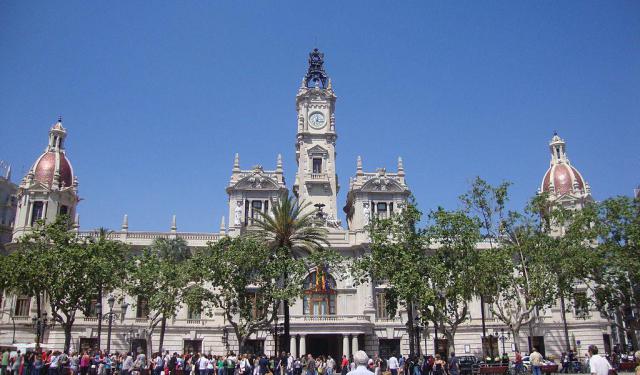
Valencia's Classical Architecture Tour
In Valencia, the architecture tells you right away-this city has layers. Indeed, this is not just a coastal getaway with sunshine, beaches, and a well-earned reputation for paella. Beneath the bright skies, “Spain’s Third Capital” reveals a rich and sometimes surprising blend of styles, bold in contrast yet delicate in detail. Nowhere is this more visible than in the Old Town, where nearly... view more
Tour Duration: 2 Hour(s)
Travel Distance: 3.3 Km or 2.1 Miles
Tour Duration: 2 Hour(s)
Travel Distance: 3.3 Km or 2.1 Miles
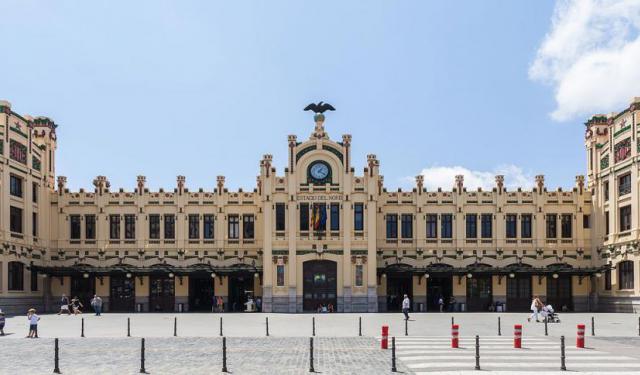
Valencia Top Attractions Walking Tour
Valencia, Spain’s third-largest city, has been around since 138 BC, when it was founded by the Romans as a colony for battle-tested veterans. Known then as Valentia, which means “valor,” it honored the courage of its first inhabitants. The city was destroyed in 75 BC by Pompey the Great, but was rebuilt within a century, later becoming home to Visigoths and then the Moors, who transformed... view more
Tour Duration: 2 Hour(s)
Travel Distance: 3.0 Km or 1.9 Miles
Tour Duration: 2 Hour(s)
Travel Distance: 3.0 Km or 1.9 Miles
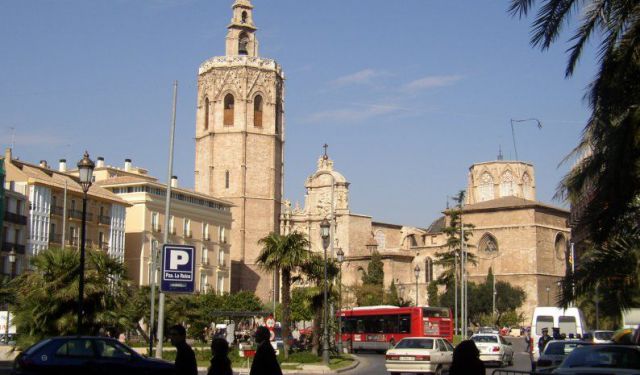
Valencia Old Town Walking Tour
Valencia’s Old Town is the sort of place where the Romans, Moors, medieval merchants, Gothic builders, Baroque decorators, and modern shoppers all seem to have comfortably found their place (albeit at different times). Beneath today’s squares, Roman streets and forum remains sit quietly underground, while above them, the city’s Islamic-era street plan still winds and twists, refusing to... view more
Tour Duration: 2 Hour(s)
Travel Distance: 3.0 Km or 1.9 Miles
Tour Duration: 2 Hour(s)
Travel Distance: 3.0 Km or 1.9 Miles