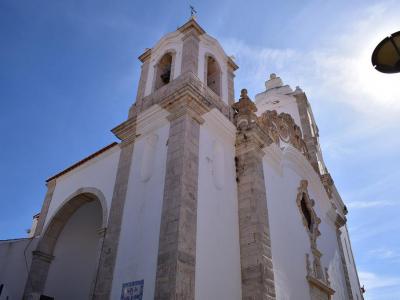


Igreja de Santo António (St. Anthony Church), Lagos (must see)
In 1707 the Brotherhood of Saint Anthony erected a church to Saint Anthony that was not attached to a Franciscan priory or convent. Saint Anthony was attached to the military forces of Lagos when he was joined to Infantry Regiment No. 2 in 1668. Since he was a part of the regiment, the Regimental Command was able to pay him a salary.
Thus Saint Anthony became the only canonized saint who got paid for his services. Not only that, he received promotions and soon achieved the rank of colonel. This practice ended in 1910 but the saint presumably can continue campaigning, after all, he never really retired.
The outside of the church is of smooth masonry for the most part. The facade is in the Baroque style. Above the main door is a niche with an oculus decorated with shells. On top of the facade is a shield with branches. The side facade of the church has an arch that forms a vaulted porch. The church has two bell towers, differently shaped.
The interior of the church is a treasure. Sumptuous Baroque decorations and gilded wood carvings cover the walls. Where the gold stops the white and blue azulejo tiles begin. There are six paintings of the miracles of Saint Anthony. Enthroned on the altar, he sits with the baby Jesus in his arms, flanked by angels with flaming torches.
The Municipal Museum of Lagos is attached to the church. It has an impressive collection of paintings of sacred art and 17th century carvings.
Thus Saint Anthony became the only canonized saint who got paid for his services. Not only that, he received promotions and soon achieved the rank of colonel. This practice ended in 1910 but the saint presumably can continue campaigning, after all, he never really retired.
The outside of the church is of smooth masonry for the most part. The facade is in the Baroque style. Above the main door is a niche with an oculus decorated with shells. On top of the facade is a shield with branches. The side facade of the church has an arch that forms a vaulted porch. The church has two bell towers, differently shaped.
The interior of the church is a treasure. Sumptuous Baroque decorations and gilded wood carvings cover the walls. Where the gold stops the white and blue azulejo tiles begin. There are six paintings of the miracles of Saint Anthony. Enthroned on the altar, he sits with the baby Jesus in his arms, flanked by angels with flaming torches.
The Municipal Museum of Lagos is attached to the church. It has an impressive collection of paintings of sacred art and 17th century carvings.
Want to visit this sight? Check out these Self-Guided Walking Tours in Lagos. Alternatively, you can download the mobile app "GPSmyCity: Walks in 1K+ Cities" from Apple App Store or Google Play Store. The app turns your mobile device to a personal tour guide and it works offline, so no data plan is needed when traveling abroad.
Download The GPSmyCity App



Igreja de Santo António (St. Anthony Church) on Map
Sight Name: Igreja de Santo António (St. Anthony Church)
Sight Location: Lagos, Portugal (See walking tours in Lagos)
Sight Type: Religious
Guide(s) Containing This Sight:
Sight Location: Lagos, Portugal (See walking tours in Lagos)
Sight Type: Religious
Guide(s) Containing This Sight:
Walking Tours in Lagos, Portugal

Create Your Own Walk in Lagos
Creating your own self-guided walk in Lagos is easy and fun. Choose the city attractions that you want to see and a walk route map will be created just for you. You can even set your hotel as the start point of the walk.
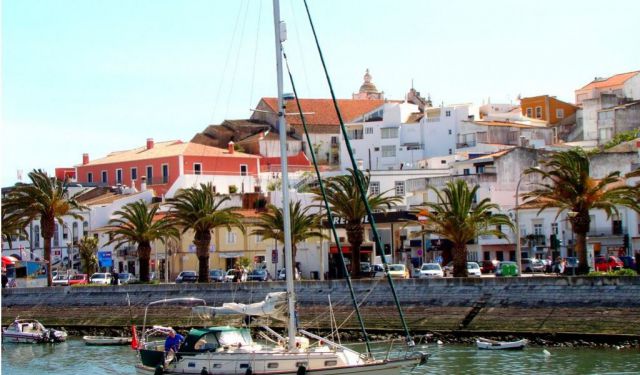
Lagos Coastline Walk
Characterful and charming as it is, the historic city of Lagos on the Algarve coast of Southern Portugal has not succumbed to mass tourism, fortunately, retaining much of its distinctive centuries-old heritage. Lagos’s extensive history is reflected in the varied attractions found throughout the city, such as the ancient Moorish city walls, 17th-century Forte da Ponta da Bandeira and cobbled... view more
Tour Duration: 2 Hour(s)
Travel Distance: 3.6 Km or 2.2 Miles
Tour Duration: 2 Hour(s)
Travel Distance: 3.6 Km or 2.2 Miles
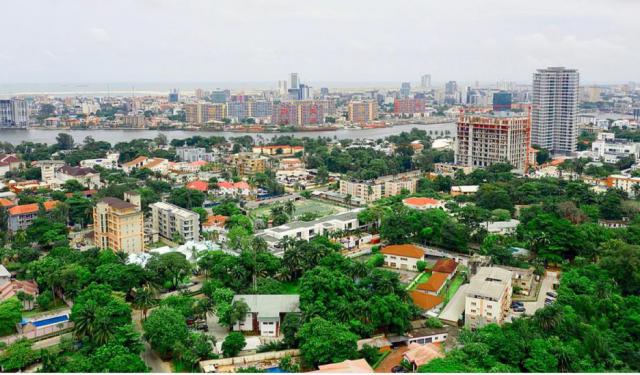
Lagos Introduction Walking Tour
Lagos, from captive to captivating.
The story of Lagos is over 2,000 years old. It was a Celtic settlement before the Punic Wars of Rome and Carthage. During the Second Punic War the people of Lagos sided with Hannibal and the Carthaginians. That didn't work out so well. The Romans came, then the Visigoths from Toledo, followed by the Byzantines. In the 8th century the Moors arrived.
... view more
Tour Duration: 2 Hour(s)
Travel Distance: 2.6 Km or 1.6 Miles
The story of Lagos is over 2,000 years old. It was a Celtic settlement before the Punic Wars of Rome and Carthage. During the Second Punic War the people of Lagos sided with Hannibal and the Carthaginians. That didn't work out so well. The Romans came, then the Visigoths from Toledo, followed by the Byzantines. In the 8th century the Moors arrived.
... view more
Tour Duration: 2 Hour(s)
Travel Distance: 2.6 Km or 1.6 Miles