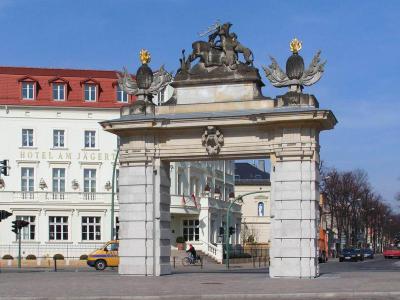


Jägertor (Hunter's Gate), Potsdam
The Hunter's Gate (Jägertor), built in 1733, is the oldest surviving city gate in Potsdam. Located along the axis of Lindenstrasse, it once served as a northern city exit and derived its name from the nearby electoral Jägerhof. Originally part of the Potsdam excise wall, the gate was not meant for fortification but rather to prevent soldiers from deserting and to control smuggling activities. Due to the angled intersection of Lindenstrasse with the former wall, the Hunter's Gate was also constructed at an angle relative to the wall's path.
After the city wall was demolished in 1869, the Hunter's Gate became a freestanding structure and is notable for its Tuscan-style pillar architecture with straight beams and a crowning group of sculptures. These sculptures feature a stag surrounded by hunting dogs, flanked by flaming grenades, symbolizing its connection to the Jägerhof and its military purpose. The gate’s architrave and crown are made of sandstone, while its rusticated pillars consist of plastered brickwork.
The structural setting of the Hunter's Gate during its construction was captured by Dismar Degen, the court painter of Friedrich Wilhelm I, in an oil painting. This painting, now owned by the Prussian Palaces and Gardens Berlin-Brandenburg Foundation, deliberately exaggerates the gate's dimensions, making it appear much larger and more imposing than it is in reality.
Today, the Hunter's Gate remains a significant part of the promenade that traces the former city wall's course. It continues to serve as an attractive focal point on Lindenstrasse, with its position highlighting the contrast between the dense baroque city expansion to the south and the more open villa developments to the north.
After the city wall was demolished in 1869, the Hunter's Gate became a freestanding structure and is notable for its Tuscan-style pillar architecture with straight beams and a crowning group of sculptures. These sculptures feature a stag surrounded by hunting dogs, flanked by flaming grenades, symbolizing its connection to the Jägerhof and its military purpose. The gate’s architrave and crown are made of sandstone, while its rusticated pillars consist of plastered brickwork.
The structural setting of the Hunter's Gate during its construction was captured by Dismar Degen, the court painter of Friedrich Wilhelm I, in an oil painting. This painting, now owned by the Prussian Palaces and Gardens Berlin-Brandenburg Foundation, deliberately exaggerates the gate's dimensions, making it appear much larger and more imposing than it is in reality.
Today, the Hunter's Gate remains a significant part of the promenade that traces the former city wall's course. It continues to serve as an attractive focal point on Lindenstrasse, with its position highlighting the contrast between the dense baroque city expansion to the south and the more open villa developments to the north.
Want to visit this sight? Check out these Self-Guided Walking Tours in Potsdam. Alternatively, you can download the mobile app "GPSmyCity: Walks in 1K+ Cities" from Apple App Store or Google Play Store. The app turns your mobile device to a personal tour guide and it works offline, so no data plan is needed when traveling abroad.
Download The GPSmyCity App



Jägertor (Hunter's Gate) on Map
Sight Name: Jägertor (Hunter's Gate)
Sight Location: Potsdam, Germany (See walking tours in Potsdam)
Sight Type: Attraction/Landmark
Sight Location: Potsdam, Germany (See walking tours in Potsdam)
Sight Type: Attraction/Landmark
Nearby Sights






Walking Tours in Potsdam, Germany

Create Your Own Walk in Potsdam
Creating your own self-guided walk in Potsdam is easy and fun. Choose the city attractions that you want to see and a walk route map will be created just for you. You can even set your hotel as the start point of the walk.
Sanssouci Park Walking Tour
Sanssouci Park is a unique Potsdam landmark that occupies 290 hectares in the heart of the city. The Park is named after the Sanssouci Palace that it surrounds, which in turn takes its name from the French phrase "sans souci", which means carefree, and implies that the palace was designated as a place of fun, rather than a seat of power.
Indeed, the Sanssouci Palace was built in 1747... view more
Tour Duration: 2 Hour(s)
Travel Distance: 3.9 Km or 2.4 Miles
Indeed, the Sanssouci Palace was built in 1747... view more
Tour Duration: 2 Hour(s)
Travel Distance: 3.9 Km or 2.4 Miles
Neuer Garten Walking Tour
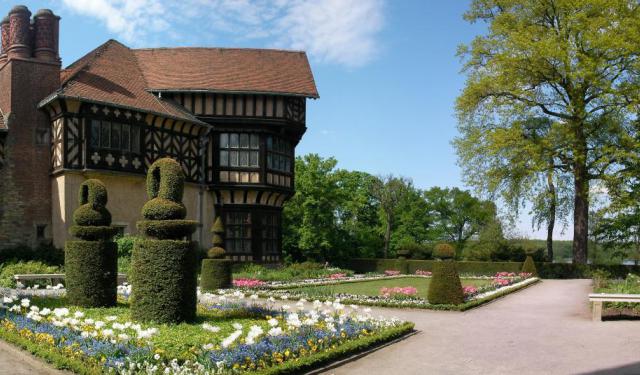
Laid out at the behest of Friedrich William II in 1787, Potsdam's Neuer Garten (New Garden) was indeed "new" compared to the already in place Sanssouci Park.
Between 1816 and 1828, the area was modified further as an English-style, open landscape garden, with an aim to reproduce nature – trees and plants were left to grow naturally, unshaped and untrimmed. Rural life was also... view more
Tour Duration: 2 Hour(s)
Travel Distance: 2.8 Km or 1.7 Miles
Between 1816 and 1828, the area was modified further as an English-style, open landscape garden, with an aim to reproduce nature – trees and plants were left to grow naturally, unshaped and untrimmed. Rural life was also... view more
Tour Duration: 2 Hour(s)
Travel Distance: 2.8 Km or 1.7 Miles
Potsdam City Center and Sanssouci Palace Walking Tour
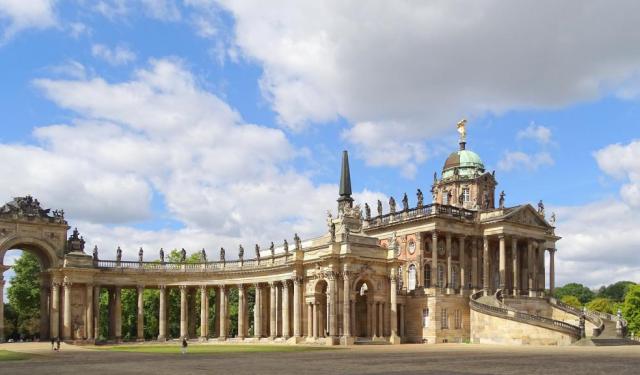
Potsdam was likely founded during the seventh century by the Hevelli tribe. The town was mentioned by the name of Poztupimi in a document from Emperor Otto III. The name likely came from an old Western Slavonic term roughly meaning "beneath the oaks."
By the early 1300s, a small town had formed with a town charter. By 1573 the town had around 2,000 people living there. Potsdam rose to... view more
Tour Duration: 2 Hour(s)
Travel Distance: 3.8 Km or 2.4 Miles
By the early 1300s, a small town had formed with a town charter. By 1573 the town had around 2,000 people living there. Potsdam rose to... view more
Tour Duration: 2 Hour(s)
Travel Distance: 3.8 Km or 2.4 Miles