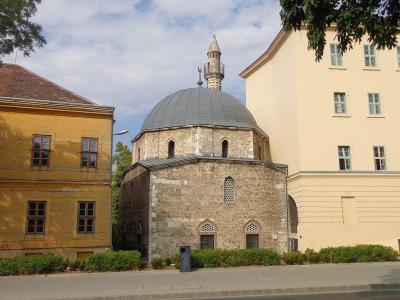


Jakovali Hassan Mosque, Pecs (must see)
The Jakovali Hassan Mosque in Pecs is one of the most well-preserved Ottoman-era mosques in the country. Constructed in the early 17th century, it stands as a rare architectural relic from Hungary’s period under Ottoman rule. Named after its benefactor, Yakovalı Hasan Pasa, the mosque remains an active place of worship while also serving as a cultural and historical site.
Built during Ottoman rule in central Hungary, the mosque's exact date and architect are unknown, though it likely dates to the 1630s. Commissioned by Yakovalı Hasan Pasa, who funded its upkeep, the official had ties to Gjakova (Kosovo) or Dakovo (Croatia). A key military figure, he took part in the 1660 siege of Oradea and defended Ottoman strongholds in Pecs and Kanizsa.
After Pecs was recaptured by Austrian forces in 1686, the mosque ceased to serve as an Islamic place of worship. Converted into a Catholic chapel (1702-1732) under Bishop Nesselrode, its minaret became a bell tower, and Baroque carvings were added. Restoration in the 1960s removed these embellishments, and further work in the 2000s aligned with Pecs’s 2010 European Capital of Culture status. In 2022, a permanent exhibition featuring 16th-century furnishings from Turkey was added.
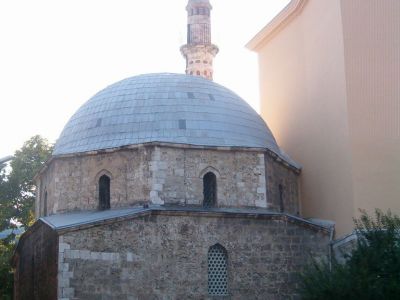
The mosque's design reflects classical Ottoman architecture, featuring a square base topped by a large dome and ogee windows. Oriented toward Mecca, it follows a northwest-southeast axis. The 22.5-meter-high minaret, once illuminated with oil lamps on religious holidays, is no longer accessible to visitors due to structural concerns. The mosque originally formed part of a larger complex that included a tekke (Sufi monastery), imaret (soup kitchen), and madrassa (Islamic school), though these structures have not survived.
In front of the mosque stands a statue of Ibrahim Pecevi (Ibrahim of Pecs), an Ottoman chronicler, sculpted by Turkish artist Metin Yurdanur and unveiled in 2016. This addition underscores the mosque's importance as a symbol of Hungary’s layered history, bridging Ottoman and European influences.
The Jakovali Hassan Mosque remains a unique and historically significant landmark in Pecs, preserving the legacy of Hungary’s Ottoman past while continuing to serve as a site of religious and cultural significance.
Built during Ottoman rule in central Hungary, the mosque's exact date and architect are unknown, though it likely dates to the 1630s. Commissioned by Yakovalı Hasan Pasa, who funded its upkeep, the official had ties to Gjakova (Kosovo) or Dakovo (Croatia). A key military figure, he took part in the 1660 siege of Oradea and defended Ottoman strongholds in Pecs and Kanizsa.
After Pecs was recaptured by Austrian forces in 1686, the mosque ceased to serve as an Islamic place of worship. Converted into a Catholic chapel (1702-1732) under Bishop Nesselrode, its minaret became a bell tower, and Baroque carvings were added. Restoration in the 1960s removed these embellishments, and further work in the 2000s aligned with Pecs’s 2010 European Capital of Culture status. In 2022, a permanent exhibition featuring 16th-century furnishings from Turkey was added.
The mosque's design reflects classical Ottoman architecture, featuring a square base topped by a large dome and ogee windows. Oriented toward Mecca, it follows a northwest-southeast axis. The 22.5-meter-high minaret, once illuminated with oil lamps on religious holidays, is no longer accessible to visitors due to structural concerns. The mosque originally formed part of a larger complex that included a tekke (Sufi monastery), imaret (soup kitchen), and madrassa (Islamic school), though these structures have not survived.
In front of the mosque stands a statue of Ibrahim Pecevi (Ibrahim of Pecs), an Ottoman chronicler, sculpted by Turkish artist Metin Yurdanur and unveiled in 2016. This addition underscores the mosque's importance as a symbol of Hungary’s layered history, bridging Ottoman and European influences.
The Jakovali Hassan Mosque remains a unique and historically significant landmark in Pecs, preserving the legacy of Hungary’s Ottoman past while continuing to serve as a site of religious and cultural significance.
Want to visit this sight? Check out these Self-Guided Walking Tours in Pecs. Alternatively, you can download the mobile app "GPSmyCity: Walks in 1K+ Cities" from Apple App Store or Google Play Store. The app turns your mobile device to a personal tour guide and it works offline, so no data plan is needed when traveling abroad.
Download The GPSmyCity App



Jakovali Hassan Mosque on Map
Sight Name: Jakovali Hassan Mosque
Sight Location: Pecs, Hungary (See walking tours in Pecs)
Sight Type: Religious
Sight Location: Pecs, Hungary (See walking tours in Pecs)
Sight Type: Religious
Nearby Sights

Walking Tours in Pecs, Hungary

Create Your Own Walk in Pecs
Creating your own self-guided walk in Pecs is easy and fun. Choose the city attractions that you want to see and a walk route map will be created just for you. You can even set your hotel as the start point of the walk.
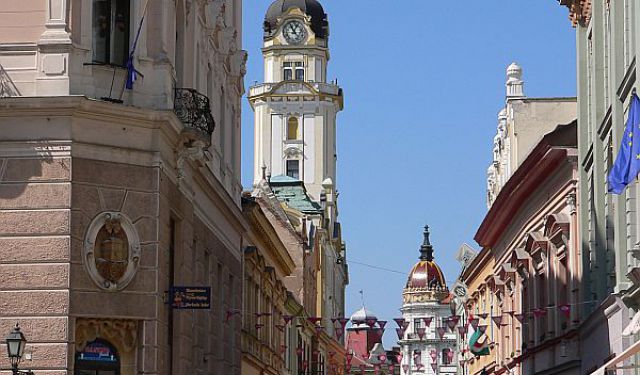
A Walking Tour of Pecs' Historical Architecture
The city of Pecs is rich in history, art and culture. This is due to the fact that the city's territory has been the site of intersection of different civilizations through the centuries. Magnificent palaces, original constructions of administrative buildings and other wonderful masterpieces by famous architects will amaze you when you discover the beauty of the architecture of Pecs!
Tour Duration: 1 Hour
Travel Distance: 1.5 Km or 0.9 Miles
Tour Duration: 1 Hour
Travel Distance: 1.5 Km or 0.9 Miles
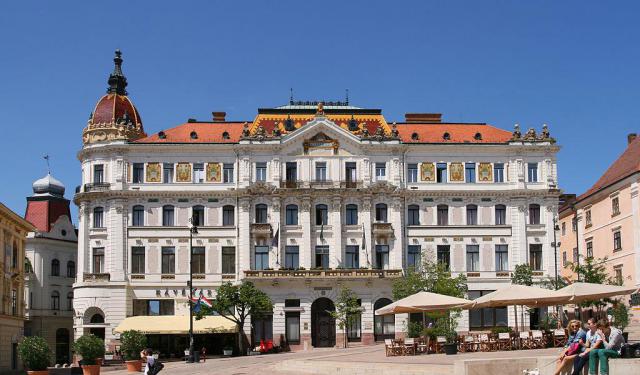
Walking Through Pecs' Historic Old Town
The city of Pecs has been the point of intersection of many eras, religions and political views. Since its time as the capital of the Valeria province of the Roman Empire, the city has maintained its historic cultural heritage. Take this orientation walk to visit the most popular and prominent sights of the city.
Tour Duration: 2 Hours
Travel Distance: 3 Km or 1.9 Miles
Tour Duration: 2 Hours
Travel Distance: 3 Km or 1.9 Miles